






Spotlights
Cardiac Rhythm Technician, Heart Rhythm Technologist, Electrophysiology Technician, Cardiac Electrophysiology Specialist, Arrhythmia Monitoring Technician, Cardiac Monitoring Technician, Rhythm Analysis Technician, ECG Technician, Cardiac Diagnostic Technician, Cardiac Event Monitor Technician, Electrophysiology Lab Technician, Cardiac Device Technician
Imagine a patient’s heart suddenly racing or fluttering unpredictably—and behind the scenes, a Cardiac Arrhythmia Technician is capturing the electrical signals that help doctors understand and treat these life-threatening irregularities. Their work is critical to diagnosing arrhythmias that can impact a person’s health and quality of life.
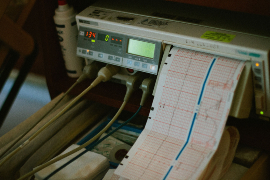
Cardiac Arrhythmia Technicians spend their days operating sophisticated heart monitoring equipment, such as electrocardiograms (ECGs), Holter monitors, and event recorders, to gather real-time data on heart rhythms. They collaborate closely with cardiologists, nurses, and electrophysiologists to ensure accurate readings and assist in the diagnosis and treatment planning for patients with irregular heartbeats. Their precise recordings guide medical decisions that can save lives.
Using specialized technology and software, these technicians analyze electrical impulses from the heart to detect abnormalities. Their expertise in setting up equipment properly and interpreting data ensures that cardiologists receive reliable information to decide on therapies ranging from medication to pacemaker implantation. Without their skilled work, detecting subtle or intermittent arrhythmias would be far more difficult, putting patient outcomes at risk.
- Playing a vital role in saving and improving patients’ lives by helping diagnose dangerous heart conditions.
- Working with cutting-edge medical technology that reveals the heart’s hidden electrical patterns.
- Collaborating with skilled healthcare teams and learning from cardiology experts every day.
- Seeing the direct impact of your work when patients receive timely, life-changing treatment.
Working Schedule
Cardiac Arrhythmia Technicians usually work in hospitals, cardiology clinics, or specialized electrophysiology labs. Their schedule often follows typical healthcare hours, but may include evenings or weekends for emergency cases or on-call duties. Many work full time, and the environment requires careful attention to detail and adherence to health and safety standards. While some positions are salaried hospital jobs, others may be contract or per diem roles depending on the employer.
Typical Duties
- Setting up and calibrating ECG machines and other heart rhythm monitoring devices for patient tests.
- Attaching electrodes and sensors to patients to record electrical activity of the heart accurately.
- Monitoring patients during tests to ensure data quality and patient comfort.
- Downloading and preparing heart rhythm data for physician review and diagnosis.
- Operating Holter monitors, event recorders, and telemetry equipment for continuous heart monitoring.
- Assisting electrophysiologists during invasive procedures like cardiac ablation by providing real-time rhythm data.
- Maintaining and sterilizing equipment to meet medical safety standards.
- Updating patient records with test results and observations.
- Educating patients about the purpose and procedure of arrhythmia monitoring tests.
- Troubleshooting technical issues with monitoring devices and software.
- Coordinating with healthcare teams to schedule tests and follow up on patient care.
- Ensuring compliance with healthcare regulations and privacy laws during patient testing and data handling.
Additional Responsibilities
- Training new technicians or assisting in staff education on arrhythmia monitoring techniques.
- Participating in quality assurance programs to maintain high testing accuracy.
- Ordering and managing inventory of monitoring supplies and equipment parts.
- Helping prepare reports or summaries for research or clinical trials involving cardiac rhythms.
- Supporting maintenance and upgrades of diagnostic software and hardware.
- Responding promptly to emergency situations involving cardiac monitoring.
- Documenting unusual patient symptoms or test anomalies for further investigation.
- Promoting patient safety and infection control practices in the testing environment.
A typical morning begins with reviewing the day’s patient list and preparing monitoring equipment, ensuring all devices are sterilized and calibrated. The technician checks schedules and confirms patient appointments, coordinating with nurses and cardiologists for any special instructions.
Midday involves working directly with patients—explaining procedures, setting up ECG leads, and starting continuous heart monitors. They carefully observe the recordings, making adjustments as needed, and compile data for cardiologist review. They might assist during electrophysiology studies, providing critical rhythm information in real time.
Later in the day, the technician downloads and analyzes collected data, updates medical records, and communicates findings to the healthcare team. They may troubleshoot equipment issues or restock supplies and prepare for the next day. Throughout, they maintain a clean, safe workspace and support patients with any questions or concerns.
Soft Skills
- Attention to detail
- Strong communication skills
- Empathy and patient care
- Problem-solving
- Teamwork and collaboration
- Time management
- Adaptability under pressure
- Technical curiosity
- Confidentiality and professionalism
- Patience
- Critical thinking
- Stress management
Technical Skills
- Operating ECG and telemetry equipment
- Calibrating cardiac monitors
- Electrode placement techniques
- Data analysis and interpretation
- Medical record documentation
- Understanding cardiac physiology
- Using specialized diagnostic software
- Equipment maintenance and troubleshooting
- Knowledge of infection control
- HIPAA and patient privacy compliance
- Holter Monitor Technician: specializes in using portable devices that record heart rhythms over 24-48 hours.
- Event Recorder Technician: focuses on devices patients activate when symptoms occur to capture intermittent arrhythmias.
- Electrophysiology Lab Technician: assists during invasive heart procedures to monitor rhythms in real time.
- Cardiac Device Technician: supports implantation and monitoring of pacemakers and defibrillators.
- Telemetry Technician: monitors patients’ heart rhythms remotely in hospital settings.
- Ambulatory ECG Technician: manages mobile ECG testing outside hospital environments.
- Stress Test Technician: conducts exercise ECGs to evaluate heart rhythms under physical stress.
- Remote Monitoring Technician: uses wireless tech to track patients’ heart rhythms from home.
- Hospitals
- Cardiology Clinics
- Electrophysiology Labs
- Medical Device Manufacturers
- Diagnostic Testing Centers
- Outpatient Care Centers
- Research Institutions
- Home Health Care Providers
- Healthcare Staffing Agencies
- Academic Medical Centers
- Veterans Affairs Medical Centers
- Private Cardiologist Offices
Cardiac Arrhythmia Technicians often work under tight deadlines, especially when urgent heart rhythm issues arise. They must be calm and precise, as errors can impact patient treatment. The role demands continuous focus and the ability to quickly troubleshoot technical problems.
Work hours are generally full time with some shift flexibility. Evening or weekend shifts may be required for emergency monitoring or on-call duties. The work environment can be fast-paced and requires standing or being active for long periods during patient testing.
Technicians need to handle patient anxieties and communicate clearly, balancing technical tasks with compassionate care. They must stay current with evolving cardiac technologies and protocols, often dedicating personal time to ongoing education and certification maintenance.
- Increasing use of wireless and wearable cardiac monitoring devices for real-time data collection.
- Integration of artificial intelligence to assist in arrhythmia detection and analysis.
- Growth of remote patient monitoring programs to support outpatient care.
- Advancements in minimally invasive electrophysiology procedures requiring precise technician support.
- Development of more user-friendly monitoring equipment to improve patient comfort.
- Expansion of telehealth services impacting technician roles in data transmission and interpretation.
- Rising demand for personalized cardiac care plans based on detailed rhythm analysis.
- Emphasis on data security and HIPAA compliance with digital health records.
- Increased collaboration between technicians and interdisciplinary healthcare teams.
- Ongoing need for technician training on emerging cardiac technologies and software.
Many Cardiac Arrhythmia Technicians show early interest in biology, anatomy, or healthcare, often enjoying science classes and hands-on experiments related to the human body. They might be curious about how the heart works or fascinated by medical technology and gadgets.
They often enjoy problem-solving activities, teamwork, and helping others, traits that naturally lead to careers in healthcare support roles. Volunteering at hospitals or shadowing healthcare professionals during high school can spark their passion for cardiac care.
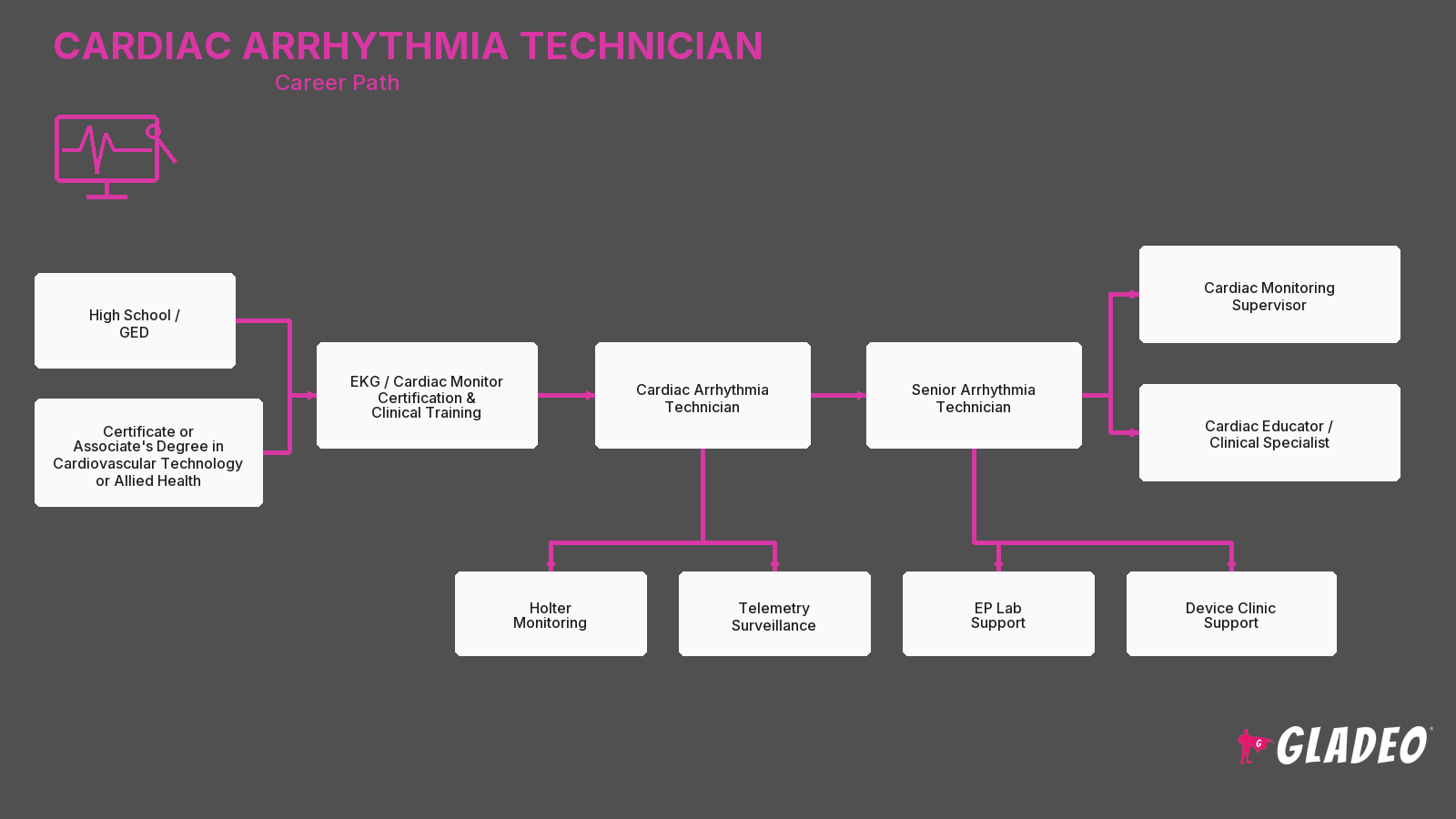
Becoming a Cardiac Arrhythmia Technician typically involves postsecondary training that combines healthcare knowledge with technical skills. Many pursue certificate programs or associate degrees in cardiovascular technology or cardiac monitoring, which prepare them for hands-on patient care and equipment operation.
Students can take courses in relevant subjects such as:
- Anatomy and Physiology
- Cardiac Electrophysiology
- Medical Terminology
- Electrocardiography (ECG)
- Patient Care Techniques
- Medical Ethics and Law
- Health Informatics
- Pharmacology Basics
- Technical Equipment Operation
- Infection Control and Safety
Hands-on clinical experience is essential for mastering cardiac monitoring techniques, so students should seek internships or practicum opportunities. Building a strong portfolio of skills and obtaining relevant certifications improves job prospects. Employers also value on-the-job training that hones precision and patient interaction skills.
- Take biology and health science classes in high school to build foundational knowledge.
- Enroll in anatomy and physiology courses to understand the heart and circulatory system.
- Join health or science clubs to gain exposure to medical careers.
- Volunteer or intern in hospitals or clinics to observe cardiac care.
- Consider technical programs or community college courses focused on cardiovascular technology.
- Develop strong computer skills for diagnostic software use.
- Practice communication and empathy through community service.
- Research certification options like the CCI’s Certified Rhythm Analysis Technician.
- Explore science fairs or projects related to heart health.
- Network with professionals through job shadowing or career days.
- Choose programs accredited by recognized cardiovascular technology associations.
- Look for curricula that offer extensive clinical practicum hours.
- Verify the availability of hands-on training with real cardiac monitoring equipment.
- Seek schools with strong partnerships with hospitals or cardiology centers.
- Ensure courses cover both the theory and technical operation of ECG and monitoring devices.
- Confirm the program prepares students for certification exams.
- Check for faculty experience in cardiac electrophysiology or arrhythmia monitoring.
- Consider programs offering career services or job placement support.
- Look for updated technology and software in training labs.
- Prioritize programs emphasizing patient communication and safety protocols.
- Apply for entry-level cardiac monitoring technician positions in hospitals or clinics.
- Build a professional resume highlighting clinical training and technical skills.
- Create a portfolio of ECG tracings or documented monitoring experiences.
- Prepare for interviews by practicing explanations of cardiac monitoring procedures.
- Network with the cardiology department staff and attend healthcare job fairs.
- Obtain relevant certifications, like those from Cardiovascular Credentialing International (CCI).
- Seek mentorship from experienced technicians or electrophysiology staff.
- Demonstrate strong attention to detail and patient care during interviews.
- Understand common medical software used in cardiac monitoring.
- Be willing to start with flexible or part-time shifts to gain experience.
- Show eagerness to learn and adapt to new technologies.
- Maintain professional certifications through continuing education.
- Gain experience and pursue advanced certifications to qualify for specialized electrophysiology technician roles.
- Develop proficiency with invasive cardiac procedures and assist in complex arrhythmia treatments.
- Build relationships with cardiologists and healthcare teams to increase responsibilities.
- Train new technicians or lead quality assurance projects within the department.
- Stay updated on emerging cardiac technologies and participate in training sessions.
- Consider further education in cardiovascular technology or nursing for career advancement.
- Seek opportunities in research or medical device companies to broaden expertise.
- Aim for leadership roles such as lead cardiac technician or clinical coordinator.
Websites:
- Cardiovascular Credentialing International (cci-online.org)
- Heart Rhythm Society (hrsonline.org)
- American Society of Electrophysiology Technologists (aset.org)
- American College of Cardiology (acc.org)
- National Board for Respiratory Care (nbrc.org)
- The Association of Cardiovascular Professionals (acp-online.org)
- Medical Device Manufacturers Association (medicaldevices.org)
- HealthIT.gov
- MedlinePlus - Heart Arrhythmias (medlineplus.gov/heart-arrhythmias)
- National Institutes of Health - Heart Health (nih.gov/health-topics/heart-disease)
- Society of Invasive Cardiovascular Professionals (sicp.org)
- Electrophysiology Journal (epjournal.org)
- American Heart Association (heart.org)
- Institute for Healthcare Improvement (ihi.org)
Books:
- The ECG Made Easy by John Hampton
- Cardiac Arrhythmia: Mechanisms, Diagnosis, and Management by Douglas P. Zipes
- Electrocardiography in Emergency Medicine by Amal Mattu
- Cardiac Electrophysiology: From Cell to Bedside by Douglas P. Zipes and Jose Jalife
- Interpretation of Cardiac Arrhythmias by Samir Saba
If becoming a Cardiac Arrhythmia Technician isn’t the right fit, there are many related healthcare careers where your interest in cardiac care and technology can still shine.
- Cardiovascular Technologist
- Electrocardiogram (ECG) Technician
- Medical Device Repair Technician
- Nursing Assistant
- Medical Laboratory Technician
- Phlebotomist
- Respiratory Therapist
- Radiologic Technologist
- Healthcare IT Specialist
- Clinical Research Coordinator
Newsfeed

Featured Jobs
Online Courses and Tools