




Spotlights
Lineworker, Power Lineman, Electrical Line Installer, Line Repairer, Transmission Line Technician, Distribution Line Mechanic, Overhead Line Installer, Underground Cable Installer, Utility Line Technician, Electrical Line Maintainer, Line Crew Worker, Power Transmission Specialist
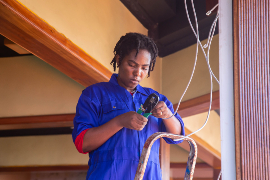
Imagine driving through your neighborhood and seeing streets lined with power poles and cables that keep your lights on, your phone charged, and your home warm. Electrical Power-Line Installers and Repairers are the skilled professionals who make sure that electricity flows safely and reliably from power plants right into homes and businesses, even during storms or emergencies.
Every day, these workers climb poles, dig trenches, and navigate high-voltage wires to install, maintain, and repair electrical power systems. They collaborate with engineers, utility crews, and safety inspectors to troubleshoot outages, replace damaged lines, and upgrade equipment, ensuring communities stay powered up and connected.
Using specialized tools like insulated gloves, bucket trucks, voltage testers, and safety harnesses, these experts follow strict safety protocols while working with high-voltage electricity. Their work is vital because without them, we would face blackouts, unsafe electrical hazards, and disruptions to daily life and commerce.
- Playing a critical role in restoring power during storms and emergencies, helping communities recover quickly.
- Working outdoors and mastering physical, hands-on skills that few people get to do.
- Collaborating with a tight-knit team where trust and safety are top priorities.
- Knowing your work directly supports essential services like hospitals, schools, and businesses.
Working Schedule
Electrical Power-Line Installers and Repairers often work full-time, including nights, weekends, and holidays, especially during power outages or severe weather. They spend much of their time outdoors, exposed to various weather conditions, and may work at great heights or in confined spaces. While many are employed by utility companies, some work for contractors or are self-employed. Deadlines can be urgent, with quick turnaround times to restore power safely and efficiently.
Typical Duties
- Climb poles or use bucket trucks to access electrical lines and equipment.
- Install new power lines, transformers, and related electrical hardware.
- Inspect lines and equipment to identify damage or wear.
- Repair or replace broken or damaged wires, poles, and transformers.
- Diagnose electrical problems using specialized testing equipment.
- Dig trenches or operate machinery to lay underground cables.
- Coordinate with team members and supervisors to ensure safe work practices.
- Follow strict safety protocols when handling high-voltage electricity.
- Respond quickly to emergency power outages and hazardous conditions.
- Maintain records of maintenance and repair work performed.
- Use maps and technical diagrams to plan line installations or repairs.
- Communicate with customers regarding power restoration timelines and safety information.
Additional Responsibilities
- Conduct regular safety checks on personal and team equipment.
- Attend training sessions on updated safety standards and electrical codes.
- Assist in training new crew members or apprentices.
- Monitor weather conditions to plan safe work schedules.
- Maintain tools and vehicles used in the field.
- Report and document any workplace incidents or hazards.
- Ensure compliance with local, state, and federal regulations.
- Participate in community outreach or education about electrical safety.
Morning begins with a safety briefing where the crew reviews daily assignments, checks equipment, and discusses weather forecasts to prepare for the day's work.
Midday involves traveling to job sites, setting up safety barriers, and performing installations or repairs on power lines either overhead or underground. Crew members communicate constantly to coordinate tasks and ensure safety.
Afternoon includes troubleshooting unexpected problems, completing paperwork, and prepping for emergency call-outs if storms or outages occur. Evenings might involve standby shifts ready to respond to urgent power failures.
Soft Skills
- Attention to detail
- Strong problem-solving abilities
- Effective communication
- Teamwork and collaboration
- Physical stamina and endurance
- Adaptability to changing conditions
- Safety-conscious mindset
- Ability to stay calm under pressure
- Time management
- Dependability and responsibility
- Manual dexterity
- Good spatial awareness
Technical Skills
- Knowledge of electrical systems and circuitry
- Ability to read technical diagrams and blueprints
- Operation of bucket trucks and cranes
- Use of voltage testers and other diagnostic tools
- Understanding of safety regulations and protocols
- Skill in climbing and working at heights
- Proficiency with hand and power tools
- Knowledge of underground cable installation
- Basic computer skills for reporting and communication
- First aid and emergency response training
- Distribution Lineman: Focuses on installing and maintaining power lines that deliver electricity directly to homes and businesses.
- Transmission Lineman: Works on high-voltage lines that carry electricity over long distances between power plants and substations.
- Overhead Line Installer: Specializes in installing and repairing power lines above ground using poles and towers.
- Underground Cable Installer: Installs and repairs electrical cables buried underground, often requiring trench digging and conduit placement.
- Electrical Line Repairer: Responds to outages and emergencies to fix damaged electrical lines quickly.
- Utility Line Technician: Maintains and tests electrical equipment to ensure reliable power delivery.
- Substation Technician: Focuses on equipment in substations, such as transformers and circuit breakers, to manage power flow.
- Line Crew Supervisor: Oversees teams of power-line workers and coordinates large projects and emergency responses.
- Electric utility companies
- Contract electrical contractors
- Municipal public works departments
- Telecommunications companies
- Renewable energy firms
- Construction companies specializing in infrastructure
- Government agencies managing power grids
- Emergency response teams
- Apprenticeship training programs
- Equipment manufacturers and suppliers
- Union organizations for lineworkers
- Safety certification providers
Working as an Electrical Power-Line Installer and Repairer carries significant physical and mental demands. Workers must be comfortable climbing poles, working at heights, and handling heavy equipment while maintaining strict safety protocols. Weather conditions can add unpredictability and risk.
Long hours are common, especially during storms or power outages, requiring quick response times and sometimes overnight or extended shifts. The job can be stressful due to the responsibility of working with high-voltage electricity and the urgency of restoring power to communities.
Sacrifices may include time away from family during emergency call-outs and exposure to hazardous environments. However, strong teamwork and safety culture help manage these challenges, and the work provides a sense of pride in keeping society powered and connected.
- Growing use of smart grid technology to monitor and control power flow remotely.
- Increased focus on renewable energy integration requiring new types of line installations.
- Advancements in safety equipment and personal protective gear.
- Use of drones and robotics for line inspections and maintenance.
- Greater demand for underground cable installation in urban areas.
- Improved training programs using simulation and virtual reality.
- Emphasis on environmental sustainability in power infrastructure.
- Rising need for skilled workers as experienced lineworkers retire.
- Expansion of utility-scale battery storage impacting power distribution.
- Adoption of advanced diagnostic tools for faster outage detection.
Many future power-line installers enjoyed building models, assembling electronics, or helping with home repairs as kids. They often like working outside, climbing, or solving mechanical puzzles and are curious about how electricity powers everyday life.
They may have been drawn to science and math classes, or participated in scouting, construction projects, or electrical clubs. Early experiences with hands-on projects and a sense of adventure often point them toward this career.
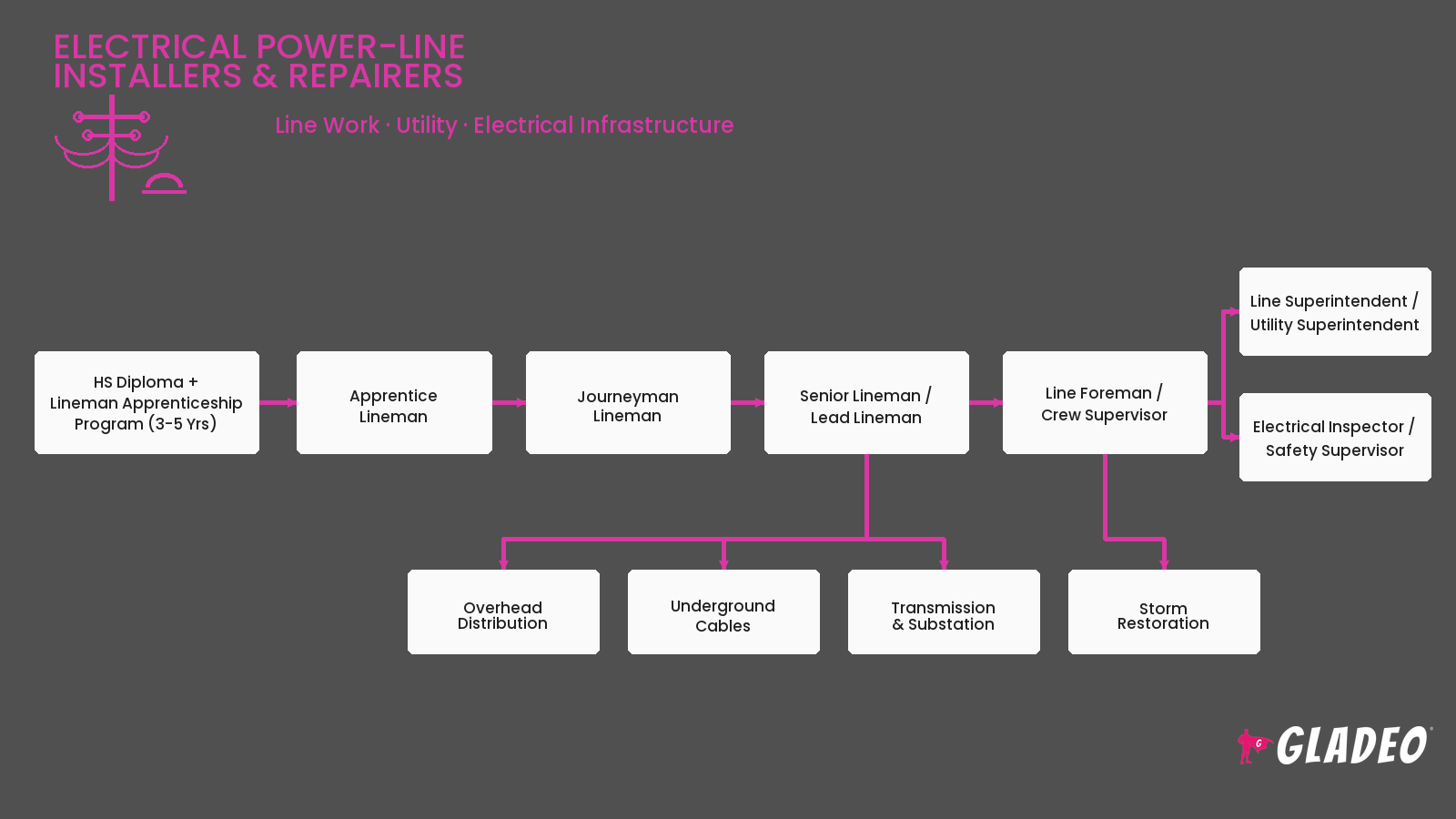
Becoming an Electrical Power-Line Installer and Repairer typically involves completing a high school diploma or GED, followed by an apprenticeship program that combines paid on-the-job training with classroom instruction. Some workers may attend technical schools or community colleges for additional coursework in electrical theory, safety, and equipment operation.
Students can take courses in relevant subjects such as:
- Electrical theory and circuitry
- Mathematics, including algebra and geometry
- Physics, focusing on electricity and magnetism
- Safety training and first aid
- Blueprint and technical diagram reading
- Mechanical drawing and tools usage
- Computer skills for reporting and diagnostics
- Communication and teamwork skills
- Environmental science
- Vocational training in construction and electrical maintenance
Hands-on experience through apprenticeships is essential to gain the practical skills needed for this career. Building a strong portfolio of completed projects and certifications in safety and electrical work helps open doors to employment and advancement opportunities.
- Enroll in high school classes focused on math, physics, and vocational training.
- Participate in trade or technical school programs related to electricity or construction.
- Join extracurricular clubs or activities like robotics, electronics, or scouting.
- Seek internships or summer jobs with utility companies or electrical contractors.
- Attend career fairs and talk to professionals in the power industry.
- Develop strong physical fitness and stamina through sports or physical activities.
- Complete CPR and first aid certification courses.
- Learn to use computers and software relevant to technical fields.
- Explore online resources and videos about electrical systems and safety.
- Plan for apprenticeship programs by researching local unions or utility company offerings.
- Choose programs accredited by recognized industry or trade organizations.
- Look for hands-on training opportunities and access to real-world equipment.
- Ensure curriculum covers safety standards and updated electrical codes.
- Select schools with strong connections to local utilities or contractors for apprenticeships.
- Verify instructors have industry experience as power-line workers or technicians.
- Check for small class sizes to allow personalized instruction.
- Explore programs that integrate computer and technology training.
- Confirm availability of certifications like OSHA safety training.
- Consider schools that offer career placement assistance.
- Evaluate program length and flexibility to fit your schedule.
- Research program reputation and graduate success rates.
- Look for opportunities to participate in competitions or practical workshops.
- Apply for apprenticeship programs through utility companies or unions.
- Start as a ground worker or line helper assisting experienced linemen.
- Build a portfolio of completed training modules and certifications.
- Network with professionals during training and community events.
- Gain experience using basic tools and safety equipment on site.
- Develop strong habits of safety and teamwork from day one.
- Seek feedback regularly to improve technical skills.
- Take advantage of opportunities to learn about different types of lines and equipment.
- Document your work and progress for future job applications.
- Prepare for physical demands by maintaining good fitness.
- Volunteer for extra shifts during outages to demonstrate reliability.
- Attend industry workshops or seminars to stay current.
- Master advanced electrical systems and troubleshooting techniques.
- Earn specialized certifications such as OSHA safety or CPR.
- Gain experience with high-voltage transmission lines and underground cables.
- Develop leadership and communication skills to supervise teams.
- Build relationships with industry professionals and mentors.
- Stay updated on new technologies and industry standards.
- Pursue additional education in electrical engineering or power systems.
- Seek roles with increasing responsibility, such as line foreman or crew supervisor.
Websites:
- International Brotherhood of Electrical Workers (IBEW) - ibew.org
- National Electrical Contractors Association (NECA) - necanet.org
- Occupational Safety and Health Administration (OSHA) - osha.gov
- National Rural Electric Cooperative Association (NRECA) - electric.coop
- Utility Workers Union of America (UWUA) - uwua.net
- Electrical Safety Foundation International (ESFI) - esfi.org
- Electric Power Research Institute (EPRI) - epri.com
- National Joint Apprenticeship and Training Committee
(NJATC) - njatc.org - American Public Power Association (APPA) - publicpower.org
- Power & Communication Contractors Association (PCCA) - pccanet.org
- National Electrical Contractors Association (NECA) Education Foundation - necaef.org
- Line Magazine - linemagazine.com
- Electrical Construction & Maintenance (EC&M) Magazine - ecmweb.com
- Utility Dive - utilitydive.com
Books:
- Power Line Worker by Robert C. Smith
- Electrical Safety Handbook by John Cadick
- Lineworker's and Cableman's Reference by Dave Scott
- Transmission and Distribution Electrical Engineering by Colin Bayliss
- The Lineman's and Cableman's Handbook by Thomas M. Shoemaker
If becoming an Electrical Power-Line Installer and Repairer isn’t the perfect fit, there are many related careers where you can use your skills working with electricity, construction, or maintenance.
- Electrician
- Electrical Engineering Technician
- Telecommunications Line Installer
- Construction Equipment Operator
- Renewable Energy Technician
- Maintenance Technician
- Electrical Inspector
- Utility Equipment Operator
- HVAC Technician
- Safety Coordinator
Newsfeed

Featured Jobs
Online Courses and Tools