






Spotlights
Plant Ethnographer, Ethnopharmacologist, Botanical Anthropologist, Ethnobiologist, Traditional Knowledge Researcher, Cultural Botanist, Indigenous Plant Specialist, Medicinal Plant Researcher, Ethnoecologist, Ethnobotanical Field Researcher, Herbal Medicine Scientist, Plant Cultural Historian
Imagine discovering how ancient plants can heal modern ailments or uncovering the secrets of plants that have sustained cultures for thousands of years. Ethnobotanists play a crucial role in connecting people to the natural world by exploring the deep relationships between humans and plants that shape medicines, food, and traditions.
Ethnobotanists spend their days exploring diverse environments, from tropical rainforests to arid deserts, studying how different cultures use plants for food, medicine, rituals, and tools. They collaborate closely with indigenous communities, anthropologists, biologists, and conservationists to document traditional knowledge while respecting cultural sensitivities. Their research helps preserve endangered plant species and cultural heritage, while inspiring sustainable practices and new scientific discoveries.
Using tools like field notebooks, GPS devices, microscopes, and lab equipment, ethnobotanists collect plant samples, analyze chemical compounds, and record oral histories. Their work is vital for advancing medicine, protecting biodiversity, and fostering respect for traditional ecological wisdom in a rapidly changing world.
- Uncovering ancient knowledge that can lead to new medicines and cures.
- Building meaningful relationships with indigenous and local communities.
- Contributing to conservation efforts that protect both plants and cultural heritage.
- Combining science, culture, and storytelling in a unique and impactful way.
Working Schedule
Ethnobotanists often balance time between fieldwork in remote locations and lab or office research. Their schedules can vary seasonally, with extended trips for plant collection or community interviews, followed by periods of analysis and writing. Deadlines may revolve around grant proposals, publications, and conference presentations. Many work as university researchers, government scientists, or for nonprofits, but some pursue freelance or consulting roles. Outdoor work can be physically demanding, while lab analysis requires patience and precision.
Typical Duties
- Conduct field research to identify and collect plant specimens used by local cultures.
- Interview indigenous and local community members to document traditional plant knowledge.
- Analyze plant specimens for chemical properties in laboratories.
- Collaborate with anthropologists, ecologists, and pharmacologists on interdisciplinary projects.
- Publish research findings in scientific journals and present at conferences.
- Develop conservation plans to protect endangered plant species and habitats.
- Educate the public and students about ethnobotany through talks and workshops.
- Ensure ethical practices by respecting cultural intellectual property and obtaining informed consent.
- Catalog and curate plant collections in herbaria or museums.
- Assist in developing sustainable harvesting methods with local communities.
- Apply for research grants and manage project budgets.
- Advocate for the preservation of traditional knowledge and biodiversity.
Additional Responsibilities
- Maintain detailed field notes and digital records of research data.
- Stay updated on regulations regarding genetic resources and indigenous rights.
- Train students or interns in ethnobotanical research methods.
- Participate in community outreach and cultural exchange programs.
- Contribute to policy discussions on environmental and cultural preservation.
- Manage relationships with funding agencies and collaborators.
- Review scientific papers and grant proposals as a peer expert.
- Organize workshops and symposia on ethnobotanical topics.
Morning often begins by reviewing research goals and preparing equipment for field excursions, including GPS units, plant presses, and notebooks. Ethnobotanists might also meet with community guides or elders to plan interviews and ensure respectful engagement.
Midday is typically spent outdoors, observing plants in their natural habitats, collecting samples, and recording detailed notes on their uses and environments. They listen carefully to stories and insights shared by local knowledge holders, forming the heart of their research.
Afternoons are for cataloging specimens, analyzing data, and collaborating with colleagues via video calls or lab meetings. They might write reports or prepare presentations to share discoveries and plan next steps, balancing scientific rigor with cultural sensitivity.
Soft Skills
- Cultural sensitivity and respect
- Strong communication and interviewing skills
- Curiosity and patience
- Critical thinking and problem-solving
- Adaptability to diverse environments
- Empathy and ethical awareness
- Collaboration and teamwork
- Attention to detail
- Storytelling and writing ability
- Observation and listening skills
- Self-motivation and independence
- Organizational skills
Technical Skills
- Plant identification and taxonomy
- Field research techniques
- Specimen collection and preservation
- Data recording and management
- Laboratory analysis of plant compounds
- GIS and GPS technology
- Ethnographic interviewing methods
- Scientific writing and publication
- Grant writing and budgeting
- Use of microscopes and chemical analysis tools
- Cultural Ethnobotanist: Focuses on how plants influence social practices and beliefs.
- Medicinal Ethnobotanist: Studies plants used in traditional healing and drug discovery.
- Economic Ethnobotanist: Examines plants’ roles in trade, agriculture, and livelihoods.
- Conservation Ethnobotanist: Works to protect plant biodiversity and traditional knowledge.
- Archaeobotanist: Investigates ancient plant remains to understand past human-plant interactions.
- Pharmacognosist: Researches bioactive compounds in plants for pharmaceutical use.
- Ethnoecologist: Studies the relationships between people, plants, and ecosystems.
- Agroforestry Ethnobotanist: Develops sustainable land-use practices combining agriculture and forestry.
- Universities and research institutions
- Government environmental and agricultural agencies
- Nonprofit conservation organizations
- Botanical gardens and arboretums
- Pharmaceutical and biotech companies
- Museums and herbaria
- International development agencies
- Cultural heritage organizations
- Environmental consulting firms
- Ethnographic and anthropological societies
- Indigenous rights groups
- Agricultural extension services
Ethnobotanists often face the challenge of working in remote, sometimes harsh environments, requiring physical stamina and adaptability. Fieldwork can involve long hours outdoors, navigating rough terrain, and dealing with unpredictable weather conditions.
The career demands high ethical standards, as professionals must build trust with indigenous and local communities while protecting sensitive cultural information. Balancing scientific goals with respect for traditional knowledge can be complex and requires diplomacy.
Work hours can be irregular, especially during field expeditions, which may last several weeks or months. Deadlines for publishing research or securing funding add pressure, and revising work based on peer review is common, requiring resilience and persistence.
- Growing interest in sustainable and indigenous-led conservation practices.
- Increasing use of digital tools like GIS mapping and mobile data collection apps.
- Collaborations across disciplines combining ethnobotany with pharmacology and ecology.
- Rising awareness of protecting indigenous intellectual property rights.
- Expansion of ethnobotanical gardens and living libraries.
- Use of DNA analysis to identify plant species and origins.
- Focus on climate change impacts on plant use and biodiversity.
- Development of community-based participatory research methods.
- Integration of ethnobotany with global health initiatives.
- Greater emphasis on ethical research and benefit-sharing agreements.
Many ethnobotanists were fascinated by plants, nature, and different cultures from a young age. They often enjoyed exploring outdoors, collecting leaves and flowers, and learning about herbal remedies or garden plants through family traditions or school projects.
Interest in storytelling, history, and helping others also pointed them toward this career. Early experiences volunteering in botanical gardens, museums, or cultural centers helped spark their curiosity about how plants shape human life.
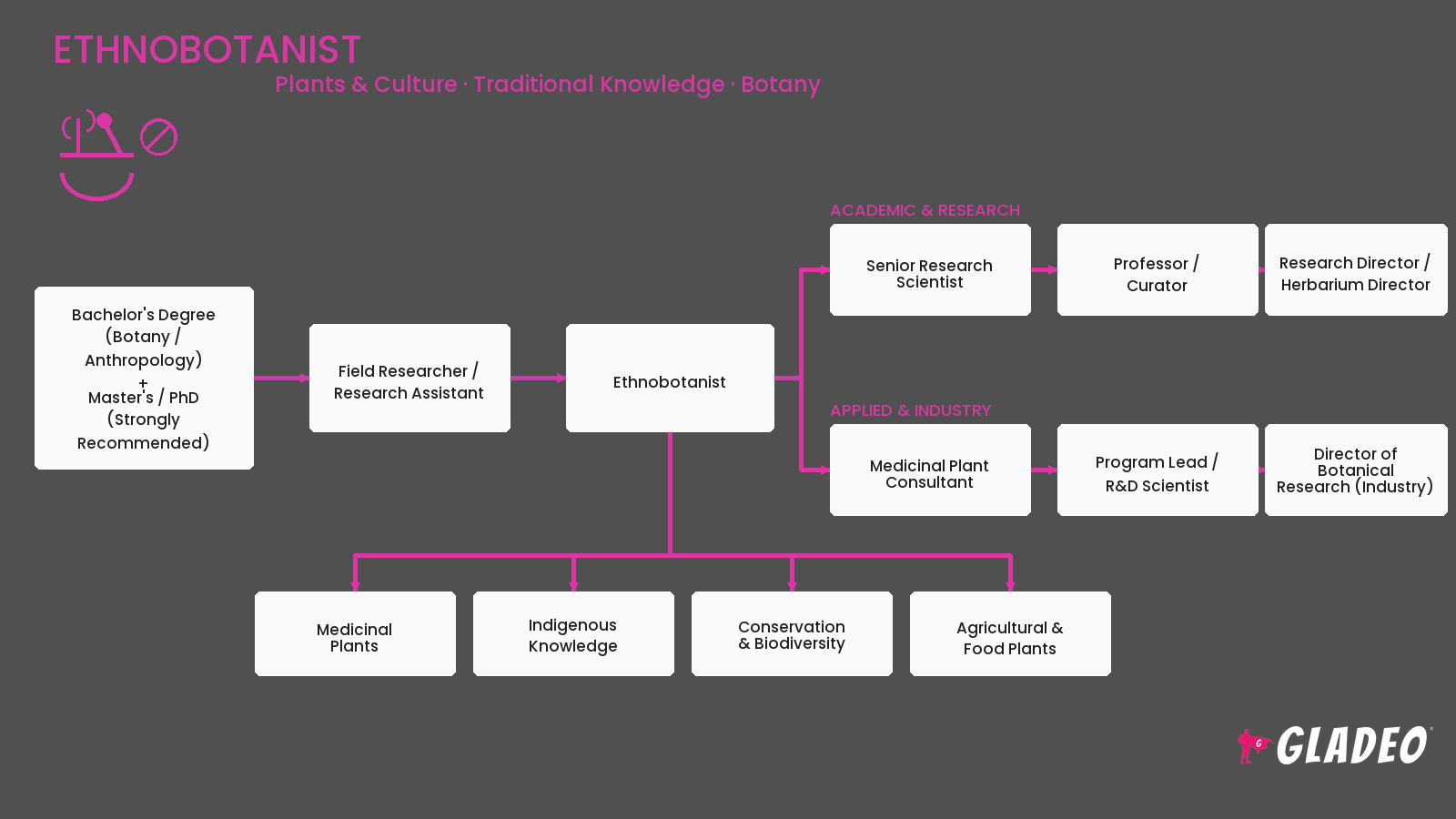
Becoming an ethnobotanist typically involves a strong foundation in biology, anthropology, or environmental science. Most professionals earn a bachelor’s degree in one of these fields before pursuing specialized graduate studies in ethnobotany or related disciplines.
Students can take courses in relevant subjects such as:
• Biology: Plant Biology and Botany
• Anthropology: Cultural and Social Anthropology
• Ecology and Environmental Science
• Pharmacology and Medicinal Chemistry
• Ethnographic Research Methods
• Chemistry: Organic and Analytical Chemistry
• Conservation Biology
• GIS and Remote Sensing
• Research Writing and Scientific Communication
• Sustainable Agriculture and Agroforestry
Hands-on fieldwork and lab experience are crucial during college and graduate studies. Building a portfolio of research projects, internships, and publications helps prepare for professional roles. Graduate degrees, especially a master's or PhD focusing on ethnobotany, open doors to advanced research and teaching opportunities.
- Take science courses like biology and chemistry to build a strong foundation.
- Enroll in social studies and cultural anthropology classes if available.
- Participate in environmental or biology clubs and outdoor programs.
- Volunteer at botanical gardens, museums, or conservation groups.
- Develop strong writing and communication skills through essays and presentations.
- Learn about indigenous cultures and global biodiversity through reading and media.
- Take computer classes focusing on data analysis and GIS software.
- Join summer research programs or internships related to plants and cultures.
- Attend lectures or workshops on ethnobotany or related fields.
- Consider college programs that offer interdisciplinary studies combining biology and anthropology.
- Look for programs with strong field research components and community engagement.
- Choose schools with faculty experienced in ethnobotany or related disciplines.
- Seek programs offering internships or partnerships with indigenous communities.
- Ensure access to laboratory facilities for chemical and botanical analysis.
- Check for courses covering both plant sciences and cultural studies.
- Evaluate opportunities for interdisciplinary collaboration and study abroad.
- Look for programs emphasizing ethical research practices and cultural sensitivity.
- Consider programs with strong alumni networks in ethnobotany.
- Find schools that support student research and publication.
- Prioritize programs that prepare students for grant writing and project management.
- Look for mentorship opportunities from practicing ethnobotanists.
- Check if the program offers workshops on GIS and data management.
- Volunteer or intern with a botanical garden, herbarium, or conservation nonprofit.
- Assist in field research projects led by universities or government agencies.
- Work as a research assistant in labs analyzing plant samples.
- Support ethnographic studies by helping with interviews and data collection.
- Participate in community outreach or environmental education programs.
- Apply for entry-level roles in environmental consulting firms.
- Help catalog plant specimens in museums or herbaria.
- Assist in writing grant proposals or preparing scientific reports.
- Join local or regional ethnobotanical societies to network.
- Attend conferences and present posters or talks on research experiences.
- Build a portfolio documenting fieldwork, lab analysis, and publications.
- Seek mentorship from experienced ethnobotanists and researchers.
- Pursue advanced degrees (master’s or PhD) specializing in ethnobotany or related fields.
- Publish research in scientific journals to build professional credibility.
- Gain experience managing independent research projects and teams.
- Develop strong relationships with indigenous communities and collaborators.
- Expand skills in grant writing and securing research funding.
- Teach ethnobotany courses or workshops to establish expertise.
- Network through professional societies and conferences.
- Lead conservation or sustainable development initiatives involving ethnobotanical knowledge.
Websites:
- Society for Economic Botany (economicbotany.org)
- International Society of Ethnobiology (ethnobiology.net)
- Botanical Society of America (botany.org)
- American Botanical Council (herbalgram.org)
- Ethnobotany Journal (ethnobotanyjournal.org)
- Plants for a Future (pfaf.org)
- Royal Botanic Gardens, Kew (kew.org)
- National Biodiversity Network (nbn.org.uk)
- United Plant Savers (unitedplantsavers.org)
- Global Diversity Foundation (global-diversity.org)
- Conservation International (conservation.org)
- Indigenous Environmental Network (ienearth.org)
- Environmental Protection Agency (epa.gov)
- National Geographic Society (nationalgeographic.org)
Books:
- Ethnobotany: Principles and Applications by C. M. Cotton
- Plants, People, and Culture: The Science of Ethnobotany by Michael J. Balick and Paul Alan Cox
- The Ethnobotany of Eden by Robert A. Voeks
- Tending the Wild: Native American Knowledge and the Management of California's Natural Resources by M. Kat Anderson
- Medicinal Plants of the Pacific West by Michael Moore
If becoming an ethnobotanist doesn't work out or you want to explore related fields, there are many careers that blend science, culture, and nature in exciting ways.
- Botanist
- Ecologist
- Pharmacologist
- Conservation Scientist
- Anthropologist
- Agronomist
- Environmental Educator
- Herbalist
- Museum Curator
- Wildlife Biologist
Newsfeed

Featured Jobs
Online Courses and Tools