






Spotlights
Flight Crew Member, Cabin Crew Member, Airline Cabin Attendant, In-Flight Service Representative, Passenger Service Flight Attendant, International Flight Attendant, Corporate Flight Attendant, Air Host/Hostess, Airline Customer Service Attendant, Cabin Safety Specialist, In-Flight Hospitality Specialist, Senior Cabin Crew Member, Lead Flight Attendant
Not so long ago, the idea of working thousands of feet in the air while serving passengers from all over the world felt like a rare and glamorous experience. Today, Flight Attendants are an essential part of modern air travel, ensuring that millions of people fly safely and comfortably every day.
Flight Attendants are responsible for far more than in-flight service. They are highly trained safety professionals who operate at the intersection of hospitality and emergency response. From the moment passengers begin boarding, they are actively preparing the cabin—checking safety equipment, securing overhead bins, and making sure all procedures are followed before departure.
During the flight, they move continuously through the cabin, balancing customer service with constant safety awareness. They assist passengers, provide food and beverage service, respond to questions, and support travelers with special needs. At the same time, they remain alert to changing conditions, ready to act quickly in situations such as turbulence, medical emergencies, or evacuations.
At the core of the profession is adaptability. Flight Attendants must shift seamlessly between roles: welcoming host, safety monitor, problem-solver, and emergency responder. This dynamic combination of skills ensures that every flight is not only comfortable, but also secure from takeoff to landing!
- Traveling to different cities, states, and countries as part of the job
- Meeting people from diverse cultures and backgrounds
- Helping passengers enjoy safe and comfortable journeys
- Developing strong communication, customer service, and leadership skills
- Experiencing a dynamic work environment where no two days are exactly alike
- Receiving travel benefits offered by many airlines
- Working as part of a close-knit flight crew team
- Having opportunities to explore new destinations during layovers
Working Schedule
Flight Attendants typically work irregular schedules that may include early mornings, late nights, weekends, holidays, and overnight trips. Work hours are determined by flight schedules and airline operations. Long-haul international flights may require multiple days away from home, while domestic routes often involve shorter trips.
Typical Duties
- Conduct pre-flight safety inspections
- Verify that emergency equipment is functioning properly
- Welcome passengers aboard and assist with seating
- Demonstrate safety procedures before takeoff
- Monitor cabin conditions throughout the flight
- Serve meals, snacks, and beverages
- Respond to passenger questions and concerns
- Assist travelers with special accommodations
- Enforce airline regulations and safety requirements
- Coordinate with pilots and fellow crew members
- Handle medical situations and emergencies
- Prepare the cabin for takeoff and landing
- Complete reports related to incidents or unusual events
- Assist passengers during boarding and deplaning
Additional Responsibilities
- Provide exceptional customer service
- Manage difficult passenger situations professionally
- Support passengers during delays or disruptions
- Help maintain cabin cleanliness and organization
- Participate in ongoing safety and emergency training
- Stay informed about airline policies and procedures
- Assist with security-related responsibilities
- Mentor newer crew members when assigned
A typical day might begin before sunrise as you report to the airport for a crew briefing. After reviewing weather conditions, flight details, and passenger information, you help prepare the aircraft for departure.
Once passengers begin boarding, you greet travelers, answer questions, and help ensure everyone is seated safely. During the flight, you may serve refreshments, assist families with young children, respond to special requests, and monitor the cabin for safety concerns.
Unexpected situations can happen at any time. A passenger may need medical assistance, turbulence may require quick action, or flight delays may create customer concerns. Throughout it all, Flight Attendants must remain calm, professional, and focused.
By the end of the day, you may find yourself in a completely different city or country, preparing for another flight or enjoying a layover before returning home.
Soft Skills
- Excellent communication
- Customer service orientation
- Professionalism
- Patience
- Adaptability
- Teamwork
- Cultural awareness
- Problem-solving
- Leadership
- Emotional intelligence
- Conflict resolution
- Time management
- Attention to detail
- Decision-making
- Ability to stay calm under pressure
Technical Skills
- Aircraft safety procedures
- Emergency response techniques
- First aid and CPR
- Passenger safety management
- Cabin operations knowledge
- Security procedures
- In-flight service delivery
- Public speaking and announcements
- Documentation and reporting
- Use of emergency equipment
- Evacuation procedures
- Regulatory compliance
- Food and beverage service standards
- Customer service technology systems
- Domestic Flight Attendant: Primarily serves passengers on flights within one country.
- International Flight Attendant: Works on international routes and often assists passengers from various cultural and language backgrounds.
- Corporate Flight Attendant: Provides service and safety support on private or business aircraft.
- Charter Flight Attendant: Serves passengers on non-scheduled commercial or private charter flights.
- Lead Flight Attendant: Supervises cabin crew members and coordinates onboard operations.
- VIP Cabin Attendant: Specializes in serving high-profile clients and luxury travelers.
- Commercial passenger airlines
- Regional airlines
- International airlines
- Charter aviation companies
- Corporate aviation departments
- Private jet operators
- Government aviation services
- Air ambulance and medical transport organizations
- Military passenger transport operations
- Luxury travel aviation companies
Training to become a Flight Attendant involves specialized preparation, adaptability, and the ability to work irregular hours, including nights, weekends, holidays, and overnight trips. New Flight Attendants may spend significant time away from home and often have limited choice over their schedules and routes during the early stages of their careers.
The role can be physically and mentally demanding. Flight Attendants spend much of their workday on their feet, moving through aircraft cabins, assisting passengers, handling luggage, and adjusting to changing time zones. They must also remain alert and ready to respond effectively in emergency situations.
While the job comes with challenges, many Flight Attendants find it highly rewarding. They enjoy the opportunity to travel, experience different places and cultures, meet people from diverse backgrounds, and play an important role in ensuring passengers have a safe and comfortable journey.
The airline industry continues to evolve, creating new opportunities and expectations for Flight Attendants. Airlines are placing greater emphasis on passenger health, safety, and security, while also strengthening emergency preparedness training to ensure crew members can respond effectively in a variety of situations. As international travel grows, there is increasing demand for multilingual Flight Attendants who can communicate with passengers from diverse backgrounds and provide high-quality service across global routes.
Technology is also shaping the future of the profession. Airlines are adopting digital tools to improve crew scheduling, communication, and cabin operations, while advanced cabin service technologies help enhance the passenger experience. At the same time, there is a growing focus on accessibility for travelers with different needs, customer satisfaction, and sustainability initiatives aimed at reducing the environmental impact of air travel. These trends are expected to influence how Flight Attendants work and the skills they will need in the years ahead.
People who become Flight Attendants often showed strong communication and people skills from a young age. Many enjoyed interacting with others, making new friends, and participating in activities that involved teamwork and public engagement. They were frequently drawn to experiences that allowed them to assist others and create positive interactions.
As they grew older, many developed an interest in travel, hospitality, and customer service. They often enjoyed fast-paced environments, adapting to new situations, and taking on responsibilities that required organization and professionalism. Their ability to stay calm under pressure, work well with different types of people, and embrace new experiences helped prepare them for a career in the airline industry.
Most airlines require Flight Attendants to have at least a high school diploma or equivalent, though many prefer candidates who have completed college coursework or earned an associate’s or bachelor’s degree. Degrees in hospitality, tourism, communications, business, public relations, psychology, or a related field can be especially helpful.
Common Courses Include:
- Communication and interpersonal skills
- Hospitality and tourism management
- Customer service excellence
- Public relations
- Psychology and human behavior
- Conflict resolution and crisis management
- Business communication
- Cultural diversity and global awareness
- Emergency preparedness and safety procedures
- First aid and health sciences
- Travel and tourism operations
- Leadership and teamwork
- Take courses in communications, psychology, hospitality, business, foreign languages, and public speaking to develop skills that are valuable in the airline industry.
- Participate in student organizations, leadership programs, or service clubs to strengthen teamwork, responsibility, and interpersonal skills.
- Volunteer at community events, tourism programs, hospitals, or customer service-oriented organizations to gain experience helping diverse groups of people.
- Seek part-time jobs or internships in hospitality, retail, tourism, restaurants, hotels, or customer service environments where you can learn how to interact professionally with the public.
- Practice public speaking and presentation skills through class projects, speech competitions, theater productions, or school events.
- Learn additional languages whenever possible, as multilingual Flight Attendants are often highly valued by international airlines.
- Develop strong problem-solving and conflict-resolution skills by participating in team activities, sports, or leadership roles.
- Become familiar with travel, geography, and different cultures by reading, attending cultural events, or participating in exchange programs.
- Earn certifications in CPR, First Aid, or emergency response to build safety knowledge and strengthen your resume.
- Courses that focus on hospitality, tourism, communications, customer service, psychology, or business with an emphasis on passenger care and professional communication.
- Hands-on learning opportunities such as internships, cooperative education experiences, or work placements in airlines, airports, hotels, tourism organizations, or customer service settings.
- Programs that include training in customer relations, conflict resolution, and service excellence for working with people from diverse backgrounds.
- Instruction in aviation safety procedures, emergency response, first aid, and crisis management techniques.
- Opportunities to develop public speaking, teamwork, and leadership skills that are essential for working as part of a flight crew.
- Exposure to real-world situations involving travel, hospitality, transportation, or passenger services.
- Experienced instructors with backgrounds in aviation, hospitality management, tourism, customer service, or airline operations.
- Courses that emphasize cultural awareness, adaptability, professionalism, and problem-solving in fast-paced environments.
- Programs that provide training in communication technologies, documentation procedures, and operational systems commonly used in the travel and aviation industries.
- Opportunities to learn foreign languages and develop cross-cultural communication skills, which can be especially valuable for international flight operations.
- Programs that offer networking opportunities with airline professionals, aviation organizations, airport personnel, and hospitality industry leaders.
- Training that prepares students for airline recruitment processes, interviews, safety certifications, and airline-sponsored cabin crew training programs.
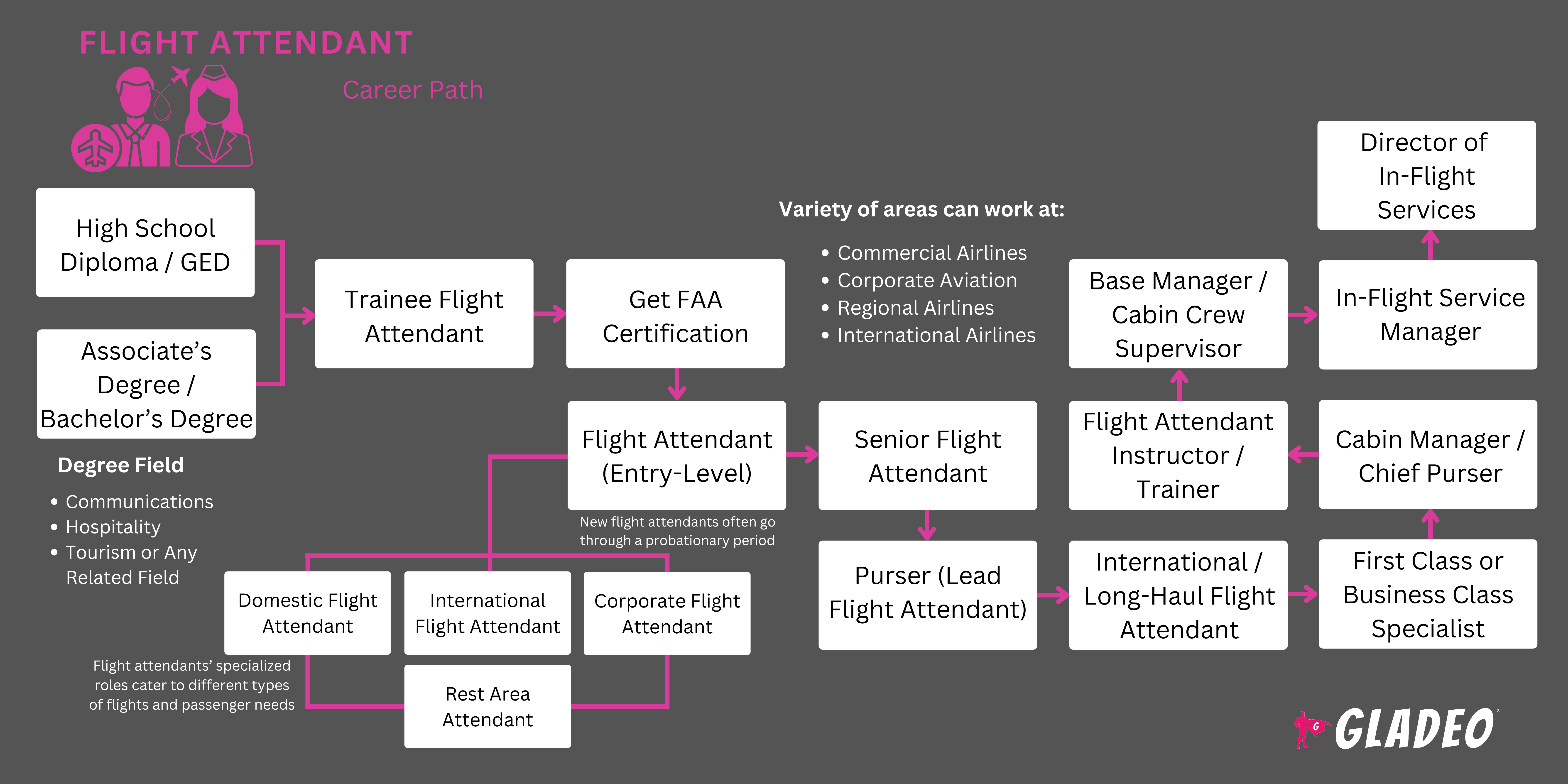
- Search airline career pages, job platforms like LinkedIn, Indeed, Glassdoor, and aviation hiring sites for roles such as “Flight Attendant,” “Cabin Crew,” or “In-Flight Service Crew.”
- Apply to regional airlines first, as they often provide more entry-level opportunities and training pathways into larger international carriers.
- Gain experience in customer-facing jobs such as hospitality staff, hotel front desk associate, restaurant server, retail sales associate, or tourism assistant to build service skills.
- Highlight any experience in customer service, teamwork, communication, and handling difficult situations on your résumé.
- Prepare to demonstrate strong interpersonal skills during interviews, including how you handle stress, solve problems, and work with diverse groups of people.
- Practice airline-style interview questions, including scenario-based questions about safety, passenger conflicts, and emergency situations.
- Build a professional LinkedIn profile that shows your communication skills, adaptability, travel interest, and experience working with people.
- Learn basic aviation terminology and familiarize yourself with airline safety procedures to show readiness during interviews and assessments.
- Improve your physical presentation and professionalism, as airlines often look for candidates who maintain a polished and confident appearance.
- Be prepared for group interviews and team exercises that test communication, teamwork, and customer service abilities.
- Stay flexible with relocation and scheduling, since many airlines require new hires to be based near major hubs or assigned irregular routes.
- Gain experience across different airline operations such as short-haul and long-haul flights, international routes, and premium cabin service to build a strong foundation in in-flight service and safety.
- Start by mastering core responsibilities such as safety procedures, passenger service, and emergency response, then gradually take on more responsibility during flights.
- Pursue additional training in areas like advanced safety procedures, emergency medical response, and leadership to qualify for senior cabin crew roles.
- Earn certifications in CPR, first aid, AED use, aviation safety, and customer service excellence to strengthen professional credibility.
- Apply for promotion opportunities such as Senior Flight Attendant, Lead Flight Attendant, or Purser roles that involve supervising cabin crew and managing cabin operations.
- Volunteer to take leadership roles during flights, such as coordinating service flow, assisting with new crew members, or handling passenger concerns.
- Build strong communication and leadership skills to effectively manage passengers, support team members, and coordinate with pilots and ground staff.
- Mentor and support newly hired flight attendants to demonstrate leadership ability and readiness for advancement.
- Stay updated on airline policies, safety regulations, and industry standards to maintain high professional performance.
Websites
- Airlines Careers Pages (e.g., major international and regional airline websites)
- Indeed
- Glassdoor
- Monster
- O*NET OnLine
- CareerOneStop.org
- FlightAttendantCareer.com
- AviationInstitute.org
- FAA (Federal Aviation Administration)
- IATA (International Air Transport Association)
- ICAO (International Civil Aviation Organization)
- CabinCrewHQ.com
- AviationJobs.com
- AirlineCareer.com
- SkyWest Airlines Careers / Regional Airline Career Portals
- Delta Air Lines Careers / United / American Airlines Career Pages
- Emirates Careers / Qatar Airways Careers / Singapore Airlines Careers
- Aviation Week
- FlightGlobal
Books
- Working in the Cabin Crew by Norman Currey
- The Essential Guide to Becoming a Flight Attendant by Patrick Smith
- Cabin Crew Interview Questions & Answers by Caitlyn Rogers
- Air Travel Survival Guide by Henry Harteveldt
- Cockpit Confidential by Patrick Smith
- How to Become a Flight Attendant by Carole “Sky” Smith
- The Flight Attendant Survival Guide by Carrie A. Traynor
- From the Galley to the Skies by various aviation authors
- The Complete Cabin Crew Interview Workbook by Caitlyn Rogers
Flight Attendants play a key role in ensuring passenger safety, comfort, and service during air travel. While the career offers exciting opportunities to travel and meet people from around the world, it can also involve irregular schedules, long hours, and time away from home. For this reason, it’s helpful to consider related career paths that still involve customer service, travel, hospitality, and working with people.
There is steady demand for qualified Flight Attendants, especially as global air travel continues to grow. However, airlines often require training, flexibility, and experience in customer-facing roles, and competition for positions can be strong.
There are related careers you might also want to consider, such as:
- Airline Customer Service Agent
- Airport Ground Staff / Passenger Service Agent
- Travel Agent or Travel Consultant
- Hotel Front Desk Associate
- Hospitality Manager
- Tourism Officer / Tourism Operations Staff
- Cruise Ship Staff (Guest Services or Hospitality Roles)
- Event Coordinator
- Customer Service Representative
- Corporate Concierge
- Air Cargo Customer Service Agent
- Flight Operations Assistant
Newsfeed

Featured Jobs
Online Courses and Tools