






Spotlights
Aging Specialist, Geriatric Care Manager, Elder Care Consultant, Gerontology Researcher, Senior Services Coordinator, Aging Services Specialist, Long-Term Care Administrator, Geriatric Social Worker, Elder Advocate, Aging Policy Analyst, Senior Health Educator, Gerontological Nurse
Imagine a world where every older adult experiences dignity, respect, and support tailored to their unique needs. Gerontologists play a crucial role in shaping this reality by improving the lives of seniors through research, education, and direct care.
Gerontologists study the physical, mental, and social aspects of aging. They work closely with healthcare providers, social workers, policy makers, and families to design programs and services that help older adults live healthier, more fulfilling lives. Daily tasks include conducting research on aging processes, assessing senior needs, developing community resources, and advocating for better elder care policies.
Using a blend of scientific research, counseling techniques, and community outreach tools, gerontologists apply their expertise to influence healthcare practices, social services, and public policies. Their work matters because it directly impacts the quality of life for millions of seniors and helps society prepare for an aging population.
- Making a real difference in seniors' lives by promoting independence and well-being.
- Contributing to groundbreaking research that informs elder care and aging policies.
- Collaborating with diverse teams including healthcare professionals, social workers, and community leaders.
- Seeing the positive impact of programs and services designed to support older adults and their families.
Working Schedule
Gerontologists typically work full-time in office, healthcare, or community settings. Some roles involve flexible hours, especially in research or consulting. Deadlines can be project-driven, with occasional pressure during grant applications or policy advocacy campaigns. Many gerontologists balance fieldwork with data analysis and team meetings.
Typical Duties
- Conduct research on aging-related physical, mental, and social changes.
- Develop and evaluate programs that support older adults’ health and social needs.
- Assess individual seniors’ needs and create personalized care plans.
- Collaborate with healthcare providers to improve elder care services.
- Advocate for policies that protect and empower older adults.
- Educate families and communities about aging and elder care resources.
- Analyze data on aging populations to inform public health strategies.
- Provide counseling and support for seniors and their caregivers.
- Coordinate with senior living facilities to improve quality of life.
- Write reports, grant proposals, and educational materials related to gerontology.
- Train staff and volunteers working with elderly populations.
- Organize community outreach events focused on aging awareness.
Additional Responsibilities
- Stay updated on the latest research and trends in aging and elder care.
- Participate in professional conferences and workshops.
- Mentor students or junior professionals entering the field.
- Manage budgets for aging programs or research projects.
- Collaborate with interdisciplinary teams on complex elder care cases.
- Help design public awareness campaigns about aging issues.
- Conduct evaluations of elder care services and recommend improvements.
- Serve on committees or advisory boards related to aging and senior services.
Morning often begins with reviewing research data or preparing assessments for clients. Gerontologists may hold meetings with healthcare teams or case managers to discuss senior care plans and program updates.
Midday is typically focused on direct communication with clients, conducting interviews, or community outreach. Some gerontologists spend this time writing reports, grant proposals, or educational content.
Afternoons might include training sessions for caregivers, policy advocacy work, or collaborating with local agencies to coordinate services. The day often ends with planning for upcoming projects or attending professional development seminars.
Soft Skills
- Empathy and compassion for older adults and their families
- Strong communication and active listening
- Problem-solving and critical thinking
- Patience and adaptability
- Collaboration and teamwork
- Cultural sensitivity and respect for diversity
- Organizational and time management skills
- Advocacy and negotiation abilities
- Analytical and research skills
- Teaching and mentoring capability
- Emotional resilience
- Attention to detail
Technical Skills
- Data collection and statistical analysis
- Research methodology and experimental design
- Assessment tools for physical and cognitive health
- Program development and evaluation
- Grant writing and fundraising
- Knowledge of healthcare systems and elder care regulations
- Use of specialized software for data management (e.g., SPSS, SAS)
- Report writing and presentation skills
- Technology to support elder care (e.g., telehealth platforms)
- Policy analysis and development
- Clinical Gerontologist: Focuses on diagnosing and treating mental health issues in older adults.
- Research Gerontologist: Conducts studies on aging processes and intervention outcomes.
- Community Gerontologist: Develops and manages programs for senior services in communities.
- Policy Gerontologist: Works on creating and influencing legislation to benefit the elderly.
- Geriatric Social Worker: Provides counseling and support services tailored to seniors.
- Long-Term Care Administrator: Oversees operations of senior living and care facilities.
- Health Promotion Specialist: Designs wellness programs specifically for aging populations.
- Educator in Gerontology: Teaches aging-related courses and trains professionals in the field.
- Hospitals and healthcare systems
- Senior living and assisted living facilities
- Government agencies focused on aging
- Nonprofit organizations serving older adults
- University research centers
- Community health organizations
- Policy think tanks specializing in elder affairs
- Home health care agencies
- Rehabilitation centers
- Public health departments
- Adult day care centers
- Advocacy groups for seniors
Gerontologists often face the pressure of balancing research demands with the immediate needs of seniors requiring support or intervention. The work can be emotionally challenging but deeply fulfilling.
Typical work hours are full-time, usually during regular business hours, but some positions may require evening or weekend outreach events or meetings. Deadlines around research publications or funding proposals can add intensity.
Professionals in this field must be willing to handle sensitive topics related to aging, including health decline and end-of-life issues. Patience, resilience, and a strong commitment to improving elder care are essential to thrive in this career.
- Growing use of technology in elder care, like telehealth and remote monitoring.
- Increased focus on mental health and cognitive disorders in aging populations.
- Development of age-friendly communities and environments.
- Expansion of interdisciplinary teams combining healthcare, social work, and policy expertise.
- Greater emphasis on personalized care plans for seniors.
- Research on aging and longevity continuing to evolve rapidly.
- Advocacy for policies addressing elder abuse and neglect.
- Integration of cultural competence in elder care services.
- Focus on preventive health to reduce chronic conditions in older adults.
- Growing demand for gerontologists due to aging global populations.
People who become gerontologists often show a natural empathy for older adults and a curiosity about social and health issues from a young age. They might enjoy volunteering at nursing homes or helping grandparents and elder relatives.
Many had early interests in science and social studies, combining a desire to understand human biology with a passion for helping people. They might have been drawn to school clubs focused on health sciences, psychology, or community service.
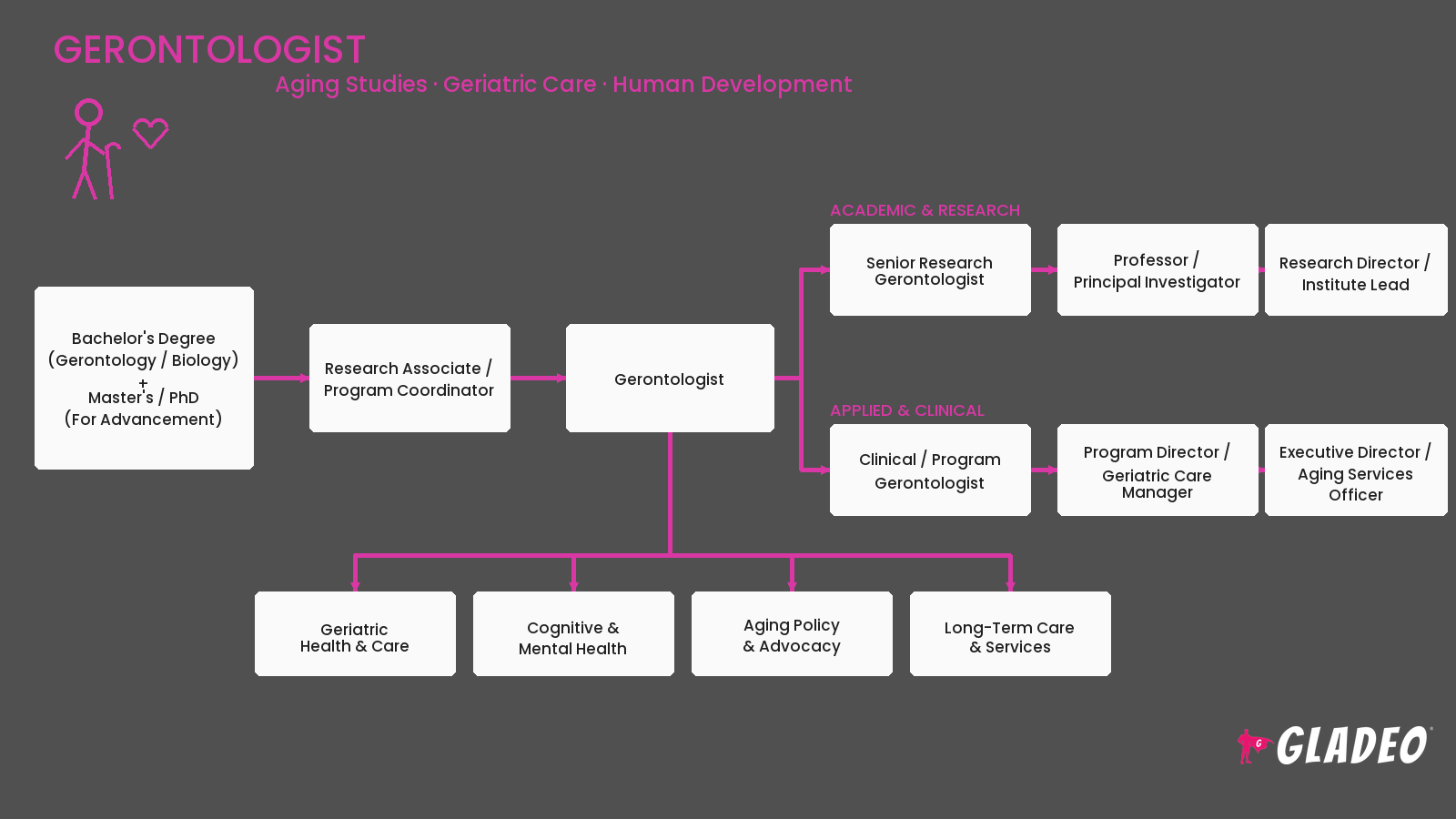
Becoming a gerontologist typically requires a bachelor’s degree in gerontology, psychology, social work, nursing, or a related field. Many professionals pursue graduate degrees to specialize further and increase career opportunities.
Students can take courses in relevant subjects such as:
- Psychology of Aging
- Human Development and Aging
- Sociology of Aging
- Health and Wellness in Older Adults
- Gerontological Research Methods
- Public Policy and Aging
- Social Work with Older Adults
- Healthcare Ethics
- Pharmacology for Older Adults
- Community Program Planning
Hands-on experience through internships or volunteering with senior populations is vital. Building a strong portfolio of research projects, community work, or clinical practice helps prepare for advanced study or entry-level roles. Continuing education keeps gerontologists updated on evolving practices and policies.
- Volunteer at nursing homes or senior centers to gain exposure to elder care.
- Take biology, psychology, and social studies courses to understand human development.
- Join health science or community service clubs to build relevant skills.
- Seek internships or summer programs related to healthcare or social work.
- Attend workshops or seminars on aging and elder care topics.
- Develop strong communication and research skills through school projects.
- Explore college programs with gerontology or related majors.
- Build relationships with mentors in healthcare or social services.
- Work on public speaking and advocacy skills.
- Participate in community service focused on diverse populations.
- Learn basic statistics and data analysis tools.
- Practice empathy and active listening in everyday interactions.
- Look for programs accredited in gerontology or health sciences.
- Choose schools offering hands-on internships or fieldwork with seniors.
- Select courses that combine science, social work, and policy education.
- Find programs with strong faculty expertise in aging research.
- Consider schools with partnerships in healthcare or community organizations.
- Check for opportunities to participate in research projects or labs.
- Evaluate availability of scholarships or financial aid for healthcare fields.
- Seek programs that offer career counseling and placement services.
- Ensure curriculum includes technology use in elder care.
- Look for programs emphasizing cultural competence and diversity.
- Check if programs offer certification preparation in gerontology.
- Prioritize schools with flexible learning options for working students.
- Apply for internships or assistant roles in senior centers, hospitals, or community programs.
- Volunteer to assist with elder care or outreach events to build experience.
- Develop a basic portfolio documenting research or community work.
- Network with professionals through conferences or local aging organizations.
- Seek entry-level roles such as geriatric care assistant or program coordinator.
- Learn to use data management and research software on the job.
- Practice communication skills with clients and interdisciplinary teams.
- Attend workshops to improve knowledge about elder care policies.
- Prepare for interviews by understanding common challenges in aging services.
- Ask for feedback to improve assessment and counseling techniques.
- Stay informed about current trends in gerontology and elder care.
- Consider joining professional associations for networking and resources.
- Pursue advanced degrees such as a Master's or PhD in gerontology or related fields.
- Gain certifications in geriatric care management or counseling.
- Build a track record of successful program development or research publications.
- Develop leadership and project management skills to oversee teams.
- Expand professional networks through conferences and interdisciplinary collaborations.
- Seek opportunities to influence policy or lead advocacy efforts.
- Stay current with emerging technologies and best practices in elder care.
- Mentor junior professionals and contribute to education and training.
Websites:
- American Geriatrics Society (americangeriatrics.org)
- Gerontological Society of America (geron.org)
- National Institute on Aging (nia.nih.gov)
- Aging Life Care Association (aginglifecare.org)
- National Council on Aging (ncoa.org)
- The Gerontological Nursing Association (gng.org)
- Eldercare Locator (eldercare.acl.gov)
- Society for Social Work Leadership in Health Care (sswlhc.org)
- Academy for Gerontology in Higher Education (aghe.org)
- Association for Gerontology in Higher Education (aghe.org)
- Centers for Disease Control and Prevention – Healthy Aging (cdc.gov/aging)
- LeadingAge (leadingage.org)
- International Association of Gerontology and Geriatrics (iagg.info)
- National Adult Day Services Association (nadsa.org)
Books:
- Successful Aging by Daniel J. Levitin
- The Longevity Economy by Joseph F. Coughlin
- Aging and the Life Course by Jill Quadagno
- Handbook of the Psychology of Aging by K. Warner Schaie and Sherry L. Willis
- Gerontology: Perspectives and Issues by Janet M. Wilmoth and Kenneth Ferraro
If a career as a gerontologist doesn’t feel like the perfect fit, there are many related paths where your passion for aging and helping others can shine.
- Social Worker specializing in elder care
- Healthcare Administrator focusing on senior services
- Physical Therapist working with older adults
- Public Health Educator in aging populations
- Mental Health Counselor for seniors
- Nursing with a focus on geriatrics
- Rehabilitation Specialist for elderly patients
- Policy Analyst in healthcare or senior affairs
- Community Outreach Coordinator for aging programs
- Long-Term Care Facility Manager
Newsfeed

Featured Jobs
Online Courses and Tools