





Spotlights
Equine Trainer, Horse Riding Instructor, Equestrian Coach, Dressage Trainer, Jumper Trainer, Racehorse Trainer, Equestrian Trainer, Horsemanship Trainer, Colt Starter, Horse Behavior Specialist, Rodeo Trainer, Western Riding Trainer, Horse Breeder and Trainer, Stable Manager/Trainer, Equine Behavior Consultant
Horses are amazing, graceful creatures that have been domesticated for nearly 6,000 years! They’re incredibly fast for their size, with some breeds able to run up to 55 miles per hour. They’re heavy, with average weights between 900 and 2,200 lbs. And they’re powerful, which is why we use the term “horsepower” as a unit of measurement for engine performance.
In addition to these characteristics, horses are also highly trainable. That’s why humans have relied on them for so many purposes over the years. But it takes time and patience to fully train a horse, which is where expert Horse Trainers come in!
Horse Trainers are dedicated professionals who encourage certain behaviors, boost performance, and ensure the overall well-being of the horses under their care. They may focus on training for specific purposes, such as Western riding, racing, showjumping, or equestrian sports. They may also work as rehabilitation trainers who specialize in helping injured animals.
While duties vary depending on what the horse is being trained for, in general, Horse Trainers ensure horses can understand and respond to human commands and signals safely and effectively. They get to know each horse’s unique personality and adapt training methods to fit individual needs. In addition, they work with owners to make sure horses receive proper care, exercise, and nutrition.
- Preparing horses for safe, successful experiences
- Contributing to equine health and wellbeing
- Helping owners and riders improve their connection and communication with their horses
- Building a trusting relationship with horses while enjoying an active lifestyle
Working Schedule
- Horse Trainers often work long hours with early mornings and weekends common. They also frequently travel for shows, races, or other events.
Typical Duties
- Conduct initial assessments of a horse’s temperament, abilities, and potential training needs.
- Design and implement training programs tailored to the owner’s desired outcomes, the specific riding disciplines (if applicable), and the horse’s capabilities.
- Encourage desired behaviors (like obeying commands and responding to cues) through reward-based reinforcement such as giving treats, grooming, and soothing speech.
- Establish trust with the horses being trained. Gently discourage undesirable habits like aggression or resistance.
- Provide regular exercise and conditioning via riding, lunging, and groundwork to boost the horse’s strength and stamina.
- Administer basic care tasks, such as grooming, tacking up, and checking equipment.
- Monitor health and behavioral issues. Share concerns with riders, owners, farmers, veterinarians, and farriers, as needed.
- Instruct owners and riders on best practices for handling and caring for their horses, such as sharing dietary suggestions based on the horse’s activities and environmental conditions.
- Horses are herbivores that eat grass and hay but may also need some fruit and vegetable matter, grains, and salt. They also require plenty of fresh water!
- There is a wide range of foods horses must avoid consuming, too!
- Note, in some cases, qualified Horse Trainers also serve as riding instructors. They may even provide private lessons to local students and groups!
Additional Responsibilities
- Keep training areas and equipment clean and organized. Order and receive supply shipments.
- Establish a schedule for feeding, watering, bathing, grooming, and exercise.
- Wash and clean equipment, gear, or other items that come into contact with horses.
- Keep records of diets, health, weight, medical treatments, and notable issues.
- Arrange medical treatment and checkups with veterinarians.
Administer supplements or prescribed medications, per instructions. - Provide customer service, answer questions, and offer recommendations to owners such as which horses to buy.
- Arrange for safe transportation and safe, sturdy exhibit enclosures.
- Mentor junior trainers.
A Horse Trainer starts the day by checking on the horses in their care, making sure they are healthy, comfortable, and ready for training. They may inspect each horse for signs of injury or illness, check its tack and equipment, and review the day's training goals. Before riding, they often groom the horses, lead them through warm-up exercises, and observe their behavior to understand their energy levels, temperament, and readiness to work.
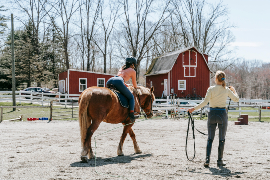
Throughout the day, Horse Trainers teach horses to respond to voice commands, body movements, reins, and other cues. Depending on their specialty, they may work on basic obedience, riding skills, jumping, racing techniques, or correcting unwanted behaviors. Some trainers ride the horses themselves, while others work from the ground using lead ropes, lunging equipment, or other training tools. They also monitor each horse's progress, adjust their methods to suit its personality and ability, and teach owners or riders how to communicate with their horses safely.
In the afternoon, Horse Trainers may conduct additional training sessions, practice specific skills, or prepare horses for competitions, shows, or trail riding. They may consult veterinarians, farriers, stable managers, and horse owners to support the animals' health and development. Before finishing the day, they cool down the horses, check for soreness or injuries, clean equipment, and record training progress. The work requires patience, physical stamina, confidence, and a strong understanding of animal behavior, but it can be rewarding for people who enjoy building trust with horses and helping them reach their potential.
Liberty Trainer: Trains horses to respond to body language and voice cues while moving freely without a lead rope or reins.
Soft Skills
- Adaptable
- Analytical
- Assertiveness
- Attention to detail
- Commitment
- Compassion
- Curiosity
- Detail-oriented
- Energetic
- Independent
- Monitoring
- Objectivity
- Organized
- Patience
- Safety consciousness
- Sound judgment
Technical Skills
- Arena maintenance tools
- Basic veterinary care and first aid
- Cleaning and disinfecting products
- Cones and poles for training exercises
- Coordination and physical stamina
- Equine handling and behavior analysis
- First-aid kits for horses
- Fly spray and fly masks
- Horse feed and supplements
- Horse grooming and care
- Horse massage and horse palpitation
- Recordkeeping
- Riding equipment, such as helmets, boots, saddles, bridles, lunging equipment, etc.
- Riding proficiency across disciplines
- Sanitation and disinfecting procedures
- Stable management and supplies
- Equestrian centers and riding schools
- Racing stables
- Competition stables
- Self-employed trainers
- Animal rehabilitation centers, shelters, and hospitals
- Farms and ranches
- Basic Obedience Trainer: Teaches horses to respond to basic commands, stand calmly, lead properly, and cooperate during handling.
- Starting Trainer: Introduces young or inexperienced horses to saddles, bridles, riders, and the fundamentals of being ridden.
- Riding Trainer: Trains horses to respond to riders' cues and develop balanced, controlled, and reliable riding skills.
- Dressage Trainer: Trains horses to perform precise movements, maintain balance, and respond to subtle riding cues.
- Show Jumping Trainer: Prepares horses to jump over obstacles safely and accurately during competitions.
- Racehorse Trainer: Conditions and trains racehorses to improve speed, stamina, fitness, and performance on the track.
- Western Riding Trainer: Trains horses for Western riding disciplines, such as reining, ranch riding, and Western pleasure.
- Roping Horse Trainer: Prepares horses to work with riders in roping events and develop the speed, responsiveness, and positioning those events require.
- Barrel Racing Trainer: Trains horses to navigate a barrel pattern quickly while maintaining balance, agility, and control.
- Endurance Horse Trainer: Builds a horse's stamina and fitness for long-distance riding competitions.
- Trail Horse Trainer: Prepares horses to navigate outdoor trails, uneven terrain, water crossings, and unfamiliar surroundings.
- Therapeutic Riding Horse Trainer: Helps prepare calm, reliable horses for therapeutic and adaptive riding programs under appropriate professional guidance.
- Behavioral Rehabilitation Trainer: Works with horses that show fear, anxiety, aggression, or other challenging behaviors, using appropriate training methods to build confidence and safer responses.
Horse Trainers must exercise sufficient caution around horses – and ensure others know how to act and what things to avoid for their safety. In general, horses are social and often enjoy human companionship. However, they are large, heavy animals that can be easily startled. Even if they don’t mean to, they can injure a person by accidentally ramming, kicking, or biting them.
In addition, some horses may not feel comfortable with people and can be aggressive or fearful. Trainers have to be ready to deal with such animals compassionately while working toward goals. Other potential dangers include falling off a horse that bucks, trips, or jumps and throws its rider or jockey off. Even experienced trainers can get hurt in a split second if something goes wrong, so they have to be constantly aware of the animal’s mood, the surrounding circumstances (such as cheering crowds), and potential risks (such as loud noises).
It takes years to learn how to train horses properly. It also requires tons of patience, commitment, and stamina. The work involves long hours with early mornings and weekend hours common. In addition, Horse Trainers are frequently exposed to dusty and sometimes smelly conditions, as well as all sorts of weather.
Modern horse training involves building partnerships with horses, known as natural horsemanship. Instead of using control-based techniques, Horse Trainers try to use methods that help horses respond willingly. This approach emphasizes understanding and respect, making training a more positive experience while building trust between horse and trainer.
Horse mental health is also becoming a priority, with trainers using relaxation exercises and non-riding activities to keep horses calm, happy, and motivated! Technology is also impacting the field, such as wearable devices to track health and performance data. This gives trainers the insights they need to create precision-tailored workouts that keep horses healthy and prepared.
Most trainers had an early interest in horses and may have participated in equine youth programs. They were likely active in outdoor activities and demonstrated patience, curiosity, and a willingness to learn about animal behavior.
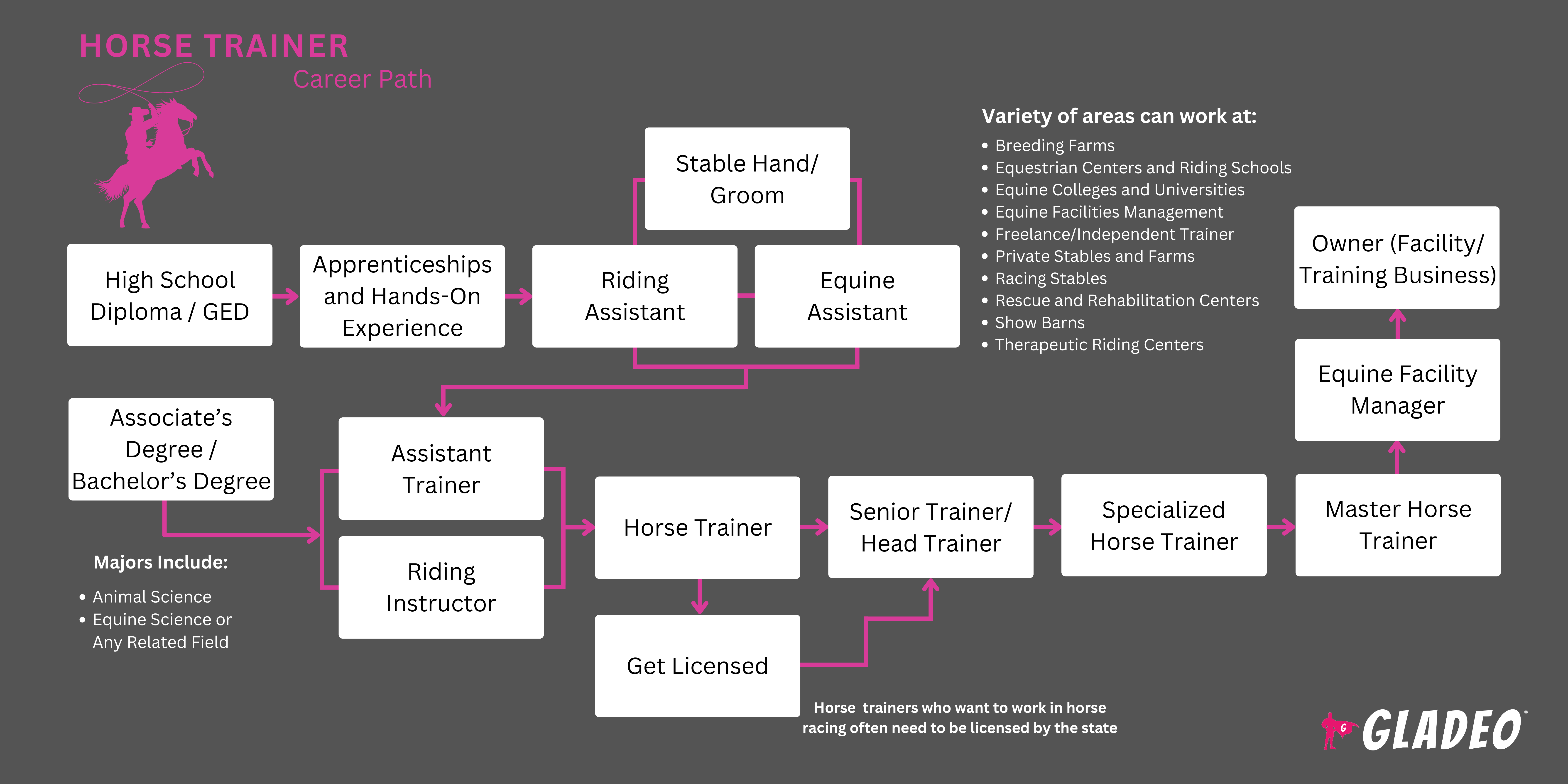
- Horse Trainers need at least a high school diploma plus practical experience around horses. Many get that experience through apprenticeships or from taking equine science classes at a community college or university.
- Horsemanship
- Horse anatomy and physiology
- Facility management
- Horse behavior
- Animal ethics and welfare
- Horse nutrition and disease
- Sometimes trainers are also riding instructors. Certifications related to instructing can be beneficial, including:
- Certified Horsemanship Association - Instructor Certification or Equine Facility Manager
- American Riding Instructors Association - Instructor Certification
- United States Hunter Jumper Association - Trainer Certification Program
- Trainers should engage in continuous learning to refine and expand their skills.
- Some states require racehorse trainers and riding instructors to be licensed.
- In addition, those operating their own business will need to:
- Obtain a business license and lease or purchase a suitable stable and riding area free from distractions and outside noises.
- Brand and advertise their business.
- Establish an online presence via a website, Google Business profile, social media, and other suitable platforms.
- Collaborate with horse owners, riders, jockeys, and equine associations to build a client base.
- Develop an efficient way for clients to book appointments and make payments.
- Build and maintain good client relations for repeat business. Implement client retention methods, such as follow-up emails or loyalty programs.
- Order supplies, such as:
• Saddles and saddle pads
• Bridles and bits
• Lunging equipment (e.g., lunge lines, whips)
• Training aids (e.g., martingales, side reins)
• Helmets and protective gear for riders
• Grooming supplies (e.g., brushes, hoof picks, mane combs)
• Fly spray and fly masks
• First-aid kits for horses
• Horse feed and supplements
• Water buckets and feed containers
• Blankets and sheets for different weather conditions
• Arena maintenance tools (e.g., drag rakes, watering equipment)
• Cones and poles for training exercises
• Stable supplies (e.g., muck buckets, pitchforks, shovels)
• Cleaning and disinfecting products
• Horse boots and wraps
• Horse halters and lead ropes
• Record-keeping supplies (e.g., training logs, health records)
- Obtain insurance for liability, professional indemnity, and property coverage.
- Track income and expenses. Submit state and federal taxes.
- Take courses in biology, animal science, and other subjects related to animal care.
- Join equestrian clubs, 4-H, or other horse-related organizations.
- Volunteer at horse stables, riding schools, or equine rescue centers.
- Learn basic horse care, including grooming, feeding, hoof care, and recognizing signs of illness.
- Take riding lessons to develop balance, confidence, and safe horse-handling skills.
- Observe experienced Horse Trainers and learn about different training methods and riding disciplines.
- Develop patience, communication, and observation skills by working with horses.
- Participate in horse shows, equestrian events, or local riding competitions.
- Seek internships or apprenticeships at horse farms, training facilities, or equestrian centers.
- Consider college courses in equine science, animal behavior, or equine management.
- Look for programs that offer courses in equine science, horse behavior, animal care, and stable management.
- Choose a program that provides hands-on experience handling, grooming, and training horses.
- Check whether students can learn different riding disciplines, such as dressage, show jumping, Western riding, or racing.
- Look for instruction in horse behavior, learning theory, and humane training techniques.
- Choose programs that teach equine health, nutrition, anatomy, fitness, and injury prevention.
- Look for opportunities to work with horses of different ages, temperaments, and experience levels.
- Check whether the program offers internships or apprenticeships with professional Horse Trainers, riding schools, or equestrian facilities.
- Seek training in stable safety, riding equipment, emergency procedures, and proper horse-handling practices.
- Look for instructors with professional horse-training experience and a strong understanding of equine welfare.
- Check whether the program includes business skills for trainers who want to operate their own training facility.
- Consider programs that provide experience preparing horses and riders for shows, competitions, or other equestrian activities.
- Verify whether the program offers recognized certifications or industry qualifications relevant to your intended career path.
- Complete the necessary training for the job you want to apply for.
- Reach out to your network in the equestrian community. Ask for tips about job openings. Many horse-related jobs are found through personal connections!
- Attend equestrian events and join associations like the Certified Horsemanship Association to stay informed of job opportunities.
- Ask former coworkers, supervisors, teachers, or clients if they’ll serve as personal references. Don’t give out their contact information without permission.
- Scan job portals like Indeed.com, Glassdoor, ZipRecruiter, and Craigslist.
- Apply for full or part-time jobs, internships, or apprenticeships.
- Review job posts for keywords and phrases, and work those into your application materials (if applicable). Popular keywords may include:
- Equine Behavior
- Horse Handling
- Training Techniques
- Riding Instruction
- Animal Nutrition
- Health and Wellness
- Stable Management
- Behavioral Modification
- Horsemanship Skills
- Safety Protocols
- Review sample Horse Trainer resumes and research potential interview questions.
- Include a link to your online portfolio showing your work with horses, including photos or videos (if permitted) that demonstrate your handling and training skills.
- Stay up-to-date on equine industry trends and techniques to showcase knowledge and adaptability in interviews.
- Be very familiar with the vocabulary of the horse training field.
- During interviews: Dress professionally, express genuine enthusiasm for working with horses, and emphasize your commitment to high standards and safe practices.
- Avoid coming across as a “know-it-all.” Many employers value candidates who are open-minded, adaptable, and willing to learn through ongoing training and guidance.
- Establish short and long-term career goals. Regularly evaluate those goals to ensure you’re on track. Be willing to adapt as new opportunities or specializations arise in the field.
- Build a positive reputation by consistently training horses safely and effectively.
- Attend continuing education workshops and obtain specialized certifications to demonstrate expertise.
- Specialize in a particular riding discipline or skill to attract clients in that area.
- Keep networking within the equestrian community, including coaches, veterinarians, and riders.
- Stay organized and on schedule. Find ways to improve efficiency and productivity, while staying compliant with employer policies, organizational rules, and state or federal regulations.
- Participate in professional organizations like the United States Equestrian Federation to learn, make friends, and discover opportunities (see our list of Recommended Resources).
- Diversify your skills by learning about horse rehabilitation or equine-assisted therapies.
- Seek out mentorship from experienced trainers who specialize in your areas of interest.
- If there’s no room to grow with your current employer, consider applying at a larger organization — or starting your own business. Make a rock-solid business plan and consult seasoned advisors for tips.
- Invest in digital marketing skills to grow your reputation if you’re considering self-employment or seeking high-profile clients.
Websites
- American Farriers Journal
- American Humane Association
- American Paint Horse Association
- American Quarter Horse Association
- American Riding Instructors Association
- American Society for the Prevention of Cruelty to Animals
- American Society of Animal Science
- American Veterinary Society of Animal Behavior
- Center for Disease Control
- Certified Applied Animal Behaviorists
- Certified Horsemanship Association
- Equestrian Trade News
- Equine Science Society
- Equine Veterinary Journal
- Horse & Rider
- Horse Illustrated
- International Horsemanship Association
- National Barrel Horse Association
- National Reining Horse Association
- People for the Ethical Treatment of Animals
- Professional Association of Therapeutic Horsemanship International
- Professional Rodeo Cowboys Association
- Quarter Horse News
- SPANA
- Stable Management
- The Chronicle of the Horse
- The Horse: Your Guide to Equine Health Care
- United States Dressage Federation
- United States Equestrian Federation
- United States Eventing Association
- United States Hunter Jumper Association
- United States Pony Club
- Walking Horse Trainers Association
- Warmbloods Today
Books
- 101 Ground Training Exercises for Every Horse & Handler, by Cherry Hill
- Groundwork Training for Your Horse: Develop a Deeper Bond with Your Horse Through a Range of Exercises and Games, by Lesley Bayley
- Horse Brain, Human Brain: The Neuroscience of Horsemanship, by Janet Jones PhD
- The Modern Horseman’s Countdown to Broke-New Edition: Real Do-It-Yourself Horse Training in 33 Comprehensive Lessons, by Sean Patrick and Charles Hilton
- The Original Horse Bible: The Definitive Source for All Things Horse, by Moira C. Reeve and Sharon Biggs
Horse Trainers are the key to fun, safe riding experiences in a variety of settings. These are very hands-on jobs and, though rewarding, they do come with associated challenges and risks. If you’re interested in exploring some related occupations, check out the suggestions below!
- Animal Behaviorist
- Animal Breeder
- Animal Caretaker
- Animal Control Worker
- Animal Nutritionist
- Animal Photographer
- Animal Trainer
- Equestrian Coach
- Farmer or Rancher
- Marine Biologist
- Stable Manager
- Veterinarian
- Veterinary Assistant
- Zoologist and Wildlife Biologist
Newsfeed

Featured Jobs
Online Courses and Tools