







Spotlights
Claims Adjuster, Claims Examiner, Claims Investigator, Insurance Investigator, Loss Adjuster, Claims Analyst, Claims Representative, Insurance Claims Specialist, Property Claims Adjuster, Casualty Adjuster, Liability Claims Adjuster, Auto Claims Adjuster
When someone faces a loss from an accident, disaster, or damage, the smooth resolution of their insurance claim can make a huge difference in their recovery and peace of mind. Insurance Adjusters, Examiners, and Investigators are the professionals who ensure that claims are handled fairly and accurately, helping people and businesses get the support they need when they need it most.
These professionals investigate insurance claims by reviewing policies, examining damages, interviewing claimants and witnesses, and determining the validity and extent of claims. They work closely with insurance companies, policyholders, repair shops, legal teams, and sometimes law enforcement to gather facts and make informed decisions that balance customer needs with company guidelines.
Using specialized software, inspection tools, and investigative techniques, they analyze reports and data to assess claims efficiently. Their role is vital because they protect against fraud, keep insurance costs reasonable, and provide crucial assistance during stressful times for claimants, making sure insurance benefits are delivered appropriately.
- Helping people recover from losses by guiding them through complex claim processes
- Solving puzzles by investigating and verifying claim details to ensure fairness
- Using a mix of analytical thinking and interpersonal skills to resolve disputes and build trust
- Playing a key role in keeping insurance systems fair, sustainable, and honest
Working Schedule
Insurance Adjusters, Examiners, and Investigators typically work full-time, often during standard business hours. However, in the event of large-scale disasters or urgent claims, they may work evenings or weekends to help policyholders quickly. Many work in office environments but also spend time visiting sites for inspections or interviews. The job can be a mix of steady workflow and periods of high pressure, especially when deadlines or claim backlogs build up.
Typical Duties
- Review insurance policies to understand coverage details
- Investigate claims by inspecting damaged property or vehicles
- Interview claimants, witnesses, and experts to gather information
- Analyze reports, photos, and documents related to claims
- Determine the validity and amount of insurance claims
- Negotiate settlements with claimants and legal representatives
- Prepare detailed reports and documentation of findings
- Collaborate with insurance agents, legal teams, and repair professionals
- Use software systems to track claims status and history
- Identify possible fraudulent claims and escalate as needed
- Stay updated on insurance laws and regulations
- Manage multiple claims simultaneously and meet deadlines
Additional Responsibilities
- Maintain accurate records and case files
- Communicate clearly with clients to explain claim decisions
- Attend mediation or legal proceedings when required
- Recommend improvements to claims handling procedures
- Participate in ongoing training and certification programs
- Monitor trends in claims to detect emerging risks
- Coordinate with law enforcement on suspected fraud cases
- Assist in developing company policies regarding claims management
A typical morning might start by reviewing new claims assigned overnight and prioritizing urgent cases. The adjuster checks emails and messages from clients or team members, then plans site visits or phone interviews for the day.
Midday often involves visiting accident scenes, inspecting damaged property, or conducting interviews with claimants and witnesses. They gather evidence firsthand, take notes, and photograph damage to build a clear picture of the claim.
Afternoons are spent back at the office reviewing collected information, entering data into claims software, and preparing detailed reports. They meet with legal or insurance teams to discuss complex claims and may negotiate settlements or approve payments before wrapping up communications with clients.
Soft Skills
- Strong communication and listening skills
- Attention to detail and thoroughness
- Critical thinking and problem-solving
- Empathy and customer service orientation
- Organization and time management
- Negotiation and conflict resolution
- Adaptability and flexibility
- Integrity and ethical judgment
- Teamwork and collaboration
- Stress management and patience
- Curiosity and investigative mindset
- Decision-making under pressure
Technical Skills
- Knowledge of insurance policies and terminology
- Proficiency with claims management software
- Ability to analyze technical reports and documents
- Basic understanding of legal and regulatory requirements
- Skill in conducting interviews and investigations
- Familiarity with property and vehicle damage assessment
- Report writing and documentation
- Use of digital tools like cameras and mobile devices for inspections
- Data entry and database management
- Understanding fraud detection techniques
- Property Claims Adjuster: Focuses on claims related to homes, buildings, and physical property damage.
- Casualty Adjuster: Handles claims involving injury or liability from accidents or negligence.
- Auto Claims Adjuster: Specializes in vehicle damage and accident claims.
- Liability Claims Examiner: Reviews claims to determine legal responsibility and coverage.
- Fraud Investigator: Investigates suspicious or potentially fraudulent claims.
- Workers’ Compensation Examiner: Focuses on claims related to workplace injuries and benefits.
- Health Insurance Claims Adjuster: Deals with medical coverage and reimbursement claims.
- Catastrophe Adjuster: Mobilizes rapidly after natural disasters to assess large numbers of claims.
- Insurance companies (property, casualty, health)
- Government insurance agencies
- Third-party claims adjusting firms
- Self-insured corporations
- Legal firms specializing in insurance cases
- Auto repair and appraisal companies
- Disaster recovery organizations
- Workers’ compensation boards
- Fraud investigation units
- Risk management firms
- Healthcare providers and insurers
- Non-profit organizations assisting victims of disasters
Insurance Adjusters work under significant pressure to process claims accurately and fairly, often balancing conflicting interests between policyholders and insurance companies. They must handle sensitive situations with empathy while maintaining professional objectivity.
Long hours can occur, especially during disaster response or when claim volumes surge. Fieldwork can involve travel to inspection sites, sometimes in uncomfortable or hazardous conditions, requiring stamina and resilience.
The job demands patience for repetitive tasks like detailed report writing and data analysis. Adjusters must be prepared for frequent revisions and re-assessments as new information surfaces, which can be mentally taxing but is crucial for fair outcomes.
- Increasing use of digital claims management platforms and mobile apps
- Growth in remote inspections using drones and video technology
- Advanced data analytics to detect fraud and assess risk
- Automation of routine claims processing tasks
- Enhanced customer self-service portals and chatbots
- Rising importance of cybersecurity in handling sensitive claim data
- Integration of artificial intelligence for damage assessment
- More frequent natural disasters increasing claims complexity
- Growing regulatory scrutiny and compliance requirements
- Shift toward specialized adjusters for complex claims
Many people who become Insurance Adjusters enjoyed activities that involved problem-solving and investigative thinking, such as puzzles, detective stories, or science experiments. They often showed curiosity about how things work and a desire to get to the truth behind situations.
Early interests in helping others, understanding rules, and communicating clearly also point toward this career. Kids who liked organizing information, debating fairness, or learning about law and safety might find this path rewarding.
Most Insurance Adjusters, Examiners, and Investigators start with a high school diploma and pursue further education or training, such as an associate's or bachelor's degree in fields like business, finance, or insurance. Licensing is often required and varies by state, so specialized courses and certifications are important.
Students can take courses in relevant subjects such as:
- Business Law
- Insurance Principles
- Risk Management
- Investigation Techniques
- Accounting
- Communication Skills
- Ethics in Insurance
- Computer Applications
- Report Writing
- Customer Service
Hands-on experience through internships or entry-level positions is critical to build practical skills. Many employers provide on-the-job training and support for licensing exams. Developing a strong portfolio of case studies and learning to use industry software will boost career prospects.
- Take math classes focusing on statistics and finance
- Enroll in business and economics courses
- Join debate or public speaking clubs to develop communication skills
- Participate in mock trials or law-related activities
- Volunteer in community service to build empathy and customer skills
- Learn computer skills, especially spreadsheet and database software
- Seek internships or summer jobs with insurance agencies
- Study ethics and critical thinking
- Explore online courses on insurance basics
- Attend career fairs focused on business and finance
- Look for programs with insurance or risk management concentrations
- Choose schools offering internships or industry connections
- Check for courses in investigative techniques and legal studies
- Verify availability of certifications preparation (e.g., CIC, AIC)
- Ensure curriculum includes emerging technology in claims processing
- Select programs with strong communication and writing components
- Prefer schools with small class sizes for personalized mentoring
- Look for faculty with real-world insurance experience
- Check if programs offer career placement assistance
- Consider programs that teach data analysis and fraud detection
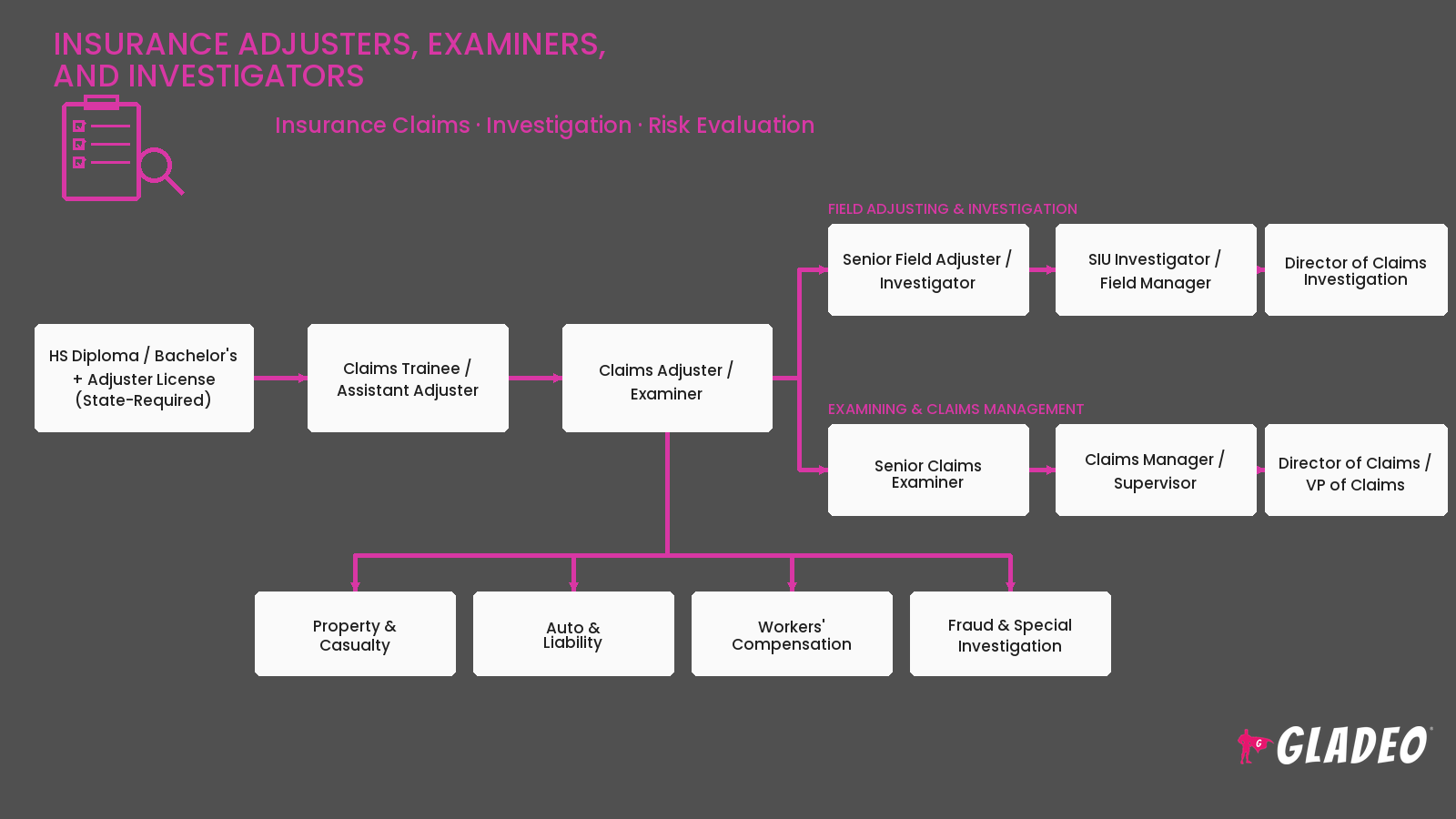
- Apply for entry-level claims assistant or clerk positions
- Build a portfolio by shadowing experienced adjusters
- Network with professionals at industry events or online forums
- Prepare for licensing exams early
- Practice clear and concise report writing
- Develop skills in customer communication
- Learn to use claims management software
- Volunteer for disaster response teams if possible
- Seek mentorship programs within insurance companies
- Stay updated on insurance laws and regulations
- Practice negotiation and interviewing techniques
- Gain experience with different types of claims
- Earn professional certifications like Chartered Property Casualty Underwriter (CPCU)
- Develop expertise in specialized claims areas
- Take leadership or supervisory roles managing teams
- Build strong relationships with legal and repair professionals
- Stay current with industry trends and technology
- Improve skills in data analysis and fraud prevention
- Seek opportunities to handle complex or high-value claims
- Expand professional network through associations
Websites:
- National Association of Insurance Commissioners (NAIC)
- The Institutes (insurance education)
- National Association of Professional Insurance Adjusters (NAPIA)
- Insurance Information Institute (III)
- Claims and Litigation Management Alliance (CLM)
- International Association of Special Investigation Units (IASIU)
- Society of Claim Law Associates (SCLA)
- American Association of Insurance Services (AAIS)
- Association of Claims Professionals (ACP)
- Risk and Insurance Management Society (RIMS)
- Insurance Journal
- AdjusterPro
- Property Casualty 360
- National Association of Independent Insurance Adjusters
Books:
- Claims Adjusting Handbook by Jonathan M. Cohen
- Property and Casualty Insurance Concepts Simplified by Christopher J. Boggs
- Essentials of Insurance Adjusting by David L. Jamison
- Insurance Investigation Techniques by Thomas J. Kane
- Fraud Detection for Insurance Professionals by Michael J. Comer
If you find the insurance adjuster path isn’t the perfect fit, there are several related careers where your investigative, analytical, and communication skills can shine.
- Insurance Underwriter
- Risk Analyst
- Claims Processor
- Loss Control Specialist
- Legal Assistant in Insurance Law
- Customer Service Representative
- Compliance Officer
- Fraud Analyst
- Accident Investigator
- Insurance Sales Agent
Newsfeed

Featured Jobs
Online Courses and Tools