






Spotlights
IPM Specialist, Pest Management Consultant, Pest Control Advisor, Agricultural Pest Manager, Crop Protection Specialist, Pest Ecologist, Integrated Pest Management Coordinator, Pest Control Scientist, Pest Prevention Analyst, Pest Control Technician, Agricultural Extension Agent, Biological Control Specialist
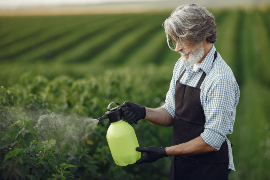
Imagine a world where farmers grow healthy crops without relying heavily on harmful chemicals, protecting both the environment and the food we eat. Integrated Pest Management Specialists make this possible by developing smart strategies to control pests in a safe and sustainable way.
Integrated Pest Management Specialists analyze pest populations and environmental conditions to create customized pest control plans that reduce risks to crops, people, and ecosystems. They collaborate closely with farmers, agricultural scientists, government agencies, and environmental groups to monitor pest trends, recommend biological or mechanical controls, and advise on pesticide use only when necessary. Their goal is to balance effective pest control with environmental stewardship and human health.
Using scientific methods, field surveys, and specialized software, these specialists gather data on pest behavior and environmental impact. They rely on tools such as population modeling, geographic information systems (GIS), and laboratory testing to guide their decisions. Their work is crucial in promoting sustainable agriculture, minimizing chemical pesticide use, and protecting biodiversity while helping farmers maintain productive, healthy crops.
- Contributing to healthier food production with less environmental harm.
- Helping farmers solve complex problems through science and innovation.
- Seeing ecosystems thrive thanks to balanced pest management strategies.
- Making a real difference in community health and sustainable agriculture practices.
Working Schedule
Integrated Pest Management Specialists often work full-time, with schedules that vary by season. During planting and growing seasons, they may spend long hours outdoors conducting field surveys and inspections. Work environments blend office settings for data analysis and meetings with fieldwork on farms or research sites. Many specialists balance routine monitoring with urgent problem-solving when pest outbreaks occur, and some work as consultants with flexible schedules or travel to multiple sites.
Typical Duties
- Conduct field surveys to identify pest species and assess population levels.
- Collect and analyze environmental data related to pest habitats.
- Develop integrated pest management plans tailored to specific crops and regions.
- Advise farmers and agricultural workers on pest prevention and control methods.
- Monitor the effectiveness of pest control techniques and adjust strategies accordingly.
- Train farmers and agricultural staff on safe pesticide use and alternative methods.
- Collaborate with researchers to study pest behavior and resistance.
- Report findings and recommendations to government agencies and stakeholders.
- Promote use of biological controls such as beneficial insects or microbes.
- Evaluate risks of pest control methods to human health and the environment.
- Implement GIS and data modeling tools to predict pest outbreaks.
- Stay updated on new pest management technologies and regulations.
Additional Responsibilities
- Prepare detailed reports and documentation for regulatory compliance.
- Participate in community outreach and education on sustainable pest management.
- Develop training materials and workshops for agricultural workers.
- Assist in grant writing and funding proposals for research projects.
- Coordinate with environmental agencies to ensure pesticide regulations are met.
- Contribute to policy development for sustainable agriculture practices.
- Maintain records of pesticide applications and pest monitoring.
- Support research trials of new pest control products or methods.
Mornings often begin early with field visits to farms or natural areas, where the specialist inspects crops, collects pest samples, and records environmental conditions. They may discuss immediate pest concerns with farmers and plan interventions.
Midday is typically spent in the office analyzing data collected during fieldwork, using software to track pest populations and predict trends. They review recent research, prepare reports, and communicate with colleagues or agricultural extension services.
Afternoons might involve training sessions with farm staff on pest identification and control, meetings with environmental regulators, or planning for upcoming pest management programs. They also update documentation and respond to urgent pest outbreak alerts when necessary.
Soft Skills
- Problem-solving mindset
- Strong communication skills
- Attention to detail
- Collaboration and teamwork
- Adaptability to changing conditions
- Critical thinking
- Patience and persistence
- Teaching and training ability
- Environmental awareness
- Customer service orientation
- Organizational skills
- Decision-making under pressure
Technical Skills
- Pest identification and taxonomy
- Data collection and analysis
- Use of GIS and mapping software
- Knowledge of pesticide regulations
- Biological control methods
- Risk assessment techniques
- Field sampling methods
- Report writing and documentation
- Familiarity with agricultural systems
- Use of population modeling tools
- Agricultural IPM Specialist: Focuses on pest management in crop production systems.
- Urban IPM Specialist: Manages pests in city environments like parks and buildings.
- Structural Pest Management Specialist: Deals with pests that affect buildings and infrastructure.
- Biological Control Specialist: Uses natural predators and parasites to control pests.
- Regulatory IPM Specialist: Works to ensure pest control methods comply with laws and safety standards.
- Research IPM Specialist: Conducts scientific studies to develop new pest control technologies.
- Extension IPM Specialist: Provides education and support to farmers and communities.
- Environmental IPM Specialist: Focuses on protecting ecosystems from pest damage and pesticide impact.
- Agricultural research institutes
- University extension programs
- Government agricultural departments
- Environmental protection agencies
- Private agricultural consulting firms
- Pest control companies
- Nonprofit environmental organizations
- Farm cooperatives and associations
- Biological control product companies
- Food production and processing companies
- Landscape and turf management firms
- International agricultural development agencies
Integrated Pest Management Specialists often face pressure to solve pest problems quickly to protect valuable crops, which can mean long hours during peak growing seasons. Fieldwork may involve working in varying weather conditions and traveling to remote or rural areas.
The role demands a balance between scientific rigor and practical solutions, requiring specialists to stay current with evolving pest behaviors and regulations. They must be prepared for urgent calls when pest outbreaks threaten crops, sometimes working evenings or weekends.
This career can involve physical activity such as walking fields, handling equipment, and collecting samples, alongside significant time analyzing complex data. Specialists need resilience and flexibility to manage unpredictable pest challenges and seasonal work fluctuations.
- Increased use of digital tools like drones and remote sensors for pest monitoring.
- Growing emphasis on sustainable and organic farming practices.
- Development of pest-resistant crop varieties through biotechnology.
- Expansion of biological control agents as alternatives to chemical pesticides.
- Integration of big data and AI to predict pest outbreaks.
- Stricter environmental regulations on pesticide use.
- Rising awareness of climate change impacts on pest patterns.
- Collaboration across disciplines to address invasive species.
- Enhanced training programs for farmers on IPM techniques.
- Use of mobile apps for real-time pest identification and reporting.
Many Integrated Pest Management Specialists were curious about insects, plants, and animals as children, often exploring outdoors and studying nature closely. They enjoyed hands-on activities like gardening, collecting bugs, or observing wildlife behavior.
They likely showed an early interest in science, especially biology and environmental studies, and enjoyed problem-solving challenges. These young explorers often combined their love for nature with a passion for protecting it, setting the stage for a career focused on sustainable solutions.
Integrated Pest Management Specialists typically pursue a bachelor's degree in agriculture, entomology, environmental science, or a related field. Advanced positions may require a master's degree or specialized certifications in pest management.
Students can take courses in relevant subjects such as:
- Biology and Ecology
- Entomology (study of insects)
- Plant Pathology
- Soil Science
- Agricultural Chemistry
- Environmental Science
- Pest Management Techniques
- Data Analysis and Statistics
- GIS and Remote Sensing
- Integrated Pest Management Principles
Hands-on experience through internships, cooperative education programs, or research projects is vital for building practical skills. Developing a strong portfolio of fieldwork and pest management case studies helps candidates stand out. Many specialists continue learning on the job to keep up with new pest control technologies and regulations.
- Take science courses like biology, chemistry, and environmental science.
- Participate in agriculture or environmental clubs and competitions.
- Volunteer for local farms, gardens, or conservation projects.
- Explore internships or summer programs in agriculture or pest management.
- Develop computer skills, especially in data analysis and mapping software.
- Attend workshops or seminars on sustainable farming and pest control.
- Join 4-H or FFA programs to gain hands-on agricultural experience.
- Practice public speaking and communication skills for education roles.
- Research colleges with strong agriculture or environmental science programs.
- Build relationships with teachers and mentors who specialize in science or agriculture.
- Choose programs with strong agricultural science or entomology departments.
- Look for schools offering hands-on fieldwork and internships.
- Seek programs with courses in pest management and sustainable agriculture.
- Verify availability of modern lab facilities and research opportunities.
- Consider programs that teach GIS and data analysis tools.
- Find schools with active extension or outreach programs.
- Check for faculty expertise in integrated pest management.
- Look for accreditation and industry connections for job placement.
- Choose programs offering certifications related to pest control.
- Prioritize programs that emphasize environmental safety and regulations.
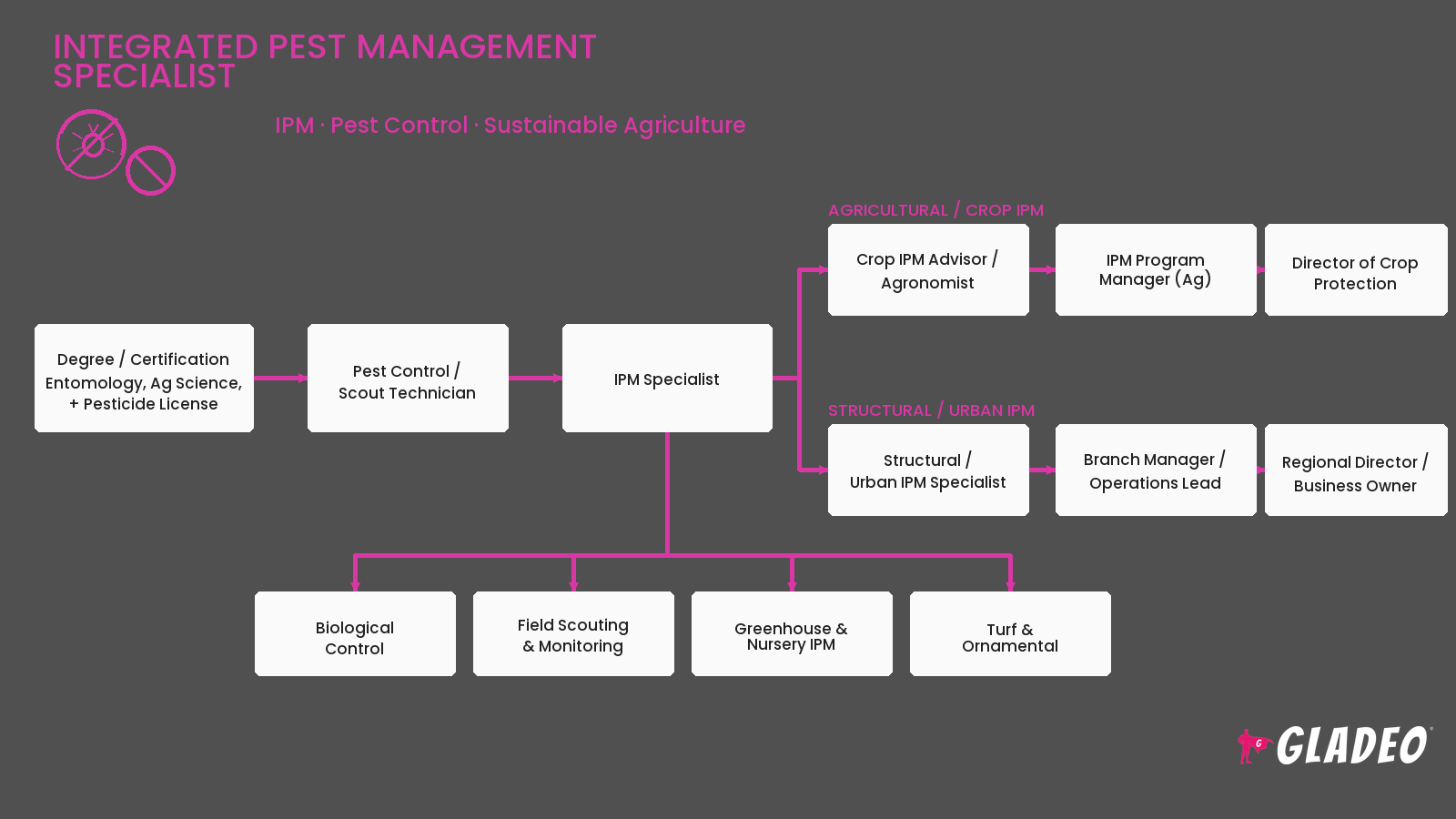
- Apply for internships or assistant roles with agricultural extension offices.
- Volunteer on research projects studying pest management.
- Work as a field technician collecting pest and environmental data.
- Seek entry-level roles with government agricultural agencies or NGOs.
- Build a portfolio documenting pest control cases and outcomes.
- Network with professionals at agricultural conferences and workshops.
- Obtain certifications in pesticide application or IPM techniques.
- Develop strong communication skills by assisting with farmer training sessions.
- Learn to use pest monitoring and GIS software through on-the-job training.
- Stay updated on pest control regulations and safety standards.
- Participate in local farming community events to build contacts.
- Request mentorship from experienced IPM specialists.
- Gain specialized certifications in pest management or biological control.
- Pursue advanced degrees to deepen scientific expertise.
- Build a track record of successful pest management programs.
- Develop leadership skills to manage teams or projects.
- Expand professional network through industry associations.
- Stay current with emerging technologies and methods.
- Publish research or case studies in agricultural journals.
- Seek roles in policy advising or program coordination.
Websites:
- Integrated Pest Management (IPM) Institute of North America: https://ipminstitute.org
- Entomological Society of America: https://www.entsoc.org
- Association of Natural Biocontrol Producers: https://www.anbp.org
- National Sustainable Agriculture Coalition: https://sustainableagriculture.net
- USDA Integrated Pest Management Program: https://www.ars.usda.gov/natural-resources-and-sustainable-agriculture/ipm-program
- CropLife Foundation: https://www.croplifefoundation.org
- Pesticide Environmental Stewardship Program: https://pestprogram.org
- International Organisation for Biological Control: https://www.iobc-global.org
- Extension Disaster Education Network: https://eden.lsu.edu
- Healthy Farms Healthy People: https://healthyfarmshealthypeople.org
- National Association of State Departments of Agriculture: https://www.nasda.org
- The Xerces Society for Invertebrate Conservation: https://xerces.org
- Society of Environmental Toxicology and Chemistry: https://www.setac.org
- American Society of Agronomy: https://www.agronomy.org
Books:
- Integrated Pest Management: Concepts, Tactics, Strategies and Case Studies by Edward B. Radcliffe
- The Field Guide to Integrated Pest Management by Joel S. Yoder
- Biological Control of Pests and Weeds by David W. Ragsdale
- Sustainable Pest Management: Challenges, Tools and Strategies for Future Agriculture by Ralf Nauen
- Ecological Pest Management by Agrios George N.
If a career as an Integrated Pest Management Specialist isn’t the perfect fit, there are many related paths where your love of science, agriculture, and problem-solving can thrive.
- Agricultural Scientist
- Entomologist
- Environmental Consultant
- Crop Consultant
- Soil Scientist
- Conservation Scientist
- Pesticide Technician
- Biological Control Technician
- Agricultural Extension Agent
- Food Safety Specialist
Newsfeed

Featured Jobs
Online Courses and Tools