







Spotlights
General Internist, Internal Medicine Physician, Primary Care Doctor, Adult Medicine Specialist, Hospitalist, Primary Care Internist, Clinical Internist, Internal Medicine Consultant, Medical Internist, Adult Care Physician
When you visit a doctor for a complex health problem, often it’s the internist who carefully unpacks the mystery of your symptoms to find the root cause. Internists are the detectives of adult medicine, making a huge impact on patients’ lives by diagnosing, managing, and treating a broad range of illnesses.
Internists spend their days seeing adult patients with a wide variety of medical concerns—from routine checkups to chronic diseases and acute conditions. They collaborate with nurses, specialists, and other healthcare professionals to create comprehensive care plans. Whether working in clinics, hospitals, or outpatient centers, they ensure patients receive personalized, evidence-based treatment that improves quality of life.
Using advanced diagnostic tools, electronic health records, and medical guidelines, internists analyze symptoms and test results to make informed decisions. Their role is vital because they provide continuous, holistic care that helps prevent serious complications and supports overall wellness in adults.
- Helping patients understand their complex health conditions and guiding them toward better health feels deeply rewarding.
- Building long-term relationships with patients and watching their health improve over time brings a strong sense of accomplishment.
- Solving medical puzzles by diagnosing challenging cases satisfies a passion for problem-solving and critical thinking.
- Playing a key role in coordinating patient care across multiple specialists ensures seamless, effective treatment outcomes.
Working Schedule
Internists typically work full-time in clinical settings such as hospitals, outpatient clinics, or private practices. Their schedules may include early mornings, evenings, or weekend shifts depending on patient needs and facility hours. Hospital-based internists often face on-call duties and irregular hours, especially when managing urgent or emergency cases. While the job can be demanding, many internists enjoy the variety and patient interaction it offers.
Typical Duties
- Conduct comprehensive physical exams and review medical histories for adult patients.
- Order and interpret laboratory tests, imaging studies, and diagnostic procedures.
- Diagnose and manage acute illnesses like infections as well as chronic conditions such as diabetes and hypertension.
- Develop personalized treatment plans including medications, lifestyle changes, and referrals to specialists.
- Coordinate care with other healthcare providers, including surgeons, cardiologists, and endocrinologists.
- Monitor patients’ progress and adjust treatment plans as needed during follow-up visits.
- Provide preventive care guidance including vaccinations, screenings, and health education.
- Document patient information accurately in electronic health records.
- Respond promptly to patient concerns and urgent medical issues.
- Educate patients about managing their health conditions and promoting wellness.
Additional Responsibilities
- Participate in hospital rounds and multidisciplinary care team meetings.
- Stay updated on medical research and guidelines to apply best practices.
- Supervise and mentor medical residents or students in clinical settings.
- Manage administrative tasks such as billing and insurance documentation.
- Advocate for patients’ health needs within the healthcare system.
- Engage in quality improvement initiatives to enhance patient care.
- Contribute to community health education programs.
- Maintain licensure and board certification through ongoing professional development.
An internist’s day often begins by reviewing patient charts and lab results from overnight to prioritize who needs urgent attention. Morning clinic hours are usually filled with scheduled appointments that include physical exams, diagnosing new concerns, and managing chronic diseases.
By midday, the internist might be coordinating with specialists to discuss complex cases or conducting hospital rounds to check on admitted patients. This time involves a mix of patient interaction, documentation, and collaboration with nurses and other staff to ensure cohesive care.
Afternoons and evenings can include follow-up appointments, reviewing diagnostic images or test results, and educating patients about treatment plans. Many internists also spend time updating medical records, responding to patient messages, and preparing for the next day’s schedule.
Soft Skills
- Empathy and compassion to connect with patients facing health challenges.
- Strong communication skills for explaining complex medical information clearly.
- Critical thinking and problem-solving to diagnose and treat diverse conditions.
- Attention to detail in reviewing symptoms, test results, and patient history.
- Patience and resilience to handle stressful or emotionally difficult situations.
- Collaboration skills for working with healthcare teams.
- Organizational skills to manage multiple patients and tasks efficiently.
- Adaptability to respond to rapidly changing health scenarios.
- Ethical judgment and professionalism in patient care.
- Time management to balance clinical duties and administrative responsibilities.
- Active listening to understand patient concerns fully.
- Cultural sensitivity to serve diverse patient populations effectively.
Technical Skills
- Proficiency in using electronic health records (EHR) systems.
- Ability to interpret diagnostic tests such as blood panels, X-rays, and MRIs.
- Knowledge of evidence-based medicine and clinical guidelines.
- Skill in performing physical examinations and clinical procedures.
- Competence in prescribing medications and managing drug therapies.
- Familiarity with telemedicine platforms for remote patient consultations.
- Understanding of health insurance and billing practices.
- Ability to conduct patient education and counseling effectively.
- Experience with hospital information systems and documentation standards.
- Knowledge of infection control and safety protocols.
- Primary Care Internist: Focuses on general adult health and preventive care in outpatient settings.
- Hospitalist: Works primarily in hospitals managing inpatient care and coordinating with specialists.
- Academic Internist: Combines patient care with teaching medical students and conducting research.
- Geriatric Internist: Specializes in caring for elderly patients and managing age-related health issues.
- Rheumatology Internist: Concentrates on autoimmune and musculoskeletal disorders.
- Cardiovascular Internist: Focuses on heart and blood vessel diseases within internal medicine.
- Endocrinology Internist: Manages hormonal disorders including diabetes and thyroid conditions.
- Infectious Disease Internist: Specializes in diagnosing and treating infections and emerging diseases.
- • Hospitals
- • Private Medical Practices
- • Community Health Centers
- • Outpatient Clinics
- • Academic Medical Centers
- • Long-term Care Facilities
- • Government Health Agencies
- • Urgent Care Centers
- • Nonprofit Health Organizations
- • Health Maintenance Organizations (HMOs)
- • Veterans Affairs Hospitals
- • Research Institutions
Internists often work under significant pressure to make accurate diagnoses and manage patients with complex, sometimes life-threatening conditions. The responsibility of guiding treatment decisions can be stressful but is balanced by the meaningful impact on patient outcomes.
Work hours can be long and irregular, especially for hospitalists who may need to cover night shifts or be on call. Outpatient internists usually have more predictable schedules but must still accommodate urgent patient needs and administrative duties.
This career requires dedication to continuous learning and adapting to evolving medical knowledge. The emotional demands of caring for seriously ill patients and delivering difficult news can be challenging, but many internists find the work deeply fulfilling.
- Increasing use of telemedicine for remote consultations and follow-ups.
- Growing emphasis on preventive care and chronic disease management.
- Integration of artificial intelligence to assist in diagnostics and treatment planning.
- Expansion of team-based care models including nurse practitioners and physician assistants.
- Greater focus on personalized medicine tailored to genetic and lifestyle factors.
- Enhanced electronic health records for better data sharing and patient tracking.
- Rising importance of mental health screening within internal medicine.
- Development of new therapies and medications for chronic illnesses.
- Increased attention to health disparities and culturally competent care.
- Use of wearable health technology to monitor chronic conditions in real time.
Many internists showed an early interest in science and biology, often curious about how the human body works and how diseases affect health. They enjoyed problem-solving activities and had a desire to help others feel better.
As kids, they might have been the friends who offered care and advice or were fascinated by medical documentaries, books, or science fairs. Their natural curiosity about medicine and compassion for people were early signs of their future path.
Becoming an internist requires extensive education and training, including earning a medical degree followed by specialized residency training in internal medicine. This path prepares students with the knowledge and skills to diagnose and treat a wide range of adult health issues.
Students can take courses in relevant subjects such as:
- Biology — foundational science of living organisms and human body systems.
- Chemistry — understanding chemical processes relevant to medicine.
- Anatomy and Physiology — detailed study of body structure and functions.
- Microbiology — exploration of infectious organisms and disease mechanisms.
- Pathophysiology — how diseases develop and affect the body.
- Pharmacology — study of medications and their effects.
- • Statistics and Epidemiology — data analysis and study of disease patterns.
- • Medical Ethics — principles guiding patient care and professional conduct.
- • Psychology — understanding mental health and patient behavior.
- • Health Informatics — managing patient data and medical records.
Hands-on clinical experience during medical school and residency is crucial for developing diagnostic and patient care skills. Interns build a portfolio of patient cases and refine their decision-making under supervision before practicing independently. Continuing education keeps internists updated on medical advances throughout their careers.
- Take advanced science courses like biology, chemistry, and physics in high school.
- Engage in health-related extracurricular activities such as volunteering at hospitals or clinics.
- Participate in science fairs or health clubs to deepen understanding.
- Prepare for college by focusing on pre-medical tracks including biology and chemistry.
- Seek internships or shadowing opportunities with doctors to gain real-world insights.
- Develop strong communication and critical thinking skills through debate or writing courses.
- Join clubs that promote teamwork and leadership, such as student government or sports.
- Explore psychology classes to understand patient behavior and mental health.
- Consider summer programs focused on medicine or healthcare careers.
- Maintain a strong GPA and prepare for the Medical College Admission Test (MCAT) during college.
- Choose accredited medical schools with strong internal medicine residency programs.
- Look for schools offering hands-on clinical rotations in diverse healthcare settings.
- Seek programs that emphasize patient-centered care and communication skills.
- Consider institutions with research opportunities in internal medicine specialties.
- Evaluate support services for student well-being and career advising.
- Check for affiliation with hospitals or clinics offering high patient volumes.
- Prioritize schools with mentorship programs linking students to experienced internists.
- Review curriculum for coverage of emerging medical technologies and telemedicine.
- Ensure access to simulation labs for practicing clinical skills.
- Find programs encouraging interprofessional education with nurses and other staff.
- Consider location and community health needs to match personal interests.
- Look for flexible options for continuing education and board certification preparation.
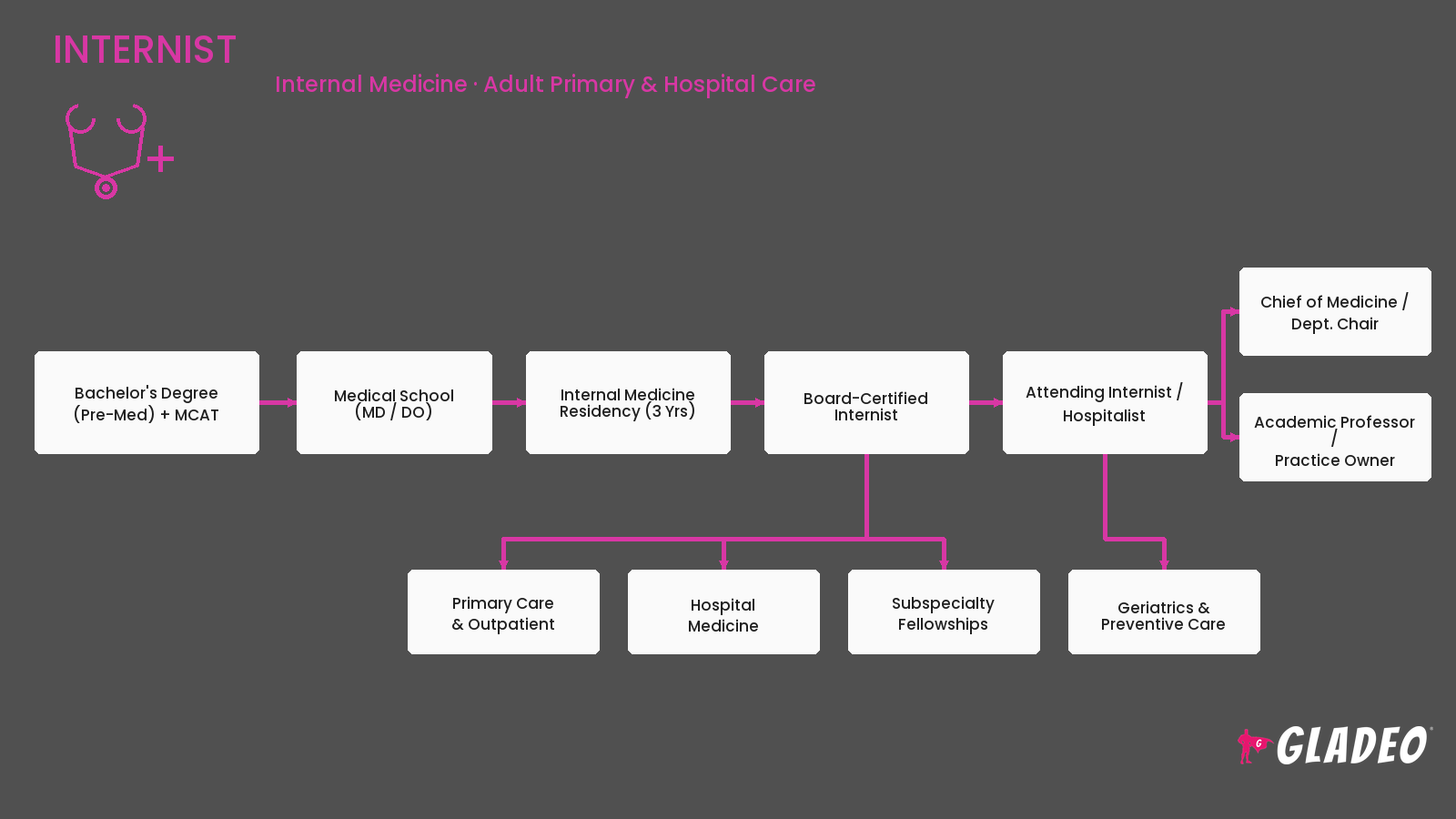
- Apply for residency programs accredited in internal medicine to begin specialized training.
- Gain experience through internships or externships in hospitals or clinics.
- Develop strong relationships with mentors and supervising physicians.
- Build a portfolio documenting patient cases and clinical skills.
- Attend medical conferences and workshops to expand knowledge.
- Join professional organizations like the American College of Physicians (ACP) for networking.
- Seek opportunities for research or quality improvement projects.
- Practice patient communication and bedside manner consistently.
- Stay current with medical literature and clinical guidelines.
- Prepare thoroughly for board certification exams in internal medicine.
- Volunteer for community health screenings or education events.
- Learn to manage electronic health records efficiently.
- Pursue fellowship training to specialize in areas like cardiology or gastroenterology.
- Take leadership roles in clinical departments or hospital committees.
- Publish research articles or present findings at medical conferences.
- Gain teaching experience by mentoring medical students and residents.
- Expand skills in healthcare administration or policy involvement.
- Build a reputation for excellent patient care and teamwork.
- Seek board certification and maintain continuing education.
- Network actively within professional medical communities.
Websites:
- American College of Physicians (ACP) - https://www.acponline.org
- American Board of Internal Medicine (ABIM) - https://www.abim.org
- Medscape Internal Medicine - https://www.medscape.com/internalmedicine
- Society of Hospital Medicine - https://www.hospitalmedicine.org
- National Institute of Health (NIH) - https://www.nih.gov
- Centers for Disease Control and Prevention (CDC) - https://www.cdc.gov
- Internal Medicine Residency Programs Directory - https://www.acgme.org
- HealthIT.gov - https://www.healthit.gov
- UpToDate Clinical Resources - https://www.uptodate.com
- PubMed Medical Research - https://pubmed.ncbi.nlm.nih.gov
- MedlinePlus Health Information - https://medlineplus.gov
- American Medical Association (AMA) - https://www.ama-assn.org
- Society of General Internal Medicine - https://www.sgim.org
- National Board of Medical Examiners (NBME) - https://www.nbme.org
Books:
- Harrison's Principles of Internal Medicine by J. Larry Jameson and Anthony S. Fauci
- Current Medical Diagnosis and Treatment by Maxine A. Papadakis and Stephen J. McPhee
- The Washington Manual of Medical Therapeutics by Hemant Godara and others
- Essentials of Internal Medicine by Eugene Braunwald
- UpToDate: Clinical Decision Support (online resource)
If internal medicine isn’t the perfect fit, there are many related healthcare careers that allow you to work with patients and use your medical knowledge in different ways.
- Family Physician — provides comprehensive health care for patients of all ages.
- Nurse Practitioner — advanced practice nurse who diagnoses and treats illnesses.
- Physician Assistant — provides medical care under physician supervision.
- Specialist Physician (e.g., cardiologist, endocrinologist) — focuses on specific organ systems.
- Medical Researcher — conducts studies to improve medical knowledge and treatments.
- Public Health Specialist — works on disease prevention and health promotion for communities.
- Clinical Pharmacist — manages medication therapy and patient education.
- Healthcare Administrator — oversees operations and management of healthcare facilities.
- Physical Therapist — helps patients recover movement and function after illness or injury.
- Mental Health Counselor — supports patients’ psychological well-being and coping skills.
Newsfeed

Featured Jobs
Online Courses and Tools