






Spotlights
Gardener, Greenskeeper, Grounds Maintenance Worker, Grounds Person, Grounds Worker, Grounds/Maintenance Specialist, Groundskeeper, Landscape Specialist, Landscape Technician, Outside Maintenance Worker
Landscape Technicians, also known as Grounds Maintenance workers or Groundskeepers, are in charge of keeping a property’s grounds and landscaped areas looking sharp at all times. They perform a wide variety of outdoor duties such as planting flowers, shrubbery, and small trees, as well as keeping all of those trimmed, mulched, watered, and free from pests. Other parts of the job include mowing and trimming lawns, removing weeds, raking or blowing leaves, picking up fallen tree limbs, clearing sidewalks, and in some cases assisting with the installation of patios, decks, sprinklers, or lighting systems. They might even be tasked for maintaining parking areas, playgrounds, fences, or public park benches.
Landscape Technicians can be found working on virtually any type of property, from private residences to malls, office parks, college campuses, public areas, golf courses, and many other spaces. They usually follow the guidance outlined by their employer’s grounds or facility manager, and designs made by a professional Landscape Architect. Specialized workers, such as those working at cemeteries or sports fields, have additional job-specific duties. Many receive training to spray pesticides on plants and soil.
While they often go unnoticed, Landscape Technicians are out there working hard to keep natural environments beautiful and healthy for everyone’s use and enjoyment!
- Working outdoors with nature
- Keeping plants, shrubs, and trees healthy and safe from pests
- Daily physical exercise
- Ensuring public areas are well-maintained for communities to enjoy
- Maintaining unique private places such as cemeteries, golf courses, and athletic fields so they look sharp for visitors
Working Schedule
Landscape Technicians usually work full-time, sometimes on a seasonal basis since there is less to do during winter months in many states.
Typical Duties
- Work outside on public or private grounds
- Plant different shrubs, plants, and flower types in prearranged patterns
- Pull weeds from the soil where shrubs, plants, and flowers are growing
- Water, fertilize, and trim shrubs and other planted items
- Spray pesticides as applicable
- Mow and edge lawn areas
- Keep lawns and gardens watered using sprinkler systems
- Plant small trees and build supports to keep them upright, if needed
- Check trees for health and signs of disease or rot; trim and remove limbs as needed
- Rake and blow leaves
- Tend to certain indoor plants at some job sites, such as malls
- Put down walkway, desk, or patio materials
- Drive trucks to haul equipment to job sites; drive small vehicles around job sites
- Help decorate garden or fountain areas with stones and sculptures
- Assist with installation of sprinkler or lighting systems, as needed
- Light painting work
Additional Responsibilities
- Wear all personal protective equipment; practice good safety procedures
- Maintain vehicles and tool/equipment inventories
- Ensure all necessary items are ready for the day’s work, including fuel for mowers
- Keep sidewalks or parking areas clear of debris
- Remove snow from sidewalks during the winter
- Perform specialized duties for specific job locations such as athletic fields, golf courses, or cemeteries
- Special labor tasks may include putting up temporary fencing, turf maintenance, cutting trees with chainsaws, digging graves with a backhoe, pool maintenance, and more
A Landscape Technician's day usually begins early in the morning, often before the heat of the day sets in. After arriving at a job site, they meet with the landscaping crew or supervisor to review the day's assignments, check the weather, and gather the necessary tools and supplies. They might load lawn mowers, trimmers, leaf blowers, shovels, rakes, pruning shears, and other equipment onto a work vehicle before heading to a residential property, commercial building, park, golf course, or public garden. Once there, they inspect the grounds, identify areas that need attention, and plan the work.
The morning and afternoon are usually spent outdoors performing a variety of landscaping tasks. A Landscape Technician might mow lawns, trim hedges, prune trees and shrubs, remove weeds, spread mulch, prepare flower beds, plant trees, or install sod. They may also apply fertilizers, maintain irrigation systems, repair sprinklers, and check plants for signs of pests or disease. Some jobs involve installing walkways, drainage features, retaining walls, or outdoor lighting. The work changes with the seasons: spring and summer may bring planting and frequent lawn maintenance, while fall often involves leaf removal and preparing plants for colder weather. Throughout the day, technicians operate equipment, work with teammates, and make sure each property meets the client's expectations.
At the end of the day, Landscape Technicians clean and store their tools, refuel equipment, dispose of green waste, and report completed tasks or problems that need attention. They may update maintenance records, prepare materials for the next job, or discuss upcoming projects with supervisors and clients. Depending on the employer and season, their schedule may include early starts, long hours, and occasional weekend work. The job can be physically demanding, involving lifting, bending, kneeling, and working in changing weather conditions, but many Landscape Technicians enjoy seeing the immediate results of their work as an ordinary outdoor space becomes healthier, greener, and more inviting.
Soft Skills
- Able to follow directions
- Attention to detail and standards
- Customer service-oriented
- Fast reaction time
- Good hand-eye coordination
- Hand and finger dexterity
- Normal color vision
- Observant
- Patient
- Safety-oriented
- Strength and stamina
- Strong listening skills
- Teamwork
- Time management
Technical Skills
- Ability to understand design layouts
- Use of personal protective equipment, such as eye and hearing protection, gloves, steel-toed boots, or other mandated items
- Familiarity with applicable state and local safety standards
- Training for safe use of powered equipment and hand tools (including lawnmowers; electric or gas-powered weed trimmers; pruners, hedge cutters; spades, shovels, and other gardening tools)
- Knowledge of pesticide and fertilizer usage and safe handling
- Familiarity with sprinkler and lighting systems, as applicable
- Other specialized equipment usage, as dictated by the job
- Landscape Maintenance Technician: Maintains lawns, gardens, and outdoor spaces by mowing, trimming, pruning, weeding, and fertilizing.
- Landscape Installation Technician: Installs new landscapes by planting trees, shrubs, and flowers; laying sod; and preparing soil and planting beds.
- Irrigation Technician: Installs, repairs, and maintains irrigation systems, sprinklers, and other watering equipment.
- Turfgrass Technician: Cares for lawns, sports fields, golf courses, and other grassy areas by monitoring soil conditions, controlling weeds, and maintaining healthy turf.
- Tree and Shrub Care Technician: Prunes, fertilizes, and monitors trees and shrubs for pests, diseases, and other problems.
- Landscape Construction Technician: Helps build outdoor features such as walkways, patios, retaining walls, drainage systems, and garden structures.
- Commercial Landscape Technician: Maintains outdoor areas around offices, shopping centers, apartment complexes, hotels, and other commercial properties.
- Residential Landscape Technician: Creates and maintains gardens, lawns, and other outdoor spaces at private homes.
- Apartment complexes
- Educational institutions
- Local and state government agencies
- Hotel chains
- Office buildings and parks
- Private residences
- Recreational establishments (amusement parks, athletic fields, golf courses)
- Self-employed (or owner of a landscaping service)
- Shopping malls
Landscape Technicians work hard and spend most of their days outside. They are exposed to heat and cold, sun, wind, and rain. Much of their time may be spent working alone, performing physically demanding tasks under deadlines so they can move on to the next task or job site. Despite the need to work efficiently, they are expected to maintain high standards. For this reason, they require patience and attention-to-detail, as well as the ability to work relatively quickly for hours on end.
In terms of sacrifice, it is important to understand that Landscape Technicians are exposed to a number of workplace hazards. They often use dangerous tools while working through fatigue, boredom from repetition, and perhaps in inclement weather that may make hands or tools wet. This combination of factors can lead to injuries, unless workers wear proper protective gear, stay focused on safety, and are trained on proper tool and equipment usage. Hearing protection is an often overlooked element, as workers may operate or be near loud equipment.
Another potential sacrifice is that work may be sporadic during winter months, when there is less to do or duties may change significantly (for instance, there may be snow removal required, or putting out holiday decorations versus mowing lawns or watering plants).
Job growth is predicted to be very good, as homeowners and organizations look to spruce up older properties by investing in landscaping. Research indicates that young homeowners are seeking increased landscaping services, as well, as a way to protect the environment. Indeed there’s a trend towards “outdoor spaces” and “outdoor rooms” like covered decks or patios, which may require the skills of a Landscape Technician.
In the business world, there is a current focus on both green initiatives and workplace wellness, which should keep landscapers busy as companies offer more outdoor areas to promote worker health and job satisfaction. Meanwhile, unpredictable national weather patterns can lead to unexpected shifts in work requirements, as snow storms, drought spells, or fires might disrupt the ability to perform typical duties. However, landscapers play a vital role in the cleanup efforts after such events.
Many groundskeepers prefer to work in temperate regions where weather conditions may be less harsh, and there is steady work during all seasons. Of note is the fact that while the sector is growing, there aren’t enough workers to fill the gaps. According to the National Association of Landscape Professionals, 82% of company leaders are concerned about “the shortage of skilled labor” as a “major limiting factor for the industry.”
Landscape Technicians don’t mind getting their hands dirty! They likely always enjoyed being outside, and aren’t afraid of manual labor. They love nature and have both the stamina and the patience to work outdoors for long periods of time—abilities they may have cultivated over years.
They take the time to do their jobs correctly while still being efficient, because there is lots to get done and a limited amount of time to do it! Such time management skills may also have been learned from an early age. Groundskeepers practice good job site safety, which is a mindset perhaps gained via training when they were younger, working on family property or during jobs in high school.
They may not be introverted, but are comfortable spending hours working on their own as part of a larger team sprawled out around the grounds being worked. They have a solid work ethic and are goal-oriented so they can stay on-task and keep things moving along!
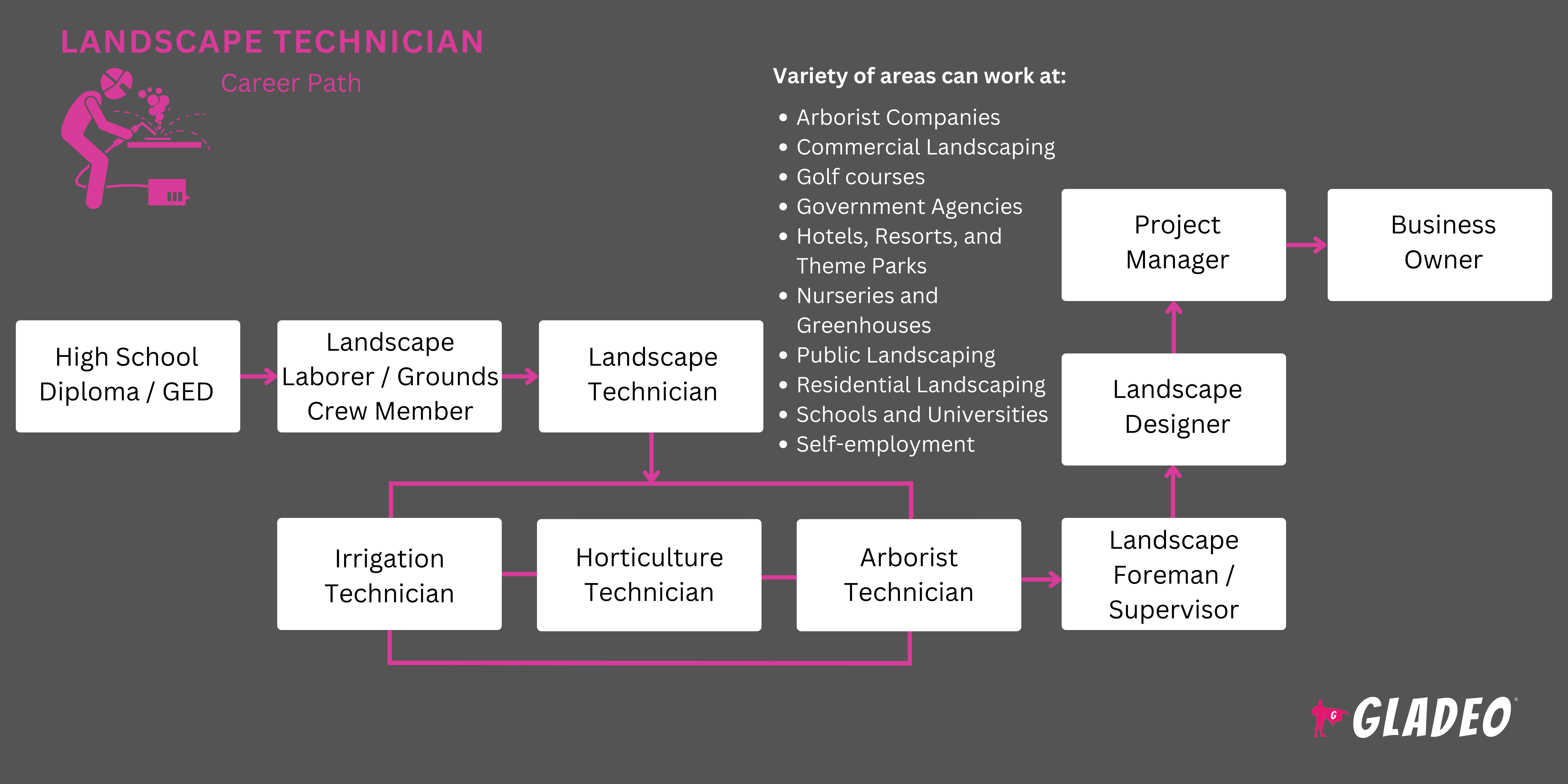
Landscape Technicians generally do not need a college degree. Many enter the field with a high school diploma or GED and learn through on-the-job training. Employers often look for people who have an interest in plants, landscaping, and outdoor work, along with the ability to operate tools and equipment safely. A valid driver's license may be required, especially for technicians who travel between job sites or operate company vehicles. Some employers prefer candidates with vocational training, an associate degree, or certifications in horticulture, landscape management, irrigation, or a related field.
Students can take courses in relevant subjects such as:
- Introduction to Horticulture
- Plant Science and Plant Identification
- Soil Science and Soil Management
- Landscape Design and Planning
- Turfgrass Management
- Plant Diseases and Pest Management
- Irrigation Systems and Water Management
- Landscape Construction and Installation
- Arboriculture and Tree Care
- Landscape Equipment Operation and Maintenance
- Environmental Science
- Workplace Health and Safety
Training is often a combination of classroom instruction and hands-on experience. Technicians learn how to prepare soil, plant trees and shrubs, install sod, maintain lawns, prune plants, operate landscaping equipment, and identify common plant pests and diseases. Those who specialize in irrigation may receive additional training in sprinkler systems, drainage, and water-efficient landscaping. Certifications from organizations such as the National Association of Landscape Professionals (NALP) can help demonstrate professional knowledge and skills. Depending on the state and job duties, pesticide application may require a separate state-issued license or certification.
Some Landscape Technicians advance by gaining experience in specialized areas such as irrigation, turfgrass management, tree care, or landscape installation. With additional training and leadership experience, they may become crew leaders, landscape supervisors, or landscape managers. Those interested in designing landscapes may pursue further education in landscape design or landscape architecture, although becoming a licensed Landscape Architect requires a separate educational and licensing path.
- Take courses in biology, environmental science, agriculture, and horticulture if your school offers them
- Learn to identify common trees, shrubs, flowers, grasses, and weeds in your area
- Volunteer at botanical gardens, parks, nurseries, community gardens, or landscaping projects
- Join gardening, agriculture, environmental, or FFA clubs
- Practice basic gardening skills, such as planting, pruning, weeding, watering, and preparing soil
- Develop your physical fitness and stamina through activities that involve walking, lifting, and working outdoors
- Learn how to safely use and maintain basic gardening tools and equipment
- Take classes in construction, woodworking, mechanics, or irrigation systems to develop practical skills
- Consider vocational training or an associate degree in horticulture, landscape management, or a related field
- Look for summer jobs or internships with landscaping companies, garden centers, nurseries, or parks departments
- Build communication and teamwork skills by participating in group projects and volunteer activities
- Research certifications offered by the National Association of Landscape Professionals and other industry organizations
- Training in operating and maintaining mowers, trimmers, blowers, and other landscaping equipment
- Instruction in irrigation systems, drainage, and water conservation
- Opportunities to learn about plant diseases, pests, weeds, and environmentally responsible treatments
- Training in workplace safety, equipment handling, and proper use of protective gear
- Access to greenhouses, nurseries, demonstration gardens, or outdoor training areas
- Internship opportunities or partnerships with landscaping companies, parks departments, and garden centers
- Preparation for industry certifications, such as those offered by the National Association of Landscape Professionals
- Instructors with professional experience in landscaping, horticulture, or grounds maintenance
- Clear information about tuition, equipment costs, certification fees, and financial aid options
- Let your friends, family, and school know that you’re looking for a landscaping job
- Review job ads on Indeed, ZipRecruiter, SimplyHired, and Craigslist
- Reach out to local landscaping companies to inquire about openings
- Ensure you have sufficient work and academic background to apply; only apply to jobs you are qualified for
- Ask a friend who is skilled with writing to review your application for mistakes or ways to enhance it
- List all relevant work experience, education and training, and certifications or licenses you possess
- Impress at interviews by being professional, dressing sharply, and being honest about your background
- Use correct terminology and explain all the tools and equipment you are qualified to use, plus the types of trees, plants, and flowers you’ve worked with
- Come to work on time and demonstrate a positive attitude. Show initiative and preparedness!
- Be a team player, pay attention to instructions, and demonstrate leadership characteristics
- Master every skill you’re taught and every tool or piece of equipment you’re shown how to use
- Maintain a keen eye for detail and ensure your work is done to the best of your ability
- Constantly learn more about your job, to include information about plants, flowers, trees, and the various conditions they thrive under
- Gain experience on as many types of equipment as you can
- Volunteer to tackle new tasks and let your supervisor know you want increased responsibilities such as managing others
- Ask your boss for suggestions about college courses, advanced training, or certifications
- Complete certifications and licensure, as applicable
- Take good care of tools, equipment, and vehicles; conduct timely maintenance as needed to ensure proper functioning
- Study technical manuals if needed so you know how equipment works and what to do when it isn’t working correctly
- Be a safety guru and always wear suitable protective equipment, while setting the standard for others to follow. Always comply with safety standards and avoid mishaps
- Train new employees and hold them accountable. Treat new workers how you want to be treated
The world needs more qualified Landscape Technicians, but not everyone is cut out for the work. There is ample labor involved, hazards exist, the work may be seasonal, and sometimes people just want to do something different! Also, due to the relatively few academic requirements to get started, the salary may leave something to be desired unless you have some specialized skills. BLS offers a few alternative careers to consider, such as:
- Agricultural Workers
- Forest and Conservation Workers
- Landscape Architects
- Pest Control Workers
- Grounds Maintenance Worker
- Landscaper
- Arborist
- Tree Trimmer or Pruner
- Irrigation Technician
- Turfgrass Management Specialist
- Horticultural Technician
- Nursery Worker
- Greenhouse Technician
- Golf Course Superintendent
- Parks Maintenance Worker
- Landscape Designer
- Soil and Plant Technician
- Pest Control Technician
- Conservation Technician
Newsfeed

Featured Jobs
Online Courses and Tools