






Spotlights
Musical Director, Show Music Director, Band Leader, Tour Music Director, TV Music Director, Music Supervisor for Live Events, Arranger and Conductor, Live Show Music Director, Bandleader and Arranger, Commercial Music Director, House Band Director, Production Music Director
The band that hits every note perfectly behind a pop star's stadium tour, the horn section that punches in right on cue during a late-night talk show, the orchestra that swells at exactly the right emotional moment in a televised awards show, none of that happens by accident. Behind every tight, polished, unforgettable live musical performance is a Music Director shaping the sound, leading the musicians, and making sure the music hits just as hard as the moment demands.
Music Directors for commercial productions build and lead the musical backbone of live performances, tours, television shows, and commercial productions. They arrange songs for a live band or orchestra, hire and rehearse musicians, work closely with the artist or performer to capture their exact creative vision, and conduct or lead the band during the actual performance. They collaborate constantly with artists, choreographers, sound engineers, tour managers, and show producers, translating a song that exists in a recording studio into a living, breathing performance that can adapt night after night to a different venue, a different energy, and sometimes a different setlist entirely.
Using arranging software, instruments, click tracks, and in-ear monitoring systems, Music Directors blend deep musicianship with sharp leadership skills. Their work matters because a live performance lives or dies on the music, and a great Music Director is the reason a concert feels tighter than the album, a halftime show feels flawless under pressure, and a television house band can shift seamlessly from one guest's genre to the next without missing a beat.
- Shaping how iconic performances actually sound and feel in the moment
- Leading talented musicians and watching a room full of individual parts become one tight sound
- Working directly with major artists and productions to bring their creative vision to life
- Feeling the immediate, electric payoff of a live performance coming together exactly as planned
Working Schedule
Music Directors often work irregular and demanding hours, since rehearsals, performances, and touring do not follow a standard 9-to-5. Many work as freelancers, moving between projects like a tour, a television show, or a special event, while some hold steady positions as the resident Music Director for a house band or ongoing production. Evenings and weekends are common working hours, and touring Music Directors can spend weeks or months away from home. The work environment shifts constantly, from rehearsal studios to arena stages to television soundstages.
Typical Duties
- Arranging songs for a live band, orchestra, or ensemble
- Hiring and auditioning musicians for tours, shows, or productions
- Leading rehearsals to prepare the band for live performance
- Conducting or leading the band during live shows or broadcasts
- Collaborating with the artist to capture their creative vision musically
- Creating charts, click tracks, and cues for musicians and production teams
- Coordinating with sound engineers on live mix and monitor needs
- Adapting arrangements for different venues, formats, or broadcast requirements
- Managing musician schedules, contracts, and payments
- Troubleshooting musical or technical issues during rehearsals and shows
- Working with choreographers and producers to align music with staging
- Training and mentoring musicians within the band or ensemble
Additional Responsibilities
- Selecting and managing musical equipment and instrumentation needs
- Coordinating with music licensing teams for cover songs or arrangements
- Building relationships with session musicians and touring players
- Staying current on musical trends across genres for versatility
- Managing budgets for musician fees and production costs
- Preparing backup plans for technical failures or missing musicians
- Advising artists on musical direction for new projects or eras
A Music Director's morning during rehearsal season often starts with reviewing arrangements and preparing charts for that day's session, then meeting with the artist or producer to align on any changes to the setlist or sound. There may be a call with a sound engineer to talk through monitor mixes or instrumentation needs for an upcoming show.
Midday is usually spent in rehearsal, leading the band through songs, fine-tuning arrangements, working out transitions between numbers, and giving notes to individual musicians. Music Directors have to balance being a strong leader who keeps rehearsal moving with being a collaborative artist who stays open to the performer's creative input.
Evenings, especially during touring or live production periods, often mean showtime itself, leading the band through a live performance in front of thousands of fans or a television audience, staying locked in and ready to adapt if something goes off script. After the show, Music Directors often debrief with the artist or producer about what worked and what needs adjustment before the next performance.
Soft Skills
- Strong leadership and the ability to direct a group under pressure
- Clear communication with musicians, artists, and producers
- Deep collaboration and openness to creative input
- Composure and quick thinking during live performances
- Adaptability when things do not go as planned
- Patience during rehearsals and creative disagreements
- Attention to detail
- Time management across rehearsals, travel, and performances
- Confidence conducting or leading in front of a group
- Emotional intelligence for reading a room or an audience
- Reliability under high-pressure, high-visibility situations
- Passion for musicianship and performance
Technical Skills
- Music arranging and orchestration
- Reading and writing musical notation and charts
- Conducting or bandleading techniques
- Proficiency on one or more instruments, often piano, guitar, bass, or drums
- Knowledge of music theory and harmony across genres
- Familiarity with music software like Sibelius, Finale, or Logic Pro
- Understanding of live sound systems, monitors, and click tracks
- Vocal coaching or arranging basics for backing vocals
- Budgeting and musician contracting
- Knowledge of union rules and musician labor standards
- Touring Music Director: Leads a band for an artist's live concert tour
- Television Music Director: Leads a house band for a talk show, awards show, or televised event
- Corporate and Event Music Director: Leads music for corporate events, galas, and private functions
- Cruise Ship Music Director: Oversees musical entertainment for cruise line productions
- Theme Park Music Director: Leads live music productions at theme parks and entertainment venues
- Awards Show Music Director: Specializes in orchestrating live performances for major televised award shows
- House Band Director: Leads a resident band for a venue, club, or ongoing residency
- Concert touring companies and artist management organizations
- Television networks and production companies
- Awards show and special event production companies
- Cruise lines with live entertainment programming
- Theme parks and entertainment resorts
- Corporate event and entertainment agencies
- Recording studios and production houses
- Talent agencies representing musicians and bandleaders
- Broadcast and streaming media companies
- Live music venues with house bands or residencies
- Wedding and private event entertainment companies
- Performing arts organizations and orchestras
Music Directors work under constant high-stakes pressure, a live performance offers no do-overs, and when millions are watching a broadcast or thousands are in an arena, every cue, transition, and note has to land correctly in real time. That pressure requires nerves of steel and the ability to think fast when something unexpected happens mid-performance.
The schedule can be grueling, especially while touring. Long stretches away from home, inconsistent sleep, and constant travel are part of the job for touring Music Directors, and even non-touring roles often require evening and weekend work around rehearsals and shows. Balancing personal life with a career built around other people's schedules and events takes real sacrifice.
The role also demands constant musical versatility and growth. Music Directors are expected to work across genres, adapt to an artist's evolving sound, and stay current with new music, new gear, and new production techniques. Building and maintaining strong relationships with musicians, many of whom are also freelancers with competing commitments, requires ongoing effort and diplomacy.
- Increased use of backing tracks and hybrid live-electronic performances alongside live musicians
- Growth of in-ear monitoring and digital click track systems for tighter live shows
- Rising demand for Music Directors who can blend genres for diverse, cross-format audiences
- Expansion of livestreamed and hybrid concert experiences requiring new technical skills
- Greater use of AI-assisted arranging and notation tools to speed up preparation
- Increased collaboration between Music Directors and visual production teams for integrated shows
- Growing opportunities in branded content, corporate events, and immersive experiences
- Rising importance of social media presence for freelance Music Directors building a client base
- More Music Directors working across genres, from pop to hip-hop to Latin music, in the same career
- Continued demand for skilled Music Directors at award shows and major televised events despite automation elsewhere in the industry
Many Music Directors started as serious musicians early on, playing in school bands, jazz ensembles, or garage bands, and often found themselves naturally taking the lead in organizing rehearsals or arranging parts for their friends. They tended to love both playing music and figuring out how all the individual pieces fit together.
Others gravitated toward leadership roles in music programs, conducting a school ensemble, arranging music for a talent show, or leading worship music at a place of faith. A combination of strong musicianship, natural leadership, and comfort performing under pressure often signals a fit for this demanding and rewarding career.
Most Music Directors build a strong foundation through years of formal music training, often earning a bachelor's degree in music performance, music education, composition, or arranging. Many also study conducting specifically, whether through a degree program or intensive workshops. That said, this is a field where real-world performance experience carries enormous weight, many successful Music Directors built their reputations by playing in bands, arranging for local artists, and gradually taking on leadership roles before landing major touring or television gigs.
Students can take courses in relevant subjects such as:
- Music Theory and Composition
- Conducting
- Orchestration and Arranging
- Applied Music Performance on a Primary Instrument
- Music Technology and Notation Software
- Music Business
- Ear Training and Sight Reading
- Jazz and Commercial Music Studies
- Audio Engineering Basics
- Ensemble Performance and Direction
Hands-on experience leading and playing in bands is just as critical as formal training. Aspiring Music Directors should seek every opportunity to arrange music, lead rehearsals, and perform live, whether through school ensembles, community bands, or local gigs. Building a network of fellow musicians and industry contacts often opens doors that a resume alone cannot, since much of the hiring in this field happens through recommendations and reputation.
- Study music theory, composition, and arranging as deeply as possible
- Join school band, orchestra, choir, or jazz ensemble and take on leadership roles
- Learn to play multiple instruments, especially piano, for arranging versatility
- Practice conducting or leading small groups whenever the opportunity arises
- Arrange music for school talent shows, church groups, or local bands
- Learn notation software like Sibelius, Finale, or MuseScore
- Attend live concerts and study how the band or ensemble is led and arranged
- Seek internships or volunteer opportunities with local production companies or venues
- Build a demo reel or portfolio of arrangements and live performances
- Network with local musicians and start playing in bands outside of school
- Take audio engineering or live sound courses to understand the technical side
- Study recordings of your favorite artists' live shows to learn arranging techniques
- Strong music theory, composition, and arranging coursework
- Dedicated conducting instruction or ensemble leadership opportunities
- Faculty with real professional touring, television, or production experience
- Access to modern recording and notation technology
- Opportunities to arrange and lead live ensembles regularly
- Programs with connections to the commercial and touring music industry
- Strong jazz or commercial music emphasis alongside classical training
- Career services or mentorship connecting students with working professionals
- Programs located near major music industry hubs like Los Angeles, Nashville, or New York
- Opportunities for cross-genre study, not just classical or just commercial music
- Strong ensemble and performance requirements throughout the program
- Alumni network active in touring, television, or commercial music direction
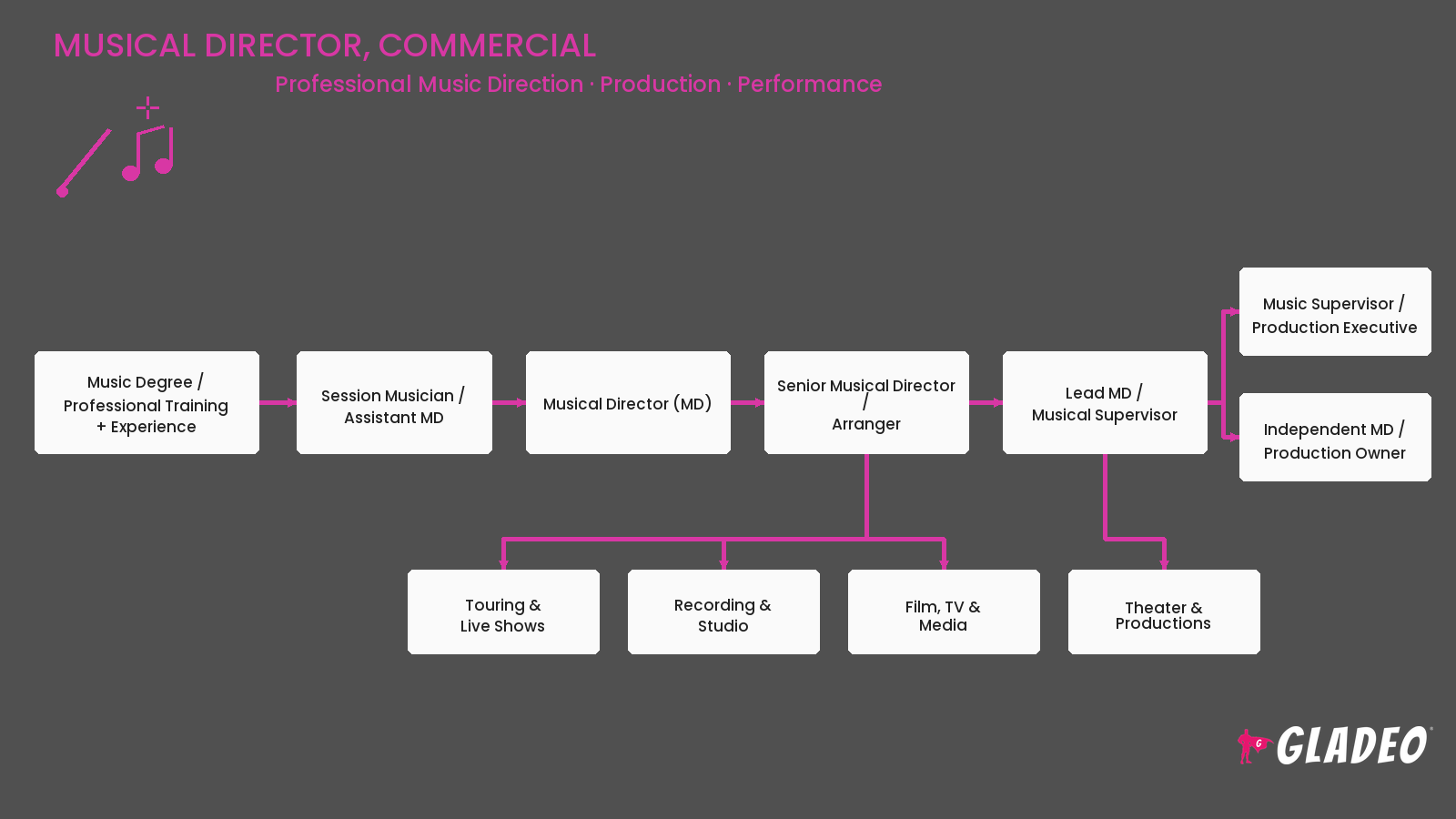
- Start by playing in as many bands and ensembles as possible to build experience and connections
- Offer to arrange music for local artists, church groups, or school productions
- Take on assistant or associate Music Director roles to learn from experienced leaders
- Build a strong reel showcasing your arranging, conducting, and performance skills
- Network relentlessly with musicians, since referrals drive much of the hiring in this field
- Apply for house band positions at local venues to build leadership experience
- Say yes to smaller gigs, corporate events, weddings, and local shows, to build your reputation
- Learn the technical side of live sound so you can communicate effectively with engineers
- Study union rules and musician contracting if you plan to hire other players
- Be reliable and easy to work with, reputation travels fast in this tight-knit industry
- Follow and reach out respectfully to Music Directors whose work you admire
- Stay versatile across genres to widen the range of gigs you can pursue
- Build a reputation for tight, professional, reliable live performances
- Take on increasingly high-profile artists, tours, or television productions
- Expand your network among artists, producers, and booking agents
- Continue developing arranging and conducting skills across new genres
- Build long-term relationships with a roster of trusted musicians you can call on
- Move from local and regional gigs to national tours or network television
- Mentor up-and-coming musicians and assistant Music Directors
- Stay current with new music technology and production trends to remain in demand
Websites:
- American Federation of Musicians - afm.org
- Recording Academy (GRAMMYs) - grammy.com
- Billboard - billboard.com
- Music Business Worldwide - musicbusinessworldwide.com
- Society of Composers and Lyricists - thescl.com
- Conductors Guild - conductorsguild.org
- Variety - variety.com
- Pollstar - pollstar.com
- MusicRadar - musicradar.com
- Berklee Online - online.berklee.edu
- Sweetwater - sweetwater.com
- DownBeat Magazine - downbeat.com
- American Choral Directors Association - acda.org
- Live Design Magazine - livedesignonline.com
Books:
- Arranging for Large Jazz Ensemble by Dick Lowell and Ken Pullig
- The Complete Conductor by Gustav Meier
- All You Need to Know About the Music Business by Donald S. Passman
- The Study of Orchestration by Samuel Adler
- Music Theory for the Bedroom Producer by Alex Forbes
If you find that being a commercial Music Director isn't the right fit, your musicianship, arranging, and leadership skills translate well into many related careers.
- Composer and Arranger
- Session Musician
- Orchestra Conductor
- Choir or Ensemble Director
- Recording Studio Producer
- Music Teacher
- Sound Engineer
- Bandleader
- Music Supervisor
- Worship or Church Music Director
Newsfeed

Featured Jobs
Online Courses and Tools