







Spotlights
Board Certified Music Therapist (MT-BC), LCAT (Licensed Creative Arts Therapist), Music Therapist, Neurologic Music Therapist, Public School System Music Therapist, Therapist
Music can calm anxiety, unlock memory, motivate movement, and help people express what words cannot. Music Therapists bring that power into hospitals, schools, and recovery programs with clinical training and compassion!
Music Therapists use music interventions—singing, instrument play, songwriting, listening, and improvisation—to help clients reach therapeutic goals. They assess client needs, design treatment plans, document progress, and collaborate with nurses, psychologists, teachers, and families. Settings include hospitals, mental health clinics, schools, nursing homes, and private practice.
They combine musicianship with psychology and healthcare knowledge. Every session is tailored to cognitive, emotional, physical, or social goals—not entertainment, but evidence-based care delivered through music.
- Watching clients achieve breakthroughs through music
- Blending creative passion with meaningful healthcare work
- Working on interdisciplinary teams that value your expertise
- Specializing in populations you care about—from pediatrics to geriatrics
Working Schedule
Music Therapists usually work full-time. Hours depend on setting—school contracts follow academic calendars; hospitals may require evening groups or bedside visits. Documentation and treatment planning add time beyond direct client sessions.
Typical Duties
- Assess clients’ emotional, cognitive, physical, and social needs
- Develop individualized music therapy treatment plans
- Lead one-on-one and group music therapy sessions
- Document session notes and progress toward measurable goals
- Collaborate with doctors, therapists, teachers, and caregivers
- Adapt interventions for developmental disabilities, injury, or illness
- Select and prepare music materials appropriate to each client
- Maintain confidentiality and ethical standards (CBMT code)
- Participate in treatment team meetings and discharge planning
- Evaluate outcomes and adjust interventions over time
Additional Responsibilities
- Maintain continuing education for board certification renewal
- Sanitize instruments and manage infection control in medical settings
- Train staff or families on supportive music strategies
- Develop program proposals and grant applications in some roles
- Supervise interns or practicum students
Morning might begin with chart reviews and planning sessions for pediatric or geriatric groups. The therapist gathers guitars, percussion, and visual aids for each scheduled client.
Midday includes back-to-back sessions—perhaps helping a stroke patient regain speech through melodic intonation, then supporting a teen with anxiety via songwriting.
Afternoon time goes to documentation, team huddles, and preparing materials for tomorrow. In schools, therapists may join IEP meetings; in hospitals, they coordinate discharge recommendations with care managers.
Soft Skills
- Empathy and active listening
- Patience with diverse client abilities and moods
- Strong verbal and written communication for documentation
- Collaboration across healthcare and education teams
- Cultural sensitivity in music choices and approaches
- Professional boundaries and ethical judgment
- Creativity in session design
- Resilience when progress is slow
- Organization for scheduling and records
- Public speaking comfort for groups and families
Technical Skills
- Proficiency on guitar, piano, and percussion (minimum)
- Vocal skills for therapeutic singing interventions
- Knowledge of music therapy assessment tools
- Understanding of anatomy, neurology, and psychology basics
- Treatment planning aligned with ICD/CPT documentation needs
- Improvisation and clinical songwriting techniques
- Adaptive instrument use for physical limitations
- Electronic health record documentation
- Medical Music Therapists: Hospitals, oncology, palliative care, rehab units
- Neurologic Music Therapists: Stroke, TBI, Parkinson’s, neuro rehabilitation
- Pediatric Music Therapists: Hospitals, early intervention, developmental programs
- Geriatric Music Therapists: Memory care, dementia, nursing facilities
- Psychiatric Music Therapists: Mental health and substance use settings
- School Music Therapists: IEP-based services in special education
- Hospitals and rehabilitation centers
- Public and private schools
- Mental health clinics and residential treatment
- Nursing homes and assisted living
- Hospice and palliative care organizations
- Private practice and home-based therapy
- Nonprofits serving disabilities or veterans
Emotional labor is real—therapists support clients through pain, grief, and trauma. Burnout prevention and supervision matter throughout the career.
Board certification requires a approved degree, clinical hours, and passing the national exam. Some regions have limited funded positions; therapists may juggle part-time contracts across sites.
Physical demands include transporting instruments and standing through sessions. The reward is measurable client progress tied directly to your interventions.
- Telehealth music therapy expanded since 2020
- Neurologic music therapy research gaining insurance interest
- Integration with OT/PT/Speech in interdisciplinary rehab
- Trauma-informed and culturally responsive practice models
- Outcome measurement and data-driven treatment plans
- Wellness programs adopting music therapy in corporate and community settings
Many Music Therapists grew up playing instruments, singing in choir, or performing. They noticed how music affected their own mood and wanted to share that healing with others.
Volunteering with kids, seniors, or hospital programs often confirmed the fit—combining music with service felt more meaningful than performance alone.
Music Therapists must complete a bachelor’s or master’s degree from an AMTA-approved program, 1200+ clinical training hours, and board certification (MT-BC) through CBMT.
Students can take courses in relevant subjects such as:
- Music theory, history, and performance
- Psychology and human development
- Anatomy and physiology
- Special education and disability studies
- Research methods and statistics
- Music therapy techniques and assessments
- Counseling ethics and multicultural competence
Undergraduate equivalency programs exist for musicians who already hold music degrees. All paths require supervised clinical practical and internship.
- Study primary instrument and secondary piano/guitar skills
- Volunteer at hospitals, camps, or disability programs
- Job-shadow a board-certified music therapist
- Take psychology and biology courses
- Perform in ensembles to build musicianship
- Research AMTA-approved college programs early
- Prepare audition materials for music therapy admission
- AMTA approval and CBMT exam pass rates
- Diverse practicum sites (medical, school, mental health)
- Faculty actively practicing and publishing in the field
- Strong music performance requirements
- Internship placement support
- Opportunities for neurologic music therapy electives
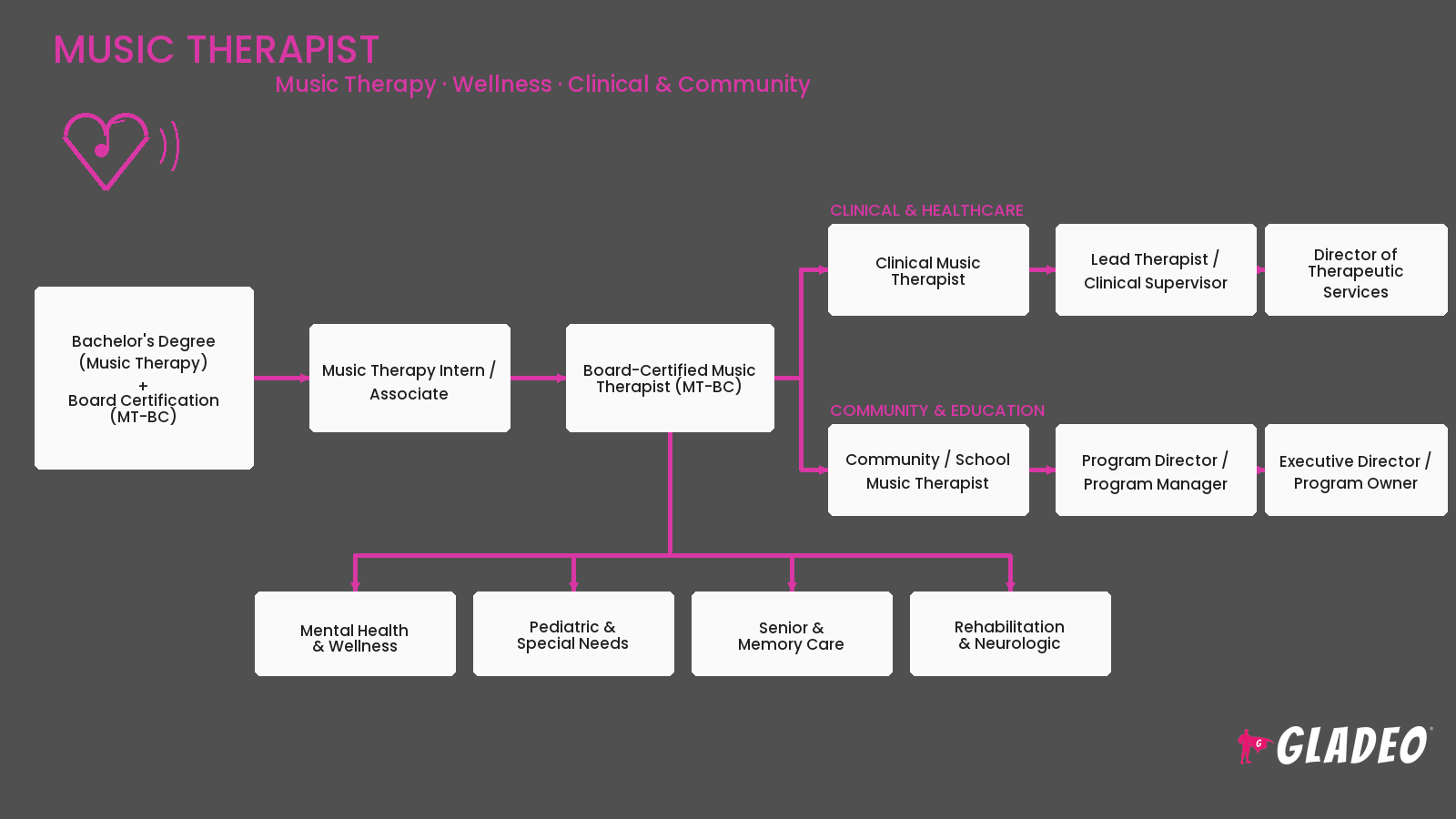
- Complete internship and obtain MT-BC credential
- Apply through hospitals, school districts, and therapy agencies
- Entry-level titles: Staff Music Therapist, Clinical Intern (pre-certification), Rehabilitation Therapist
- Highlight specialization practica in resume and cover letters
- Network through AMTA conferences and state chapters
- Be flexible about geography—rural areas often have openings
- Prepare clinical vignettes for interviews (de-identified)
- Pursue advanced certifications (e.g., NMT) or master’s degree
- Move into supervisory or program director roles
- Develop niche expertise—NICU, autism, oncology, veterans
- Publish or present research to build professional reputation
- Open private practice after gaining clinical experience
Websites:
- American Music Therapy Association (AMTA)
- Certification Board for Music Therapists (CBMT)
- World Federation of Music Therapy
- Journal of Music Therapy
Books:
- Introduction to Music Therapy by Hodges and Sebald
- Musicophilia by Oliver Sacks
- This Is Your Brain on Music by Daniel Levitin
Related helping and arts careers include:
- Occupational Therapist
- Speech-Language Pathologist
- Recreational Therapist
- Counselor or Social Worker
- Special Education Teacher
- Art Therapist
- Audiologist
- Community Arts Program Director
Newsfeed

Featured Jobs
Online Courses and Tools