





Spotlights
College Professor, University Professor, Faculty Member, Assistant Professor, Associate Professor, Lecturer, Adjunct Professor, Academic Researcher, Postsecondary Instructor, Department Faculty, Principal Investigator, Distinguished Professor
Think about the class that changed how you see the world, the teacher whose passion made a hard subject suddenly click, or the mentor who believed you could do something you did not think was possible. Professors spend careers creating exactly that kind of moment, not just once, but semester after semester, for students discovering who they want to become.
Professors teach courses at colleges and universities, but the job goes far beyond the classroom. They design curricula, lead lectures and seminars, mentor students through research projects and career decisions, and often conduct original research that pushes their field forward, from scientific discoveries to new interpretations of literature or history. They work alongside fellow faculty, graduate students, department chairs, and university administrators, and many also serve on academic committees that shape everything from admissions policy to campus-wide initiatives. A professor's daily work reflects three intertwined roles: teacher, researcher, and institutional citizen.
Using specialized research tools, academic publishing platforms, learning management systems, and grant funding, Professors generate new knowledge and pass it on to the next generation. Their work matters because it advances what humanity knows, trains the next wave of doctors, engineers, artists, and thinkers, and gives students the intellectual foundation and mentorship to find their own path forward.
- Watching a student go from confused to confident in a subject you love
- Pursuing original research that adds genuinely new knowledge to your field
- Enjoying deep intellectual freedom to explore questions that fascinate you
- Building a lasting legacy through the students and scholarship you leave behind
Working Schedule
Professors generally set their own schedules around teaching commitments, office hours, and research deadlines, which gives significant flexibility but rarely adds up to a standard 40-hour week. Time splits between the classroom, office hours meeting with students, labs or libraries for research, and long stretches of independent work grading, writing, and preparing lectures. Most Professors are employed by a college or university, either on the tenure track, in a non-tenure-track teaching role, or as adjunct faculty teaching on a course-by-course basis, and many balance teaching with grant-funded research obligations.
Typical Duties
- Preparing and delivering lectures, seminars, and discussion sections
- Designing course syllabi, assignments, and exams
- Grading student work and providing detailed feedback
- Holding office hours to advise and mentor students
- Conducting original research and publishing findings in academic journals
- Applying for research grants and managing grant budgets
- Advising graduate students on theses and dissertations
- Serving on academic committees, such as curriculum or hiring committees
- Presenting research at academic conferences
- Reviewing manuscripts and grant proposals for other researchers
- Supervising teaching assistants and research assistants
- Writing letters of recommendation for students
Additional Responsibilities
- Staying current with new research and developments in the field
- Mentoring junior faculty or graduate students on career development
- Participating in university governance and faculty senate activities
- Writing textbooks, book chapters, or public-facing articles
- Collaborating with researchers at other institutions
- Recruiting and evaluating prospective graduate students
- Engaging in public outreach, media interviews, or community education
- Managing a research lab, including budgets, equipment, and staff
A Professor's morning might start with final preparations for a lecture, reviewing slides, updating examples, or responding to student emails about an upcoming assignment. Teaching itself might take up a few hours, leading a large lecture course or a smaller graduate seminar where discussion drives the session.
Midday often shifts to research and mentorship. A Professor might meet with a graduate student to review data from an ongoing study, spend time in a lab or library gathering material for a paper, or sit down to write a section of a research article. Office hours might bring undergraduates seeking help with course material or guidance on their academic path.
Afternoons and evenings frequently involve committee meetings, grading, or writing grant proposals to fund future research. Many Professors also spend evening hours reading academic literature, revising manuscripts, or preparing for the next day's classes, since the boundary between work and personal time in academia is often blurry, especially during grant deadlines or conference season.
Soft Skills
- Clear and engaging communication
- Patience and adaptability when teaching diverse learners
- Strong critical thinking and analytical reasoning
- Self-motivation and independent work ethic
- Mentorship and coaching ability
- Public speaking and presentation skills
- Time management across teaching, research, and service
- Resilience in the face of rejection from journals or grant funders
- Collaboration with colleagues across disciplines
- Curiosity and a genuine love of lifelong learning
- Organizational skills for managing multiple long-term projects
- Openness to feedback and peer critique
Technical Skills
- Deep expertise in a specific academic discipline
- Research methodology and data analysis specific to the field
- Academic writing and publishing conventions
- Grant writing and budget management
- Learning management systems such as Canvas or Blackboard
- Statistical or specialized software relevant to the discipline
- Presentation tools for lectures and conferences
- Peer review and manuscript evaluation
- Curriculum design and assessment
- Familiarity with academic databases and research libraries
- Tenure-Track Research Professor: Balances heavy research output with teaching and university service
- Teaching-Focused Professor: Concentrates primarily on classroom instruction and curriculum design
- Adjunct Professor: Teaches on a part-time, course-by-course basis, often at multiple institutions
- Clinical Professor: Combines teaching with hands-on professional practice, common in medicine or law
- Research Professor: Focuses primarily on grant-funded research with limited teaching duties
- Department Chair: A faculty member who also leads departmental administration and strategy
- Distance and Online Professor: Specializes in teaching fully online or hybrid courses
- Visiting Professor: Holds a temporary teaching or research position at an institution
- Public research universities
- Private universities and liberal arts colleges
- Community colleges
- Graduate and professional schools
- Online and distance learning universities
- Government research institutions
- Medical schools and academic health centers
- Think tanks and research institutes
- International universities and exchange programs
- Historically Black colleges and universities (HBCUs)
- Religious and faith-based institutions
- Military and service academies
Becoming a Professor typically requires years of advanced education, often a doctoral degree that can take five to seven years beyond a bachelor's degree, followed by additional years in temporary postdoctoral or visiting positions before landing a permanent role. The academic job market is highly competitive, and many qualified candidates spend years searching for stable positions, sometimes relocating multiple times.
The workload is intense and rarely confined to standard hours. Professors juggle teaching, research, grant writing, and service obligations simultaneously, and the pressure to publish original research, especially for those pursuing tenure, can mean nights and weekends spent writing and revising. Rejection is a constant companion in academia, whether from journals, grant funders, or hiring committees, and building resilience to that rejection is essential.
Compensation can also be a real tradeoff, particularly for adjunct faculty who are paid per course and often lack benefits or job security. Even tenured Professors accept that academic salaries frequently trail what similar expertise would earn in industry, in exchange for intellectual freedom, flexible scheduling, and the ability to pursue research questions purely out of curiosity.
- Growing use of online and hybrid course formats across universities
- Increased demand for interdisciplinary research spanning multiple fields
- Rising use of artificial intelligence tools in both teaching and research
- Greater emphasis on open-access publishing to make research widely available
- Expansion of competency-based and skills-focused curricula alongside traditional degrees
- Growing reliance on adjunct and non-tenure-track faculty across institutions
- Increased focus on public scholarship and communicating research to broader audiences
- Rising importance of data science and computational methods across many disciplines
- More universities emphasizing diversity, equity, and inclusion in hiring and curriculum
- Expansion of micro-credentials and continuing education programs taught by faculty
Many Professors were the kids who asked endless questions, read far beyond what was assigned, or got completely absorbed in a niche topic that fascinated them, whether that was dinosaurs, ancient civilizations, or how machines work. They often loved debate, writing, or independent projects that let them dig deeper than a typical class allowed.
Others found their spark through a mentor or teacher who took their curiosity seriously, through science fairs, academic competitions, or research opportunities in high school or college. A genuine love of learning for its own sake, paired with a desire to share that excitement with others, often marked this path early on.
Becoming a Professor typically requires a doctoral degree, usually a Ph.D., in the field you want to teach and research, though some fields such as fine arts or certain professional programs accept a master's degree or equivalent professional experience. The path generally includes a bachelor's degree, a master's degree, and then several years of doctoral study involving original research, culminating in a dissertation. Many aspiring Professors also complete one or more postdoctoral research positions before securing a permanent faculty role.
Students can take courses in relevant subjects such as:
- Core coursework in your chosen discipline
- Research Methods and Statistics
- Academic Writing and Scholarly Communication
- Pedagogy and College Teaching Methods
- Grant Writing and Research Funding
- Ethics in Research and Academia
- Public Speaking and Presentation Skills
- Interdisciplinary Studies relevant to your field
- Discipline-specific technical or laboratory skills
- Professional Development Seminars in Academia
Hands-on research experience is essential from early in the academic path. Undergraduate research assistantships, summer research programs, and presenting at academic conferences all build the experience needed for competitive graduate programs. Teaching experience, often gained as a graduate teaching assistant, is equally important, since most faculty positions expect demonstrated classroom skill alongside research credentials.
- Take advanced or honors courses in the subject you are most passionate about
- Seek out research opportunities with teachers or local university faculty
- Enter academic competitions, science fairs, or writing contests
- Join academic clubs or honor societies related to your field of interest
- Practice writing extensively, since strong writing underlies almost every discipline
- Attend guest lectures or public talks at nearby colleges or universities
- Apply for summer research programs for high school or college students
- Seek out a mentor, teacher, or professor willing to guide your academic interests
- Get involved in undergraduate research as early as possible in college
- Present research at undergraduate conferences or symposiums
- Consider a teaching assistant or tutoring role to explore whether you enjoy instruction
- Research graduate programs and talk to current graduate students about their experience
- Doctoral programs with strong faculty mentorship and research funding
- Programs with a track record of graduates securing academic positions
- Opportunities to gain teaching experience as a graduate student
- Access to well-funded labs, archives, or research resources in your field
- Strong publication record and conference presence among current faculty
- Funding packages that cover tuition and provide a livable stipend
- Programs with active professional networks and alumni in academia
- Support for presenting at national or international conferences
- Clear guidance on the dissertation process and expected timeline
- Opportunities for interdisciplinary collaboration
- A departmental culture that supports work-life balance and mental health
- Career services or advising for both academic and non-academic career paths
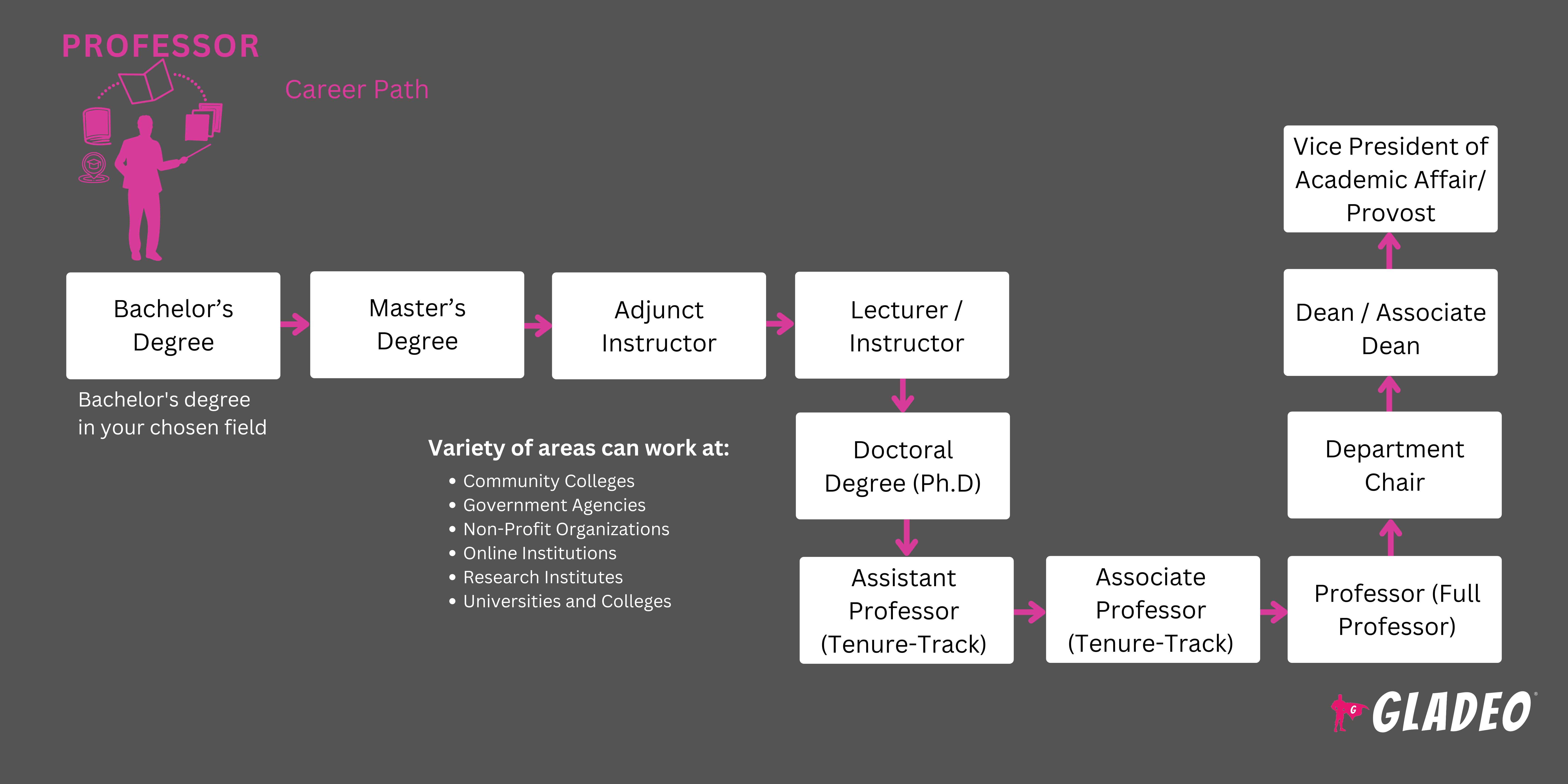
- Publish research in respected academic journals during graduate school
- Present at academic conferences to build visibility in your field
- Gain teaching experience as a graduate teaching assistant or instructor of record
- Complete one or more postdoctoral positions if standard in your field
- Apply broadly for open faculty positions, since the academic job market is highly competitive
- Build a strong CV highlighting publications, teaching experience, and grants
- Prepare a compelling research statement and teaching philosophy for applications
- Practice your job talk, the presentation given during faculty interviews
- Network at conferences and through your academic advisor's connections
- Consider adjunct or visiting positions to gain experience while searching for permanent roles
- Be open to relocating, since faculty openings in a specific field can be limited and scattered
- Seek mentorship from senior faculty on navigating the hiring process
- Build a strong, consistent record of published research in respected journals
- Secure external research grants to fund your work and demonstrate independence
- Develop a reputation as an excellent, well-reviewed teacher
- Take on leadership roles in departmental or university committees
- Mentor graduate students and junior faculty effectively
- Pursue tenure by meeting your institution's research, teaching, and service requirements
- Build a national or international reputation through conferences and collaborations
- Move into roles like full professor, endowed chair, or department chair over time
Websites:
- American Association of University Professors (AAUP) - aaup.org
- Chronicle of Higher Education - chronicle.com
- Inside Higher Ed - insidehighered.com
- Council of Graduate Schools - cgsnet.org
- National Science Foundation - nsf.gov
- National Endowment for the Humanities - neh.gov
- Higher Education Recruitment Consortium (HERC) - hercjobs.org
- American Council on Education (ACE) - acenet.edu
- Academic Jobs Online - academicjobsonline.org
- ProFellow - profellow.com
- Modern Language Association (MLA) - mla.org
- American Association for the Advancement of Science (AAAS) - aaas.org
Books:
- The Professor Is In by Karen Kelsky
- Academic Writing for Graduate Students by John M. Swales and Christine B. Feak
- How to Write a Lot by Paul J. Silvia
- Becoming an Academic Writer by Patricia Goodson
- What the Best College Teachers Do by Ken Bain
If you find that being a Professor isn't the right fit, your research, writing, and teaching skills transfer well to many related careers.
- High School Teacher
- Research Scientist
- Policy Analyst
- Corporate Trainer
- Museum Curator
- Science or Technical Writer
- Nonprofit Program Director
- Instructional Designer
- Consultant in Your Field of Expertise
- Academic Advisor
Newsfeed

Featured Jobs
Online Courses and Tools