







Spotlights
Quality Engineer, QA Engineer, Quality Control Engineer, Process Quality Engineer, Reliability Engineer, Compliance Engineer, Supplier Quality Engineer
Every product you use—your phone, your car, your clothes, even medical devices—must work safely and reliably. Behind that reliability is a Quality Assurance (QA) Engineer. Their job is to make sure products meet strict standards before they ever reach customers.
Quality Assurance Engineers design systems that prevent problems, not just fix them. They test materials, inspect processes, analyze data, and create quality control plans to ensure consistency and safety. If something fails, they investigate why and develop solutions so it doesn’t happen again.
This career blends problem-solving, data analysis, and teamwork. QA Engineers work closely with production teams, designers, and managers to maintain high standards while keeping costs and timelines under control. It’s ideal for someone who notices small details, enjoys improving systems, and takes pride in making things better and safer.
- Knowing customers can trust your products because of your work.
- Solving complex problems and preventing costly mistakes.
- Improving efficiency while maintaining high standards.
- Working across departments and influencing company-wide
improvements. - Playing a critical role in safety and compliance.
Working Schedule
Most QA Engineers work full-time in office, lab, or manufacturing settings. Some roles require time on the production floor. Deadlines, audits, or product launches may require extended hours.
“Every day is different and brings its own set of challenges... Each morning begins with a review of the tickets that recently appeared in Jira and in the calendar. Based on the tasks I see, I plan my day and set priorities for individual tasks.” — Ela Szulc, Quality Assurance Engineer, describing her work routine at a software development company.
Typical Duties
- Develop quality control procedures and inspection plans.
- Test products and materials to ensure they meet specifications.
- Analyze data to identify trends or recurring defects.
- Investigate product failures and determine root causes.
- Work with production teams to improve processes and reduce waste.
- Ensure compliance with industry regulations and safety standards.
Additional Responsibilities
- Conduct internal audits and supplier evaluations.
- Prepare quality reports for management and regulatory agencies.
- Train staff on quality standards and best practices.
- Implement continuous improvement strategies such as Lean or Six Sigma.
- Collaborate with engineers and designers during product development.
A Quality Assurance Engineer might begin the morning reviewing production reports and quality data from the previous shift. If defect rates increased overnight, they immediately started analyzing patterns to determine what changed.
After that, they may walk the production floor, inspect products, observe processes, and speak with technicians to ensure procedures are being followed correctly. If an issue is discovered, they document findings and begin a root-cause investigation.
Midday could include a meeting with engineers and managers to discuss improvements—perhaps adjusting a process to reduce waste or updating a testing procedure to strengthen reliability.
In the afternoon, they might conduct product tests in a lab, audit supplier documentation, or update compliance reports required by industry regulations.
By the end of the day, they review progress on improvement projects, respond to emails, and prepare action plans to ensure tomorrow’s production meets the highest quality standards.
Soft Skills:
- Attention to detail
- Critical thinking
- Communication
- Problem-solving
- Integrity and ethics
- Teamwork
- Time management
- Adaptability
Technical Skills:
- Statistical analysis
- Quality management systems (ISO standards)
- Root cause analysis
- Six Sigma and Lean methodologies
- Data reporting tools
- Process improvement techniques
- Regulatory compliance knowledge
- Risk assessment
- Manufacturing QA Engineers – Focus on production lines and factory processes.
- Software QA Engineers – Test software systems for bugs and reliability.
- Supplier Quality Engineers – Evaluate and monitor supplier performance.
- Compliance Engineers – Ensure products meet legal and regulatory standards.
- Reliability Engineers – Focus on product durability and long-term performance
- Manufacturing companies
- Technology firms
- Automotive and aerospace companies
- Healthcare and medical device companies
- Pharmaceutical companies
- Government agencies
- Consumer goods manufacturers
QA Engineers sometimes have to give difficult feedback when products or processes don’t meet quality standards. They may also experience pressure if production is delayed because of quality concerns. In fast-paced environments, they must balance speed and accuracy while carefully documenting findings, running tests, and rechecking results. The job calls for patience, persistence, strong attention to detail, and the confidence to stand by high standards—even when others are frustrated or disagree.
They also spend time investigating the root cause of defects, collaborating with production teams, and recommending corrective actions. This often means asking tough questions, analyzing data, and ensuring that problems are fully resolved—not just temporarily fixed.
Despite these challenges, the impact of their work is significant. QA Engineers help protect customers from faulty or unsafe products, reduce waste and costly recalls, and maintain the company’s reputation for reliability and excellence. Their commitment to quality builds trust, strengthens brand credibility, and ensures that products consistently meet or exceed expectations.
The field of Quality Assurance is evolving quickly as industries adopt new technologies and higher standards. One major trend is the growing use of automation and artificial intelligence in testing, allowing QA Engineers to detect defects faster and more accurately. Data analytics is also playing a larger role, helping engineers identify patterns, predict potential failures, and make data-driven decisions to improve processes.
In manufacturing and product development, there is increased emphasis on preventive quality control—focusing on identifying risks early rather than fixing problems after they occur. Sustainability and regulatory compliance are also becoming more important, requiring QA Engineers to ensure products meet environmental standards and safety regulations.
Additionally, digital documentation systems and cloud-based quality management software are transforming how QA teams track issues, report findings, and collaborate across departments. As products become more complex—especially in technology, healthcare, and advanced manufacturing—the role of the Quality Assurance Engineer continues to expand, requiring both technical expertise and strong analytical skills.
Quality Assurance Engineers often enjoyed solving puzzles, spotting mistakes, and figuring out why something didn’t work the way it should. They may have been the students who double-checked group projects for errors or reorganized messy systems just to make them more efficient.
Many liked math, science, or technology classes where accuracy mattered and small details made a big difference. Some enjoyed building models, coding simple programs, or running experiments to test different outcomes.
As professionals, they tend to be analytical, patient, and naturally curious—traits that often began showing up early in school when they took pride in getting things “just right.”
Educational requirements for Quality Assurance Engineers vary depending on the industry and level of responsibility. For example:
- Entry-level quality inspectors or technicians may only need a high school diploma or an associate degree, along with on-the-job training in inspection procedures and safety standards.
- Quality technicians working in manufacturing or technical environments often hold an associate degree in industrial technology, engineering technology, or a related field.
- Certifications such as Six Sigma Yellow Belt may be preferred.
- Most Quality Assurance Engineers need at least a bachelor’s degree in industrial engineering, mechanical engineering, manufacturing engineering, or a related field. Coursework in statistics, quality control, and process improvement is especially important.
- Engineers working in highly regulated industries—such as aerospace, pharmaceuticals, or medical devices—may need specialized training in compliance standards (such as ISO certifications or FDA regulations).
- Professionals seeking advancement often earn certifications such as Certified Quality Engineer (CQE) through the American Society for Quality (ASQ) or Six Sigma Green Belt/Black Belt credentials.
- Senior-level quality managers or directors may pursue a master’s degree in engineering, business administration (MBA), or operations management to move into leadership roles.
- Decide which industry you might want to work in as a Quality Assurance Engineer—such as manufacturing, technology, healthcare, food production, or aerospace. Different industries have different standards and testing methods, so exploring early can help you focus your path.
- Take challenging courses in math, science, computer science, engineering, or technology. Classes like statistics, chemistry, physics, coding, and industrial technology are especially helpful because QA Engineers rely heavily on data analysis and problem-solving.
- Ask your teachers about projects that involve testing, evaluating, or improving processes. Volunteer to help with lab experiments or group projects where you can practice documenting procedures and analyzing results.
- Get comfortable working with data. Learn how to use spreadsheets, basic programming tools, or data visualization software. Understanding how to interpret charts, trends, and performance metrics is a key skill in quality assurance.
- Participate in STEM clubs, robotics teams, coding clubs, or engineering competitions. These activities help you develop teamwork skills and attention to detail—both essential in QA roles.
- Practice identifying problems and suggesting improvements in everyday situations. Whether it’s reviewing a product, testing an app, or improving a school project workflow, train yourself to think critically about quality and efficiency.
- Look for internships, summer jobs, or volunteer opportunities in manufacturing plants, tech companies, laboratories, or production facilities. Even entry-level roles can provide exposure to quality control processes and safety standards.
- Programs with courses in statistics and quality control.
- Hands-on laboratory or manufacturing simulation experiences.
- Internship or co-op opportunities with reputable companies.
- Faculty with industry experience in quality systems.
- Opportunities to earn Lean or Six Sigma certifications.
- Courses that teach root cause analysis, risk management, and regulatory compliance standards (such as ISO).
- Access to data analysis tools and software commonly used in industry, such as statistical process control (SPC) programs.
- Capstone or real-world problem-solving projects where students improve an existing process or product.
- Strong job placement support and connections with manufacturing, healthcare, aerospace, or technology employers.
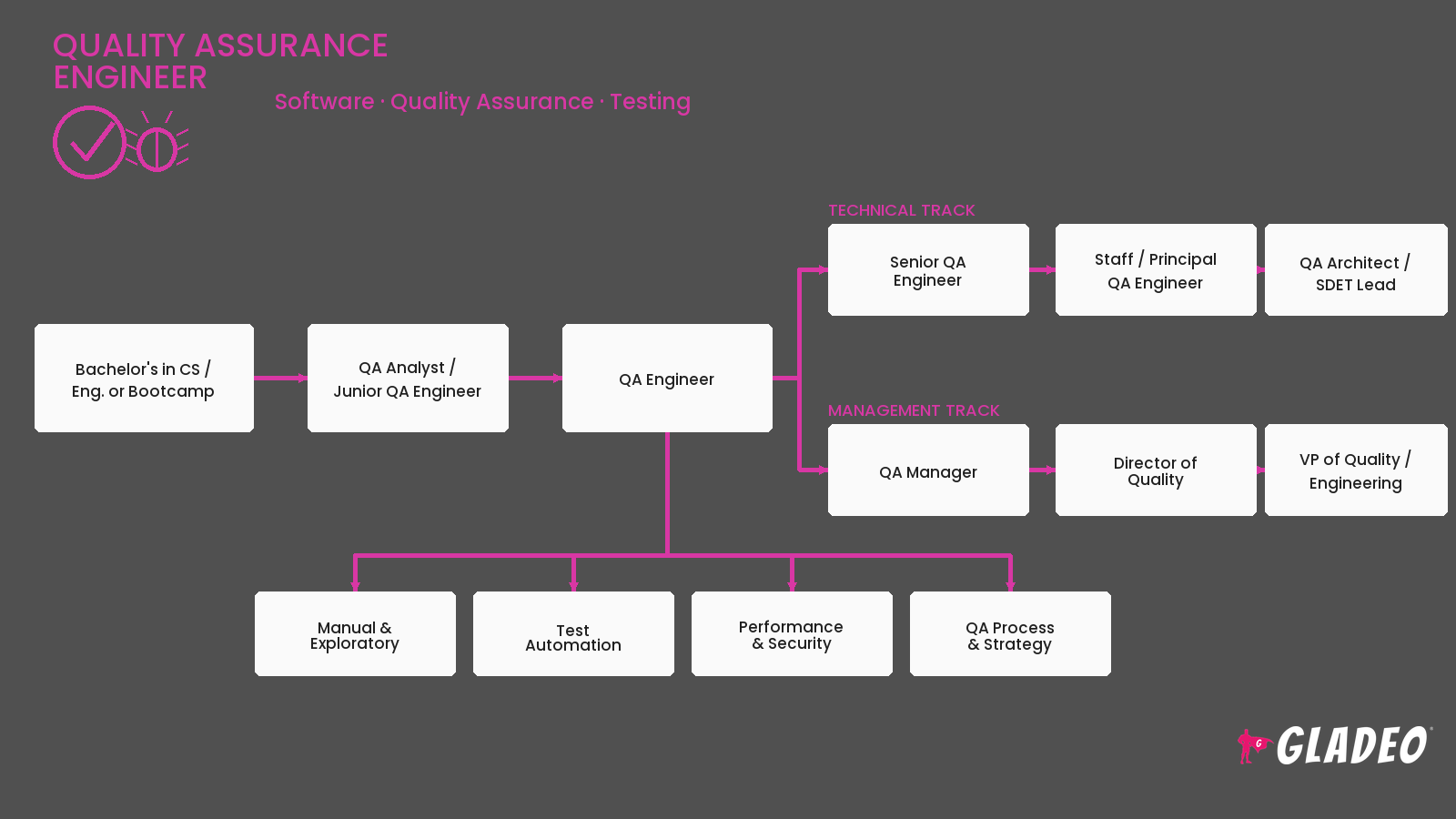
- Most QA Engineers have a bachelor’s degree in engineering, industrial technology, manufacturing, or a related field.
- Degrees in applied science, mechanical, electrical, or software engineering can also work.
- Take courses in statistics, math, science, and computer applications.
- Learning programming, databases, or data analytics is a big advantage.
- Certifications like Six Sigma (Green or Black Belt) or Certified Quality Engineer (CQE) strengthen your resume.
- Industry-specific certifications, such as ISO 9001 or FDA compliance, are useful in some sectors.
- Internships or co-op programs provide hands-on experience in labs, manufacturing, or tech companies.
- Workshops, webinars, and professional associations help you stay updated on QA tools and trends.
- Continuous learning is important to build skills and stay competitive in the field.
- Practice answering technical and behavioral questions to prepare for QA job interviews.
- Attend mock interviews or career fairs to gain confidence and improve your interview skills.
- Focus on specialized areas in demand, such as automated testing, software QA, or compliance with industry regulations.
- Consider pursuing a master’s degree in engineering, quality assurance, or industrial management to deepen your expertise.
- Take the lead on projects that streamline processes, reduce errors, or improve product reliability.
- Aim for leadership positions like QA Manager, Quality Director, or Compliance Officer.
- Develop a reputation for problem-solving, precision, and consistently improving workflows.
- Build connections by attending industry conferences, joining professional organizations, and engaging in online QA communities.
- Enhance your credentials with certifications like Six Sigma, ISO auditing, or advanced software quality programs to stand out in your field.
Websites
- ASQ.org – American Society for Quality
- QualityDigest.com – Industry news and best practices
- iSixSigma.com – Lean and Six Sigma resources
- SME.org – Society of Manufacturing Engineers
- ISO.org – International Organization for Standardization (global quality standards)
- NIST.gov – National Institute of Standards and Technology (measurement and compliance resources)
- ASQTV.org – Training videos and webinars from quality professionals
- AmericanManufacturing.org – Insights on manufacturing trends and workforce development
- QualityMag.com – Articles and case studies on quality assurance in industry
Books
- The Certified Quality Engineer Handbook by Connie M. Borror
- Lean Thinking by James P. Womack and Daniel T. Jones
- Out of the Crisis by W. Edwards Deming
Working in quality assurance can be challenging and highly rewarding—you help protect customers, improve products, and save companies from costly mistakes. As technology advances, automation and artificial intelligence are changing how inspections and testing are performed, but they are also creating new opportunities for engineers who understand data, systems, and continuous improvement.
If you’re curious about other careers that focus on analysis, safety, and process improvement, consider related fields such as:
- Industrial Engineer
- Manufacturing Engineer
- Process Improvement Analyst
- Compliance Specialist
- Regulatory Affairs Specialist
- Operations Manager
- Supply Chain Analyst
- Project Manager
- Reliability Engineer
- Safety Engineer
- Data Analyst
- Risk Management Specialist
- Production Supervisor
- Business Operations Specialist
Newsfeed

Featured Jobs
Online Courses and Tools