







Spotlights
Community Outreach Director, Public Engagement Manager, Social Impact Coordinator, Outreach Program Manager, Community Relations Director, Volunteer Coordinator, Advocacy Director, Social Services Director, Community Development Manager, Public Affairs Director, Engagement Specialist, Outreach Coordinator
Imagine a city where every neighborhood feels connected, supported, and empowered to thrive. Social Outreach Directors make this vision real by designing and leading programs that bring resources, education, and hope directly to the people who need it most.
Social Outreach Directors plan, develop, and oversee community programs that address social issues like poverty, education gaps, and health disparities. They work closely with local government agencies, nonprofits, schools, and volunteers to build partnerships and create outreach campaigns. Their day-to-day involves coordinating events, managing teams, securing funding, and evaluating program impact to ensure communities get the support they deserve.
Using data analysis tools, communication platforms, and project management software, Social Outreach Directors measure success and adapt strategies to reach diverse populations effectively. Their leadership fuels lasting social change by bridging the gap between resources and underserved communities, making a real difference in people’s lives.
- Seeing communities improve and knowing your programs helped create positive change.
- Building strong relationships with people from all walks of life and inspiring teamwork.
- Creating opportunities that empower individuals and families to overcome challenges.
- Leading projects that address critical social issues and improve quality of life.
Working Schedule
Social Outreach Directors often work full-time with some flexibility but can face long hours during campaign launches or community events. Their work environments range from offices to community centers, schools, and outdoor venues. Many work for nonprofits, government agencies, or educational institutions, with some managing teams remotely. Deadlines tied to funding cycles and grant reporting create a dynamic, sometimes high-pressure work rhythm.
Typical Duties
- Develop and implement outreach programs targeting specific community needs.
- Coordinate with local agencies and nonprofits to build partnerships.
- Manage budgets, grants, and funding applications for outreach initiatives.
- Recruit, train, and supervise volunteers and outreach staff.
- Plan and lead community events, workshops, and informational sessions.
- Conduct needs assessments and gather community feedback.
- Create promotional materials and social media campaigns to raise awareness.
- Monitor and evaluate program effectiveness, preparing reports for stakeholders.
- Advocate for community resources and policy changes with government officials.
- Maintain detailed records and documentation for compliance and funding purposes.
- Facilitate communication between diverse groups and stakeholders.
- Respond to community concerns and adjust programs accordingly.
Additional Responsibilities
- Represent the organization at public meetings and forums.
- Develop strategic plans aligned with organizational goals.
- Ensure cultural competency and inclusivity in all outreach efforts.
- Stay updated on social issues, funding opportunities, and best practices.
- Collaborate with marketing teams to amplify outreach impact.
- Provide training and support to partner organizations.
- Lead crisis response efforts related to community needs.
- Write grant proposals and manage reporting requirements.
Mornings start with reviewing program schedules, checking communications from partners, and planning outreach activities for the day.
Midday often involves meeting with community leaders, coordinating volunteer teams, and overseeing event setups or workshop sessions.
Afternoons are dedicated to analyzing program data, preparing reports, and collaborating with other departments to refine outreach strategies and secure funding.
Soft Skills
- Empathy and compassion
- Strong communication and active listening
- Leadership and team motivation
- Conflict resolution and negotiation
- Cultural awareness and sensitivity
- Adaptability and problem-solving
- Networking and relationship building
- Organizational and time management
- Creativity in program design
- Public speaking and advocacy
- Patience and resilience
- Critical thinking and decision making
Technical Skills
- Data analysis and interpretation
- Project management software (e.g., Asana, Trello)
- Grant writing and fund development
- Social media management tools
- Microsoft Office Suite (Word, Excel, PowerPoint)
- Customer Relationship Management (CRM) systems
- Survey design and evaluation methods
- Budget management and financial reporting
- Public relations and media outreach
- Event planning platforms
- Urban Outreach Director: Focuses on programs in city environments addressing challenges like homelessness and education.
- Rural Outreach Director: Develops initiatives tailored to remote or farming communities with limited resources.
- Youth Outreach Director: Specializes in programs supporting young people through mentoring, education, and recreation.
- Health Outreach Director: Coordinates campaigns related to public health, disease prevention, and wellness.
- Senior Outreach Director: Oversees multiple outreach programs and manages larger teams at an organizational level.
- Advocacy Outreach Director: Concentrates on influencing public policy and community rights through activism and education.
- Volunteer Outreach Director: Focuses on recruiting, training, and managing volunteers for various community projects.
- Digital Outreach Director: Uses online platforms and social media to engage communities and spread awareness.
- Nonprofit organizations focused on social services
- Government social service agencies
- Public health departments
- Educational institutions and school districts
- Community development corporations
- Faith-based organizations
- Healthcare providers and hospitals
- Youth development organizations
- Environmental justice groups
- Advocacy and civil rights groups
- Foundations and grant-making bodies
- Local and regional councils
Social Outreach Directors often juggle multiple projects and deadlines, requiring strong stress management and prioritization skills. They may face emotional challenges as they work with vulnerable populations and navigate complex social issues.
Work hours can be irregular, with evenings and weekends needed to attend community events or emergency meetings. Flexibility and commitment are essential for success in this role.
Sacrifices may include occasional travel and high accountability to funders and stakeholders. However, the fulfillment of making a measurable difference in people's lives often outweighs these demands.
- Increased use of data analytics to target outreach efforts more efficiently.
- Growing emphasis on culturally responsive and inclusive programming.
- Expansion of digital and social media platforms for community engagement.
- Greater collaboration between government, nonprofits, and private sector.
- Focus on mental health and holistic community well-being.
- Use of mobile apps for service delivery and communication.
- Shift towards participatory approaches involving community members in decision-making.
- Enhanced grant competition driving innovation in program design.
- Integration of environmental justice into social outreach work.
- Emphasis on sustainability and long-term impact evaluation.
Many Social Outreach Directors were drawn to helping others from a young age, often volunteering in community service projects or school clubs focused on social justice.
They typically enjoyed organizing events, public speaking, and working with diverse groups, showing early signs of leadership and a passion for making a difference.
To become a Social Outreach Director, a bachelor’s degree in social work, public administration, community development, or a related field is often required. Many professionals also pursue advanced degrees or certifications to deepen their expertise and leadership skills.
Students can take courses in relevant subjects such as:
- Social Work
- Community Development
- Public Administration
- Sociology
- Psychology
- Communications
- Nonprofit Management
- Grant Writing
- Program Evaluation
- Cultural Competency
Hands-on experience through internships or volunteer work is essential to build practical skills and community connections. A strong portfolio of successful projects and a network of professional contacts help open doors to leadership roles.
- Volunteer with local nonprofits or community groups to gain firsthand experience.
- Take leadership roles in school clubs focused on service or advocacy.
- Enroll in classes covering social sciences and public speaking.
- Attend workshops or seminars on community issues and nonprofit work.
- Develop computer skills, especially in data and project management software.
- Seek out mentors working in social services or public administration.
- Participate in youth leadership programs or civic engagement activities.
- Start small outreach projects to practice organizing and communication.
- Build a portfolio documenting your service activities and impact.
- Learn about grant writing and fundraising basics.
- Look for programs accredited by recognized social work or public administration bodies.
- Choose programs offering internships or fieldwork in community settings.
- Evaluate faculty experience with real-world outreach projects.
- Check for courses that emphasize cultural competence and inclusivity.
- Seek programs with strong alumni networks for mentorship and job placement.
- Consider flexible scheduling options if balancing work and study.
- Ensure the curriculum covers grant writing and program evaluation.
- Look for training in digital communication and social media use.
- Check for opportunities to develop leadership and advocacy skills.
- Verify access to career services and professional development workshops.
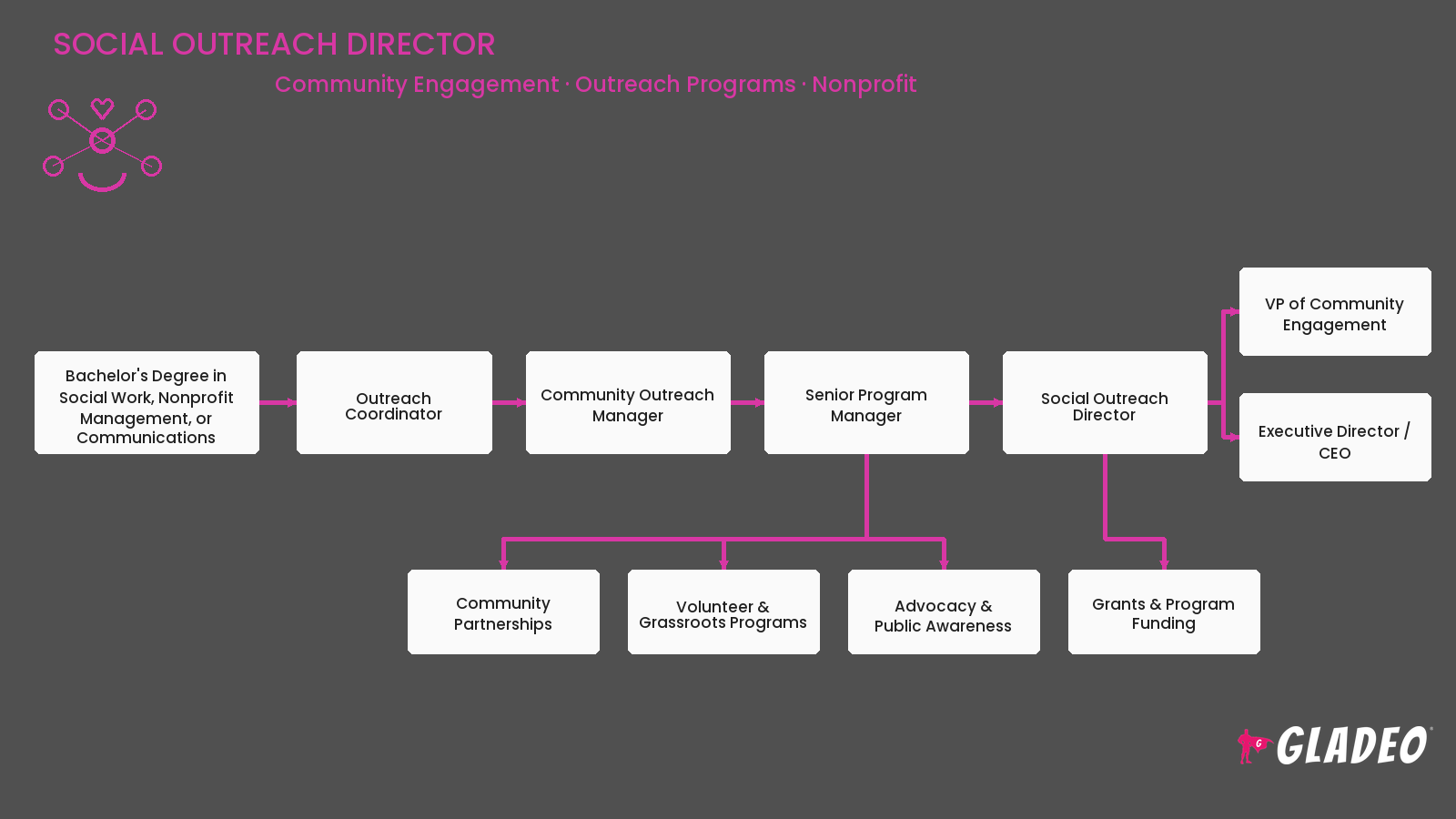
- Volunteer or intern at a local nonprofit or social service agency.
- Assist in organizing community events or fundraising campaigns.
- Support grant writing and reporting tasks to understand funding processes.
- Help manage social media accounts to gain communication experience.
- Shadow experienced outreach coordinators to learn daily operations.
- Participate in community needs assessments and data collection.
- Develop and distribute outreach materials under supervision.
- Attend public meetings to observe advocacy and stakeholder engagement.
- Build relationships with community members and partner organizations.
- Track and report on program attendance and impact data.
- Practice public speaking in small group settings.
- Seek feedback to improve organizational and leadership skills.
- Gain expertise in grant writing and program evaluation.
- Build a reputation for successful project management and community impact.
- Take leadership training or advanced degrees in social work or public administration.
- Expand professional networks through conferences and industry groups.
- Develop skills in advocacy and public policy engagement.
- Mentor junior staff and volunteers to show leadership.
- Seek roles managing larger teams and budgets.
- Pursue certifications in nonprofit management or community leadership.
Websites:
- National Association of Social Workers (NASW) - https://www.socialworkers.org/
- National Council of Nonprofits - https://www.councilofnonprofits.org/
- Alliance for Strong Families and Communities - https://www.alliance1.org/
- Grant Professionals Association - https://grantprofessionals.org/
- Community Tool Box - https://ctb.ku.edu/en
- Council on Foundations - https://www.cof.org/
- Urban Institute - https://www.urban.org/
- National Human Services Assembly - https://www.nationalassembly.org/
- Independent Sector - https://independentsector.org/
- American Evaluation Association - https://www.eval.org/
- Corporation for National and Community Service - https://www.nationalservice.gov/
- Foundation Center - https://foundationcenter.org/
- VolunteerMatch - https://www.volunteermatch.org/
- Social Work Helper - https://www.socialworkhelper.com/
Books:
- The Art of Community: Seven Principles for Belonging by Charles Vogl
- Building Powerful Community Organizations by Michael Jacoby Brown
- Nonprofit Management 101 by Darian Rodriguez Heyman
- The Grant Application Writer's Workbook by Stephen Russell and David Morrison
- Evaluating Training Programs by Donald Kirkpatrick and James Kirkpatrick
If becoming a Social Outreach Director doesn’t feel like the right fit, there are many other careers that use similar skills in leadership, communication, and community engagement.
- Social Worker
- Program Coordinator
- Nonprofit Fundraiser
- Community Health Worker
- Public Relations Specialist
- Volunteer Manager
- Policy Analyst
- Youth Counselor
- Event Planner
- Human Services Manager
Click here to download the infographic
Newsfeed

Featured Jobs
Online Courses and Tools