






Spotlights
Audio Technician, Sound Technician, Audio Engineer, Audio Specialist, Broadcast Audio Engineer, Live Sound Technician, Recording Technician, Mixing Engineer, Sound Mixer, Field Audio Technician, Studio Engineer, Location Sound Engineer
Imagine sitting in a concert hall or watching your favorite movie, completely immersed in the rich, clear sound that brings the experience to life. Sound Engineering Technicians are the invisible hands behind that perfect audio—they make sure every note, effect, and voice reaches your ears flawlessly.
Every day, Sound Engineering Technicians set up, operate, and maintain the audio equipment that captures and delivers sound for concerts, films, TV shows, radio broadcasts, and live events. They collaborate closely with producers, directors, musicians, and other technicians to achieve the exact sound quality needed for each project, whether it’s mixing a live concert or recording dialog on a movie set.
Using a mix of high-tech gear like mixing consoles, microphones, audio processors, and computer software, Sound Engineering Technicians shape and control sound to create the best possible listening experience. Their work ensures that audiences hear every detail clearly, making stories more powerful and performances unforgettable.
- Bringing live music and performances to life with perfect sound that audiences feel.
- Being a key part of creating memorable movies, TV shows, and broadcasts through expert audio work.
- •Working with creative teams to solve technical challenges and enhance storytelling with sound.
- The satisfaction of hearing a final mix and knowing your skills made it sound amazing.
Working Schedule
Sound Engineering Technicians often work irregular hours to match event and production schedules. They may spend long hours standing during concerts or film shoots and sometimes work nights, weekends, or holidays. Many find freelance work, traveling between locations and projects, while others are employed full-time by studios, theaters, or broadcasters. Deadlines can be intense, especially during live events or tight post-production periods.
Typical Duties
- Setting up and testing microphones, speakers, and mixing consoles before events or recording sessions.
- Operating soundboards and digital audio workstations to mix live or recorded audio.
- Adjusting audio levels and effects to ensure balanced and clear sound.
- Collaborating with directors, musicians, and producers to understand sound requirements.
- Troubleshooting and repairing audio equipment as needed during sessions or events.
- Recording, editing, and mastering audio tracks in studio or field settings.
- Monitoring sound quality during live broadcasts or performances and making real-time adjustments.
- Maintaining and organizing audio equipment and cables to ensure reliability and safety.
- Coordinating with lighting and video technicians for synchronized production.
- Training or assisting junior technicians or interns.
- Documenting audio setups and configurations for repeatability in future events.
- Ensuring adherence to safety and noise regulations during events and recordings.
Additional Responsibilities
- Updating software and firmware on audio devices to stay current with technology.
- Keeping detailed logs of sessions, equipment settings, and maintenance.
- Assisting in the design and layout of studio or stage audio setups.
- Managing inventory of audio equipment and ordering replacements or upgrades.
- Communicating with venue staff to coordinate technical requirements.
- Supporting post-production teams by providing raw audio files and session notes.
- Adapting to new technologies and techniques to improve sound quality.
- Participating in rehearsals or pre-recording meetings to align on audio goals.
A Sound Engineering Technician’s day often starts early by reviewing the day’s schedule and checking equipment. They inspect microphones, cables, and audio consoles to ensure everything is ready for setup. They might meet with producers or musicians to discuss specific sound needs or changes from previous sessions.
Midday is usually packed with setting up gear at venues or studios, running sound checks, and coordinating with performers or directors. During live events or recordings, they monitor audio feeds closely, adjusting levels and fixing any issues instantly to prevent disruptions.
By late afternoon or evening, they may assist with breakdown of equipment, back up recorded audio, and review session notes. After events, they often collaborate with editors or mixers and prepare equipment for the next day. The job requires a mix of technical focus and creative problem solving throughout the day.
Soft Skills
- Active listening
- Attention to detail
- Problem-solving mindset
- Patience under pressure
- Teamwork and collaboration
- Communication skills
- Adaptability
- Creativity
- Time management
- Critical thinking
- Multitasking
- Calmness during live events
Technical Skills
- Operating mixing consoles
- Audio signal processing
- Digital Audio Workstation (DAW) proficiency
- Microphone placement and selection
- Sound system setup and calibration
- Troubleshooting audio equipment
- Recording techniques
- Sound editing and mastering
- Understanding acoustics
- Familiarity with audio software plugins
- Live Sound Technician: Manages sound reinforcement during concerts, theater, and live events to ensure clear audio for audiences.
- Studio Sound Technician: Works in recording studios to capture and refine audio for music, voiceovers, and other productions.
- Broadcast Audio Technician: Handles audio for radio, TV, and streaming broadcasts, ensuring smooth live or recorded sound.
- Location Sound Engineer: Records high-quality audio on film or TV sets, often working outdoors or in challenging environments.
- Post-production Sound Technician: Edits, mixes, and masters audio after recording to enhance final productions.
- Sound System Installer: Designs and installs permanent audio systems in venues like stadiums, houses of worship, or conference centers.
- Audio Maintenance Technician: Focuses on repairing and maintaining audio equipment to keep it performing optimally.
- Theatrical Sound Technician: Specializes in sound design and operation for stage plays and musicals.
- Recording studios
- Concert venues
- Film and television production companies
- Radio and television broadcasters
- Live event production companies
- Theaters and performing arts centers
- Audio equipment manufacturers
- Music production companies
- Sports arenas and stadiums
- Post-production houses
- Educational institutions with media programs
- Broadcast networks
Sound Engineering Technicians often work in fast-paced, high-pressure environments where every second counts, especially during live events. They must be ready to troubleshoot unexpected issues quickly to avoid disruptions that could affect performances or broadcasts.
Their work hours can be irregular and demanding, including nights, weekends, and holidays, depending on the event schedules. Long periods of standing and carrying heavy equipment are common. Freelancers may face unpredictability in workload and income, requiring strong self-management skills.
Despite these challenges, the role offers dynamic work with creative teams and varied environments, from studios to concert halls. The ability to adapt and stay calm under pressure is essential, as is ongoing learning to keep up with rapid audio technology changes.
- Increasing use of digital audio workstations and software plugins for more flexible sound control.
- Growth in remote production and live streaming requiring new audio engineering techniques.
- Advances in wireless microphone technology improving mobility and sound quality.
- Integration of immersive audio formats like Dolby Atmos for richer listener experiences.
- Increased automation in mixing consoles and sound systems.
- Growing demand for environmentally conscious audio equipment and setups.
- Use of artificial intelligence for noise reduction and audio enhancement.
- Expansion of virtual and augmented reality creating new sound design challenges.
- Cross-disciplinary collaboration with video, lighting, and stage design teams.
- Rising importance of cybersecurity for audio streaming and broadcasting systems.
Many Sound Engineering Technicians discovered their passion by experimenting with music, recording, or live sound setups during childhood. Playing with radios, speakers, or early music production apps sparked curiosity about how sound works and how to control it.
They often enjoyed activities like playing instruments, participating in school bands or theater productions, or tinkering with electronics and computers. Early exposure to concerts, recording studios, or media production environments helped build their enthusiasm for a career in sound technology.
To become a Sound Engineering Technician, aspiring professionals typically pursue a mix of formal education and hands-on training. Many start with associate degrees or certificates in audio engineering, music technology, or broadcasting, while others gain experience through internships and apprenticeships.
Students can take courses in relevant subjects such as:
- Audio Engineering Fundamentals
- Digital Audio Workstations (DAW)
- Microphone Techniques
- Sound Design and Acoustics
- Live Sound Reinforcement
- Music Theory and Production
- Broadcast Technology
- Electronics for Audio Equipment
- Mixing and Mastering
- Recording Studio Practices
Building a strong portfolio of recorded or live projects and gaining practical experience through internships or part-time work are crucial to breaking into this field. Many Sound Engineering Technicians continue learning on the job to keep up with evolving audio technologies and software.
- Join school bands, theater groups, or media clubs to gain early exposure to sound and music production.
- Take classes in physics, computer science, and music to understand sound principles and technology.
- Learn to use basic audio software and recording equipment through electives or independent projects.
- Volunteer to help with school events, concerts, or broadcasts to build practical experience.
- Pursue summer programs or workshops focused on audio engineering or music technology.
- Consider dual enrollment options for college-level audio or media courses while in high school.
- Develop strong math and problem-solving skills to handle technical challenges.
- Build a portfolio by recording and mixing music or podcasts.
- Seek internships or part-time jobs at local radio stations, theaters, or studios.
- Network with professionals through events, online communities, or mentorship programs.
- Stay curious about new audio gear and software innovations.
- Practice teamwork and communication skills by collaborating on group projects.
- Look for programs with hands-on labs and modern audio equipment.
- Choose schools with strong connections to local media or music industries for internship opportunities.
- Verify that instructors have professional experience in sound engineering or related fields.
- Ensure curriculum covers both live sound and studio recording techniques.
- Check for courses in emerging audio technologies like immersive sound or broadcast audio.
- Evaluate opportunities for portfolio and reel development during the program.
- Consider programs that offer career counseling and job placement support.
- Look for programs that teach troubleshooting and equipment maintenance skills.
- Find schools with access to professional-grade recording studios and live venues.
- Check if the program supports certifications relevant to audio technology.
- Seek programs that encourage collaboration with other creative disciplines like video or theater.
- Choose programs offering flexible schedules or part-time options if needed.
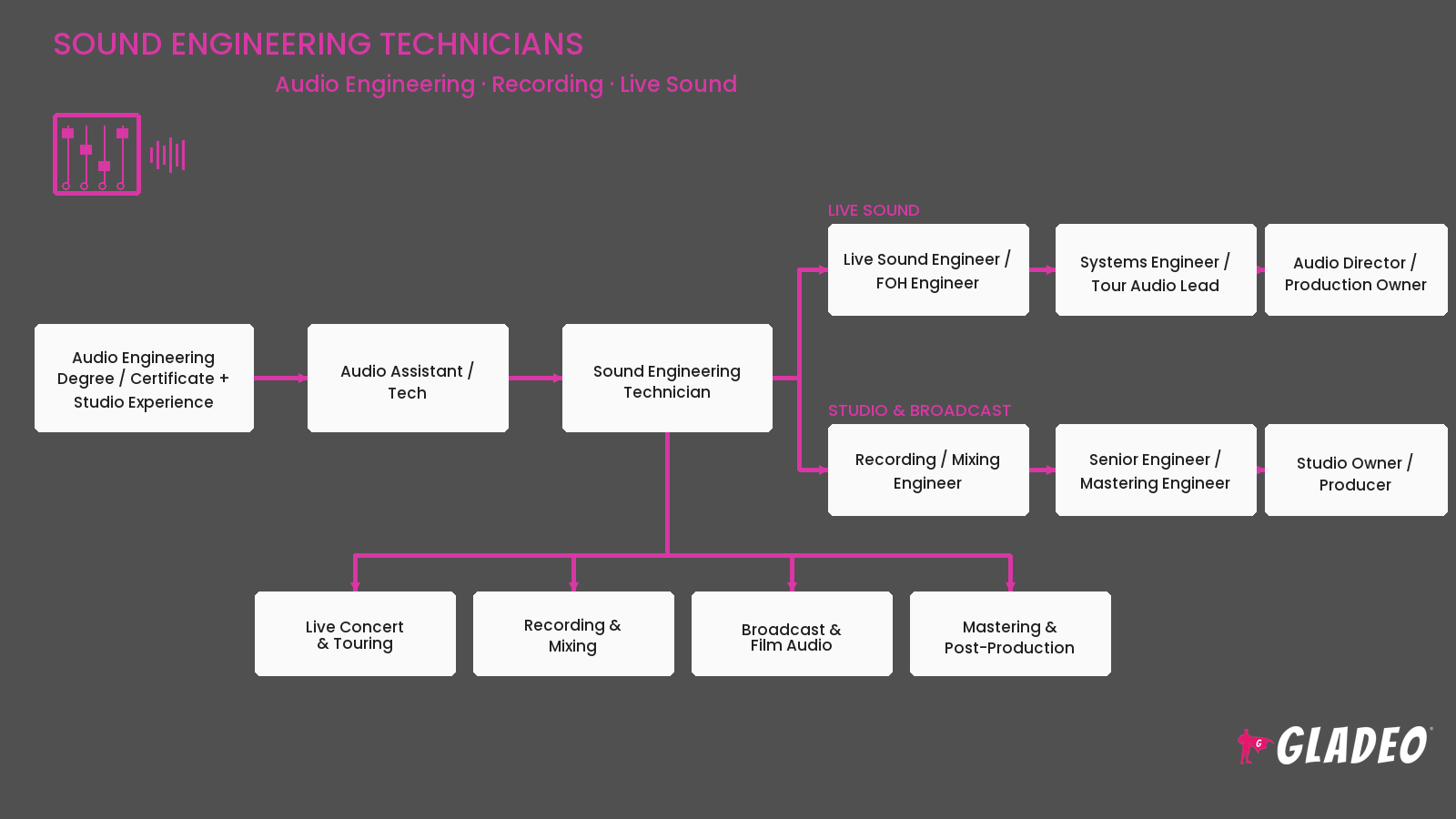
- Apply for internships or assistant roles at recording studios, radio stations, or live event companies.
- Build a demo reel showcasing your best recorded or mixed work.
- Volunteer to run sound for school events, local theater productions, or community concerts.
- Network with professionals through social media platforms like LinkedIn or industry forums.
- Attend audio industry workshops, trade shows, and meetups to meet potential employers.
- Start as a runner or equipment assistant to learn the ropes on set or in the studio.
- Keep learning new audio software and technologies to stay competitive.
- Ask for feedback from mentors and peers to improve your technical skills.
- Create a professional resume highlighting relevant coursework and hands-on projects.
- Be punctual and reliable to build a reputation for professionalism.
- Offer to help with equipment setup and teardown to gain trust and experience.
- Seek out freelance gigs for local bands or podcasts to expand your experience.
- Gain specialized certifications in audio software or hardware to increase your qualifications.
- Develop expertise in niche areas like post-production sound or immersive audio.
- Build strong relationships with producers, directors, and other creatives to secure repeat work.
- Take leadership roles on projects to demonstrate management and technical skills.
- Keep up with industry trends and continue learning new tools and techniques.
- Expand your network by joining professional audio organizations or attending conferences.
- Consider moving into sound design, mixing, or production roles for career growth.
- Start your own audio services business or freelance brand once experienced.
Websites:
- Audio Engineering Society (aes.org)
- Sound On Sound (soundonsound.com)
- Mix Magazine (mixonline.com)
- Pro Sound Web (prosoundweb.com)
- Recording Connection (recordingconnection.com)
- Gearslutz Forums (gearspace.com)
- Broadcast Engineering (broadcastengineering.com)
- SonicScoop (sonicscoop.com)
- Live Sound International (livesoundinternational.com)
- SoundGirls (soundgirls.org)
- Sweetwater (sweetwater.com)
- MusicTech (musictech.net)
- FilmSound.org
- SoundBetter (soundbetter.com)
Books:
- Modern Recording Techniques by David Miles Huber
- The Mixing Engineer's Handbook by Bobby Owsinski
- Sound Reinforcement Handbook by Gary Davis and Ralph Jones
- Mastering Audio: The Art and the Science by Bob Katz
- Recording Music on Location by Bruce Bartlett and Jenny Bartlett
If a career as a Sound Engineering Technician doesn’t work out or you want to explore related fields, there are plenty of options where your technical and creative skills can shine.
- Broadcast Technician: Operates equipment for radio and television broadcasts, focusing on overall transmission quality.
- Music Producer: Oversees the creative and technical aspects of music recording and production.
- Video Editor: Edits and assembles video footage, often working closely with audio teams.
- Acoustical Consultant: Designs spaces to optimize sound quality for theaters, studios, and public venues.
- Audio Equipment Sales Specialist: Helps customers choose and use professional audio gear.
- Lighting Technician: Manages lighting design and operation for live events and productions.
- Media Technician: Sets up and maintains audio-visual equipment for schools, businesses, or events.
- Electronic Technician: Repairs and maintains electronic devices, including audio equipment.
- Sound Designer: Creates original sound effects and atmospheres for games, films, and theater.
- Radio DJ or Host: Curates and presents music and content on air, blending technical and creative skills.
Click here to download the infographic
Newsfeed

Featured Jobs
Online Courses and Tools