






Spotlights
Sports Equipment Designer, Sporting Goods Product Designer, Sports Gear Designer, Athletic Equipment Designer, Sports Product Developer, Sporting Goods Design Engineer, Sports Accessories Designer, Performance Equipment Designer, Sports Apparel Designer, Sports Gear Design Specialist
Chances are you’ve bought sports-related products in your life, such as baseball gloves, tennis rackets, or bike helmets. As with any other merchandise, someone had to design those products before they could be manufactured and shipped off to the stores where you bought them. Who is doing all that designing? Sports Goods Designers!
So what exactly falls under the category of sports goods? Law Insider defines sporting goods as “fitness equipment and accessories, which presently involve treadmills, home gyms, aerobic exercises, trampolines, weights and benches and exercise accessories.” But the term can also include “items designed for human use and worn or used in conjunction with sporting, athletic, or recreational activities.”
Though it isn’t a well-known career type, Sports Goods Designers — also known as product or industrial designers — are key to the multimillion-dollar industry that provides youth and adults with an insanely broad range of sporting and athletic goods and products used at home, at schools, in gyms, and in professional sporting events around the world. Even though we don’t usually think about them, without the hard work of these “behind-the-scenes” product and industrial design experts, life would be a lot less fun!
- Designing unique sports and fitness items and upgrading features of existing products
- Producing gear that will help entertain a wide range of users while promoting physical fitness
- Helping mitigate injuries by enhancing safety features
- Contributing to fitness, health, and wellness for people of all ages
Working Schedule
Sports Goods Designers usually work full-time jobs, generally indoors but with travel sometimes needed to visit and collaborate with project managers and engineers.
Typical Duties
- Review markets for trends
- Conceptualize potential new products or upgrades on existing ones
- Look for problems that a new product or feature could solve for users
- Research existing products and designs to see what’s currently available or what’s been tried before
- Come up with design ideas on potential consumer interest
- Review and analyze competitor products to uncover unmet consumer needs or wants
- Draft initial concept sketches and visual designs to go over with other designers, managers, and engineers
- Apply aesthetic skills to producing 3D models
- Consider materials and fabrics to be used
- Keep user experience and ergonomics in mind while designing
- Discuss short- and long-term potential for products
- Go over cost estimates with production executives
- Continue to develop approved ideas until they are ready to be prototyped, tested, manufactured, and marketed
- Pay close attention to feedback during testing
Additional Responsibilities
- Explore ideas with team members outside the design department
- Consider stakeholder interests and be able to explain product strategies and visions
- Stay involved and offer support during the execution of design plans
- Monitor sales performance and consumer feedback after a product is launched
A basketball shoe needs better grip. A tennis racket needs to be lighter without losing strength. A football helmet needs improved protection while remaining comfortable. Sports Goods Designers help solve these challenges by creating and improving the equipment, clothing, and accessories athletes use to perform at their best. They combine creativity, knowledge of materials, engineering principles, and an understanding of sports to develop products that are functional, comfortable, durable, and visually appealing.
A typical day might include:
- Researching sports, athletic performance, and consumer trends to identify opportunities for new products
- Sketching and developing concepts for sporting equipment, footwear, protective gear, and accessories
- Selecting materials such as carbon fiber, rubber, foam, plastics, leather, and performance fabrics
- Creating digital designs and 3D models using computer-aided design (CAD) software
- Building prototypes and testing products for comfort, durability, flexibility, safety, and performance
- Working with engineers, product developers, manufacturers, and professional athletes to improve designs
- Gathering feedback from athletes and customers and making adjustments to existing products
- Monitoring manufacturing processes to ensure finished products meet quality and design specifications
Soft Skills
- Communication skills
- Consumer-focus
- Creativity
- Curiosity
- Deductive reasoning
- Empathy
- Enthusiasm
- Interest in games, sports, and fitness
- Organizational skills
- Patience
- Persuasiveness
- Resourcefulness
- Sound judgment and decision-making
- Teamwork
- Time management
Technical Skills
- Business-orientation
- Familiarity with design tools
- Knowledge of software related to:
- Analytics
- Computer-aided design
- Computer-aided manufacturing
- Development environment
- Enterprise resource planning
- Financial analysis
- Geographic information systems
- Graphics
- Object or component-oriented development
- Knowledge of visual presentation equipment
- Knowledge of generative research methods
- Understanding problem-solving frameworks and lean product management
- Sports Footwear Designer: Creates athletic shoes for activities such as running, basketball, soccer, hiking, and training, focusing on comfort, support, traction, and performance
- Sports Equipment Designer: Develops equipment such as tennis rackets, golf clubs, baseball bats, bicycles, and balls to improve performance and usability
- Protective Sports Gear Designer: Designs helmets, pads, guards, gloves, and other protective equipment that helps reduce the risk of sports-related injuries
- Sports Apparel Designer: Creates athletic clothing, uniforms, compression garments, and performance wear using fabrics that support movement, comfort, and temperature regulation
- Fitness Equipment Designer: Develops products such as treadmills, exercise bikes, weight machines, resistance equipment, and home gym accessories
- Outdoor and Adventure Gear Designer: Designs equipment for activities such as camping, climbing, skiing, cycling, and water sports, emphasizing durability, safety, and weather resistance
- Sports Accessories Designer: Creates smaller athletic products such as bags, water bottles, wristbands, protective eyewear, and training accessories
- Sporting Goods Manufacturers
- Sportswear and Footwear Companies
- Sports Equipment Companies
- Protective Equipment Manufacturers
- Outdoor and Adventure Gear Companies
- Industrial Design and Product Development Firms
- Sports Technology Companies
- Research and Development Laboratories
- Custom Sports Equipment Manufacturers
- Sports Teams and Professional Athletic Organizations
Sports and fitness equipment and gear must be rugged, durable, and reliable because it gets used over and over, sometimes by multiple people. Thus, consumers expect companies to produce goods that will last.
Meanwhile, product manufacturers are interested in keeping costs as low as possible, so designers are stuck in the middle, trying to help companies save money while also putting out products that meet customer expectations. To an extent, they must ensure sufficient research and development is budgeted for. They must also be involved with quality assurance, so products are developed utilizing quality materials that meet necessary safety standards and prototypes are thoroughly tested before hitting the market.
Sports Goods Designers must use a human-centered design approach that puts consumer safety and needs first. Communication between teams is vital and designers may need to put their people skills to full use as they work with others to meet objectives and address issues effectively.
The sports equipment industry has been valued at ~$111 billion, making it a wildly lucrative area of business. As Keith Storey, President of Sports Marketing Surveys USA, noted, “It’s impressive to see that the sports industry has outperformed the US economy for a second straight year. It highlights again the growing number of people taking part in sport, and…the wider pool of potential buyers in particular sports.”
Trends include an increase in individual outdoor sports and home exercise; a major boost in sales for “athleisure” wear; more digitally enabled fitness and exercise offerings (allowing for remote group exercising); and shifts in how goods are sold (increasing online and with the help of influencer marketing).
Sports Goods Designers likely enjoyed playing sports or engaging in fitness-related hobbies that required equipment or gear. It’s possible they noted problems that they wanted to fix one day by creating better products. Like most designers, they’re creative and have a talent for art, but they are also practical and realistic. They may have liked tinkering with gadgets, doing arts and crafts projects, or creating tangible things with their hands.
Sports Goods Designers typically need a bachelor's degree in Industrial Design, Product Design, or a related field. Some specialize in footwear, apparel, textile design, materials science, or mechanical engineering, depending on the products they want to create.
- Industrial Design: Provides training in product sketching, 3D modeling, prototyping, ergonomics, materials, and manufacturing processes
- Product Design: Focuses on developing useful, attractive, and user-friendly products, from initial concepts to finished prototypes
- Fashion Design or Apparel Design: Useful for those interested in athletic clothing, sports uniforms, footwear, and performance fabrics
- Mechanical Engineering: Provides knowledge of mechanics, materials, structural strength, and product testing, particularly for sports equipment
- Materials Science and Engineering: Helps designers understand how different materials behave under pressure, impact, heat, and repeated use
- Computer-Aided Design (CAD) Training: Develops skills in software such as SolidWorks, Fusion, Rhino, and Adobe Illustrator for creating product models and design presentations
Internships with sporting goods companies, footwear brands, product design studios, or manufacturing companies can provide valuable hands-on experience. Building a portfolio of sketches, 3D models, prototypes, and completed design projects is also important when applying for entry-level positions.
- Take classes in art, drawing, graphic design, physics, mathematics, computer science, and technology
- Participate in sports teams or recreational activities to understand how athletes use equipment and what improvements they might need
- Practice sketching shoes, sports equipment, protective gear, and other products from different angles
- Experiment with materials such as cardboard, foam, plastic, fabric, and wood to create simple prototypes
- Learn basic 3D modeling and digital design through beginner-friendly CAD programs
- Join art, robotics, engineering, or design clubs to develop creative and technical skills
- Study how popular sporting goods are made and identify ways to improve their comfort, safety, appearance, or performance
- Pursue college projects involving product development, ergonomics, materials testing, or sports equipment innovation
- Look for internships or part-time opportunities with sporting goods retailers, manufacturers, product design studios, or athletic brands
- Build a portfolio featuring original concepts, sketches, digital models, prototypes, and explanations of the problems each design solves
- Hands-on learning and internships with sporting goods manufacturers, athletic brands, product design studios, or sports equipment companies.
- Courses in industrial design, product development, ergonomics, materials science, engineering, and manufacturing processes.
- Opportunities to design, sketch, build prototypes, and test sports equipment, footwear, apparel, and protective gear.
- Access to design studios, 3D printers, CAD software, workshops, fabrication tools, and product testing facilities.
- Strong connections to sporting goods companies, footwear manufacturers, sportswear brands, and product development firms.
- Opportunities to participate in sports equipment innovation, product design competitions, and real-world industry projects.
- Exposure to modern design technologies, including 3D modeling, computer-aided design (CAD), digital rendering, and 3D printing.
- Training in material selection, biomechanics, product safety, durability testing, and manufacturing techniques.
- Access to instructors with professional experience in industrial design, product development, sports equipment design, or engineering.
- Opportunities to develop a professional portfolio showcasing original designs, prototypes, technical drawings, and completed projects.
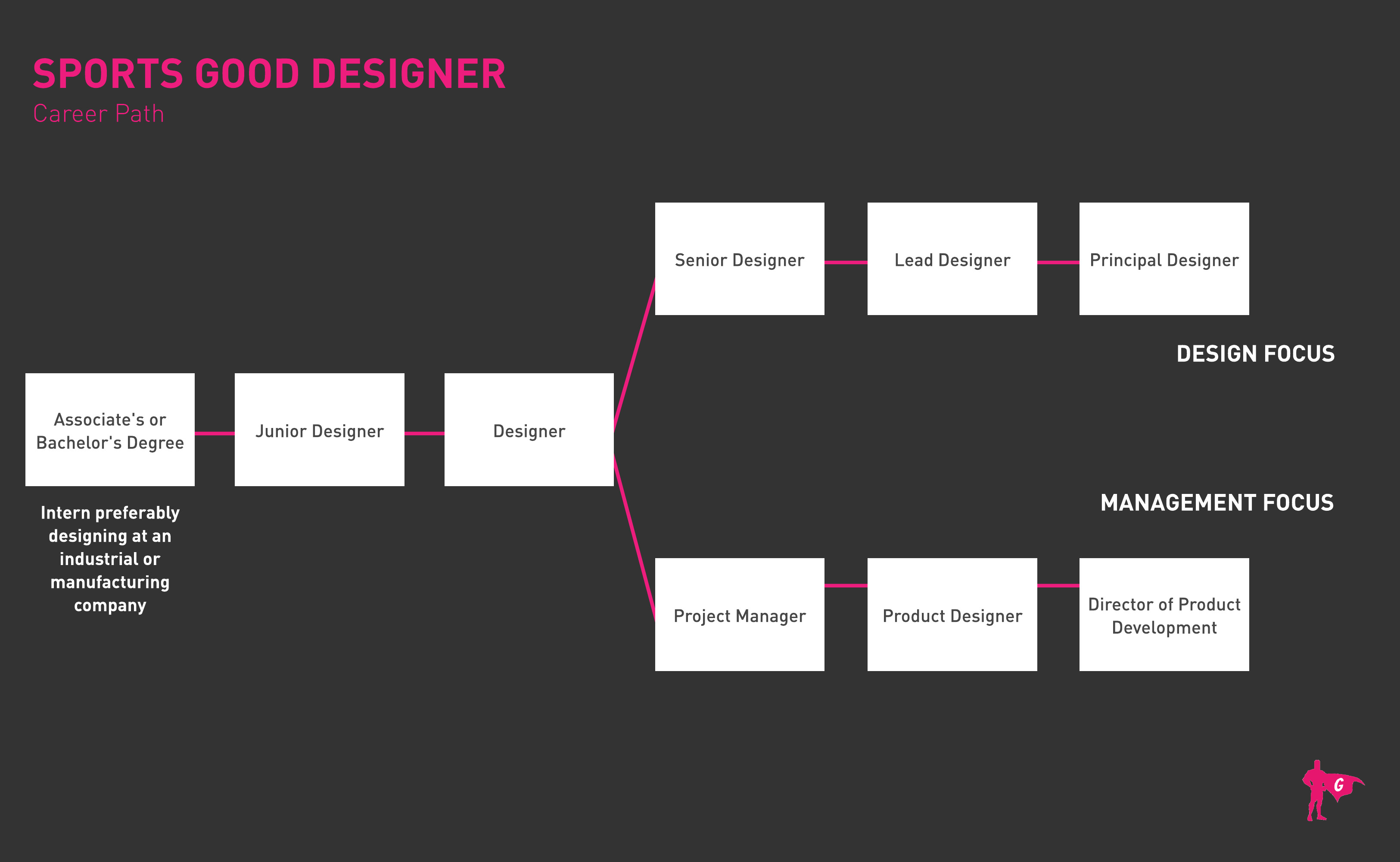
- Ideally, you’ll want to have some prior experience in manufacturing or industrial work
- Expect to pay your dues by starting as a part-time assistant working with various teams
- If you did an internship, let that company know when you’ve graduated
- Move to where the most jobs are. Per BLS, the states with the highest employment level for industrial designers are California, Michigan, New York, Massachusetts, and Ohio
- Look on employment portals like Indeed and ZipRecruiter
- Read job posts thoroughly. Make sure your background meets all applicable needs listed by the employer. Note any skills/experience gaps so you can work on those to boost your qualifications
- Check out product designer resume templates for ideas
- Consult your school’s career center for help writing a resume, practicing interview techniques, and connecting with recruiters
- On your resume, list ample details about your work experience, formal education, volunteerism, and accolades
- Reach out to former supervisors and professors to ask if they’ll serve as personal references
- Have your online portfolio polished and filled with high-quality photos and descriptive details that showcase your visual and interactive design skills and creativity
- Include concepts to improve existing products. If you have an idea for an original product, consider protecting your intellectual property with a patent before sharing it
- While some product designers launch their own entrepreneurial enterprises, it may be good to land a traditional job first to gain experience
- Stay focused on the business aspects of work. Offer ideas that turn into viable, money-making products
- The more profit you help your employer earn, the more responsibilities and compensation you should be rewarded with!
- Never cut corners when it comes to product safety, which equals consumer safety
- Be the go-to problem solver that your employer comes to trust and rely upon
- Pour all your creativity in your job, but remain open to constructive criticism
- Demonstrate patience and persistence as you collaborate with teams and managers. Learn how to de-escalate conflict so everyone can keep moving towards goal achievement
- Stay on top of sports goods design trends and never stop learning new techniques
- Consider doing ad hoc courses that’ll help you explore new skills
- If feasible, enroll in a master’s degree program to take your talent to the next level
- Company loyalty is important, but if there are no advancement opportunities with your current employer, research other options. Just remember to leave on good terms and never burn bridges!
Websites
- AIGA Iowa
- American Institute of Graphic Arts
- Human Factors and Ergonomics Society
- Industrial Designers Society of America
- Interaction Design Association
- Product Development and Management Association
- Service Design Network
- Society for Environmental Graphic Design
- World Design Organization
- World Intellectual Property Organization
Books
- Design for How People Think: Using Brain Science to Build Better Products, by John Whalen PhD, Mitchell Dorian, et al.
- Solving Product Design Exercises: Questions & Answers, by Artiom Dashinsky
- The COMPLETE BOOK of Product Design, Development, Manufacturing, and Sales, by Steven Selikoff
- Value Proposition Design: How to Create Products and Services Customers Want, by Alexander Osterwalder, et al.
If you want to work in a creative field, but don’t necessarily want to design products, here are a few career alternatives for you to consider!
- Art Director
- Drafter
- Fashion Designer
- Graphic Designer
- Industrial Designers
- Interior Designer
- Software Developer
Newsfeed

Featured Jobs
Online Courses and Tools