







Spotlights
Fabric Development Engineer, Materials Engineer (Textiles), Textile Technologist, Fiber Engineer, Apparel Product, Development Engineer, Nonwoven Materials Engineer, Technical Fabric Specialist
The clothes you wear, the carpet in your home, the seats in your car, the bandages in a hospital, and even parts of a spacecraft all rely on textiles. But textiles today are far more advanced than simple cotton shirts. Behind every high-performance fabric is a Textile Engineer—a professional who designs, tests, and improves fibers, yarns, fabrics, and textile-based products.
Textile Engineers combine creativity with science. They work with materials like cotton, wool, polyester, nylon, and high-tech fibers such as Kevlar or carbon fiber. They design fabrics that stretch, breathe, resist fire, repel water, block bacteria, or withstand extreme temperatures. Some develop athletic wear that keeps runners cool. Others create medical fabrics used in surgical gowns or implantable materials. Some even design textiles used in aircraft interiors or space exploration.
This is a career for someone who enjoys chemistry, physics, design, and problem-solving. Textile Engineers don’t just ask, “How will this look?” They ask, “How will this perform? Will it last? Is it sustainable? Can we manufacture it efficiently?” They are innovators shaping the future of what the world wears and uses.
- Seeing a product you helped design in stores—or used in hospitals, sports arenas, or vehicles.
- Solving real-world problems, such as creating eco-friendly fabrics that reduce environmental impact.
- Blending creativity and engineering to build something both functional and beautiful.
- Working on cutting-edge innovations like smart textiles that monitor heart rate or adjust to temperature.
- Contributing to sustainability by developing recyclable or biodegradable materials.
- Building teamwork, speed, and communication in a high-energy environment
Working Schedule
Most Textile Engineers work full-time in offices, laboratories, or manufacturing facilities. Some travel to factories, suppliers, or international production sites. Deadlines for product launches may occasionally require extended hours.
Typical Duties
- Design new fibers, yarns, and fabrics for specific performance needs.
- Test materials for strength, durability, stretch, shrinkage, and colorfastness.
- Improve manufacturing processes to increase efficiency and reduce waste.
- Work with designers to ensure fabrics meet both performance and style goals.
- Troubleshoot production problems in textile mills or manufacturing plants.
- Analyze fabric samples using laboratory equipment.
Additional Responsibilities
- Research sustainable materials and eco-friendly dyeing processes.
- Ensure compliance with safety and environmental regulations.
- Collaborate with global suppliers and production teams.
- Develop technical documentation for product specifications.
- Monitor quality control during mass production.
A typical morning might begin in a lab testing fabric samples for durability or moisture resistance. Using specialized equipment, a Textile Engineer measures tensile strength, elasticity, or thermal insulation performance.
Later in the day, they might meet with product designers who want to develop a new line of athletic apparel. The engineer recommends fabric blends that wick moisture while remaining lightweight and durable.
Afternoons could involve reviewing production data from a textile mill, identifying ways to reduce defects or improve efficiency. Some days include troubleshooting—if a fabric is shrinking unexpectedly or colors aren’t holding, the engineer investigates the root cause.
“My office is always open for textile engineers. I enjoy my identity as a textile engineer a lot.” — Engr. Md. Shafiqur Rahman, President, The Institution of Textile Engineers and Technologists
Soft Skills:
- Creative problem-solving
- Attention to detail
- Communication with designers and production teams
- Collaboration
- Adaptability
- Critical thinking
- Time management
- Innovation mindset
Technical Skills:
- Fiber science and polymer chemistry
- Fabric construction (knitting, weaving, nonwovens)
- Textile testing methods
- Quality control processes
- Computer-aided design (CAD) software
- Manufacturing process optimization
- Sustainability and environmental compliance
- Data analysis
- Apparel Textile Engineers – Focus on clothing, sportswear, and fashion fabrics.
- Technical Textile Engineers – Develop materials for medical, automotive, aerospace, or industrial use.
- Sustainability Engineers – Specialize in eco-friendly fibers and green manufacturing processes.
- Research & Development Engineers – Create innovative fibers and smart textiles with embedded technology.
- Quality Assurance Engineers – Ensure products meet strict safety and durability standards
- Clothing and fashion companies
- Athletic wear brands
- Automotive manufacturers
- Medical device companies
- Aerospace and defense contractors
- Carpet and home furnishings manufacturers
- Global textile mills and production facilities
- Research laboratories and universities
Textile Engineers must balance creativity with strict technical standards. A fabric might look beautiful but fail durability tests. Engineers often work under production deadlines and must quickly solve manufacturing issues.
Global supply chains can require communication across time zones. Manufacturing environments may involve factory visits with noise, machinery, and safety protocols.
However, the impact is meaningful—every improvement can affect thousands or even millions of products worldwide.
- Sustainable and biodegradable fabrics are in high demand.
- Recycled polyester and plant-based fibers are growing rapidly.
- Smart textiles with embedded sensors are emerging in healthcare and sports.
- Automation and digital textile printing are transforming manufacturing.
- 3D knitting technology is reducing material waste.
Many future textile engineers enjoyed science experiments, especially chemistry and physics labs where they could test how materials reacted and changed. Some loved sewing, fashion design, or crafting—but were just as curious about why certain fabrics stretched, wrinkled, or felt cooler than others.
Others were fascinated by how materials respond to heat, pressure, and force, often taking things apart to understand how they were made. Interest in robotics, engineering clubs, STEM competitions, or environmental sustainability projects is also common, especially for students who like combining creativity with problem-solving.
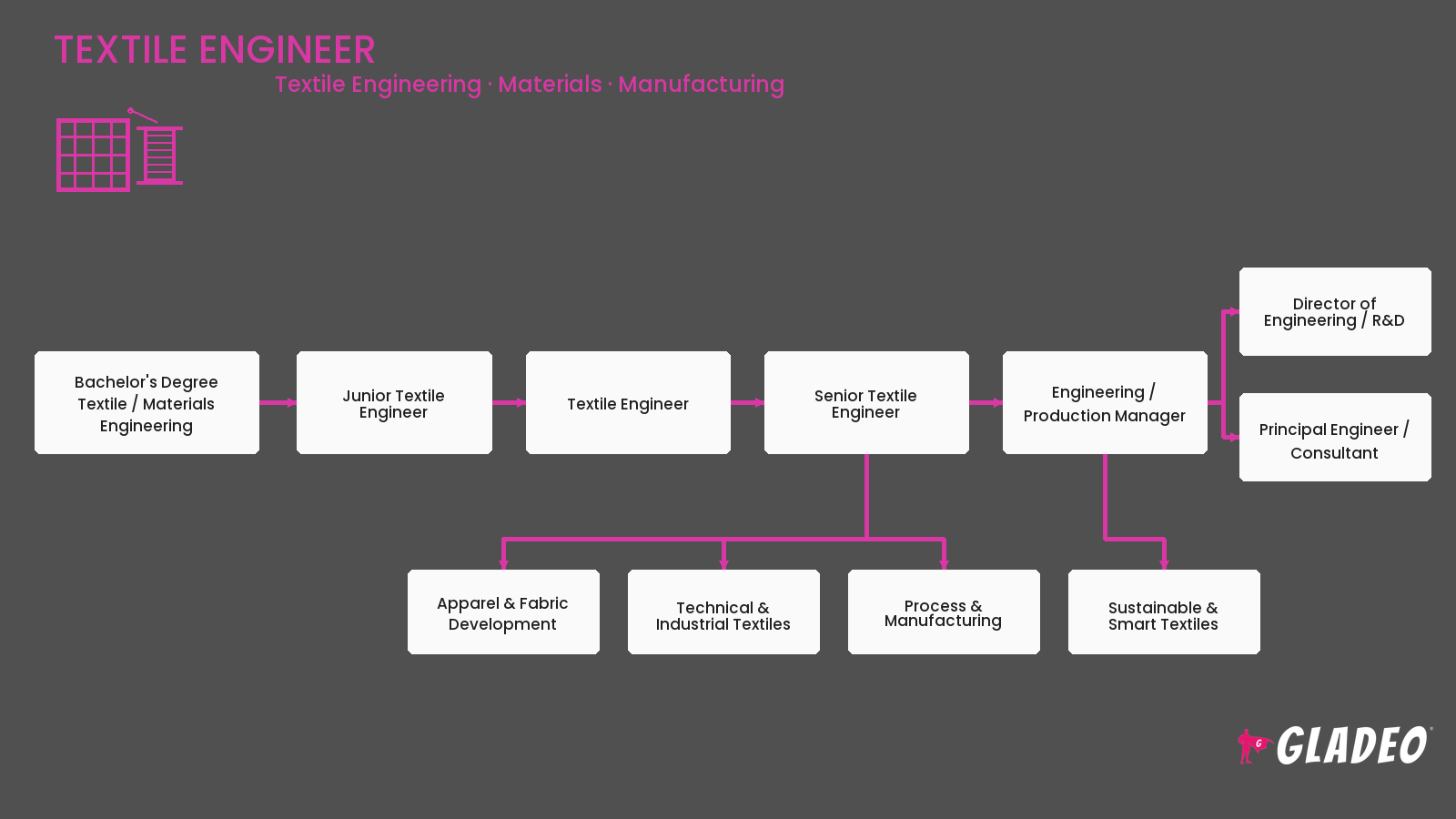
- Some Textile Engineers earn a bachelor’s degree in textile engineering, materials science, polymer science, chemical engineering, or a related field, though hands-on technical roles may begin with an associate degree in textile technology or manufacturing.
- Students considering college should look for programs that offer specialized coursework in fiber science, fabric construction (knitting and weaving), textile chemistry, and sustainable materials.
- For those interested in advanced or high-performance fabrics, majors in materials science or chemical engineering can provide strong preparation in polymers and material behavior.
- Many professionals gain early experience through internships with apparel brands, textile mills, or product development labs, as well as cooperative education (co-op) programs during college.
- Applicants benefit from working knowledge of manufacturing processes, quality control systems, and basic industrial machinery, along with comfort using laboratory testing equipment.
- Students may want to explore specific areas of textile production such as woven fabrics, knit fabrics, nonwovens, dyeing and finishing, or technical textiles used in medical and industrial applications.
- Learners can also build skills through online courses in CAD design, sustainability in fashion, textile testing methods, and lean manufacturing from platforms like Udemy, Coursera, and other technical training sites.
- Take advanced classes in chemistry, physics, algebra, and computer science to build a strong STEM foundation for engineering coursework.
- Join robotics teams, engineering clubs, STEM competitions, or science fairs to strengthen problem-solving and hands-on design skills.
- Enroll in sewing, fashion design, or technical theater costume courses to better understand fabric construction and garment behavior.
- Participate in sustainability or environmental clubs to explore eco-friendly materials and responsible manufacturing practices.
- Seek internships or summer programs with apparel brands, textile manufacturers, or product development labs to gain real-world exposure.
- Learn computer-aided design (CAD) software or 3D modeling programs used in product and textile development.
- Tour local manufacturing facilities or attend industry expos to observe textile production and innovation firsthand.
- Develop strong math and data analysis skills, as engineers regularly test materials, interpret lab results, and improve production efficiency.
Look for universities with strong programs in textile engineering, materials science, or polymer engineering. The best programs offer advanced textile laboratories, research opportunities, and partnerships with apparel brands, manufacturers, or technical textile companies. Hands-on experience with fabric testing, dyeing, weaving, knitting, and digital textile design is especially valuable.
- Search job boards like Indeed, Glassdoor, LinkedIn, or company websites for textile manufacturers, apparel brands, or research labs.
- Use keywords like “textile engineering intern,” “junior textile engineer,” “materials testing technician,” or “product development assistant.”
- Apply for entry-level roles in textile production, quality control, or lab testing at mills, apparel companies, or technical textile firms.
- Highlight any lab experience, CAD skills, or projects related to fabrics, materials, or product development—even from class assignments or personal projects.
- Be ready to demonstrate hands-on skills, such as testing fabrics, analyzing materials, or troubleshooting small-scale production processes.
- Show your enthusiasm for innovation, problem-solving, and sustainability in textiles.
- Be flexible with assignments and willing to rotate through different departments, such as R&D, quality assurance, and production, to gain broad experience.
- Consider obtaining certifications or short courses in textile testing, CAD, or sustainable materials to make your application stronger.
- Attend industry expos, textile fairs, or professional organization events to meet employers and learn about career opportunities.
- Prepare a resume and portfolio that showcase both technical skills and creative problem-solving abilities.
- Follow up politely after interviews with a thank-you email to reinforce your interest and professionalism.
- Specialize in high-demand areas like smart textiles or sustainable materials.
- Earn a master’s degree in materials science or textile engineering.
- Lead research or production optimization projects.
- Move into management roles such as Production Manager or R&D Director.
- Build a reputation for innovation and efficiency improvements.
- Network with industry professionals through conferences, professional associations, and online forums to stay informed and open doors for advancement.
- Pursue advanced certifications in textile testing, quality management, or sustainability to enhance credibility and expertise.
Websites:
- TextileWorld.com – Industry news and innovation updates
- AATCC.org – American Association of Textile Chemists and Colorists
- Fiber2Fashion.com – Global textile industry trends
- SME.org – Society of Manufacturing Engineers
- TextileToday.com – News, trends, and technical insights for the textile industry
- TextileLearner.net – Educational resources and tutorials on textile engineering and technology
- TextilesUpdate.com – Market trends, research, and innovation in fibers and fabrics
- InnovationinTextiles.com – Reports on advanced textile technologies and sustainable solutions
- TextileWorldAsia.com – Regional news and developments in the Asian textile sector
- TextileExchange.org – Information on sustainable and eco-friendly textile practices
Books:
- Textile Science by Mary L. Cowan
- Fabric Science by Joseph J. Pizzuto
- Materials Science and Engineering: An Introduction by William D. Callister Jr.
If becoming a Textile Engineer isn’t the right fit, you might enjoy careers that use similar skills in materials, manufacturing, and product innovation:
- Materials Engineer
- Fashion Product Developer
- Quality Control Engineer
- Chemical Engineer
- Industrial Engineer
- Sustainability Specialist
- Product Design Engineer
Newsfeed

Featured Jobs
Online Courses and Tools