






Spotlights
Author, Novelist, Screenwriter, Copywriter, Content Writer, Technical Writer, Content Strategist, Freelance Writer, Ghostwriter, Staff Writer, Scriptwriter, UX Writer
The novel you could not put down until 2 a.m., the TV episode that made you laugh and cry in the same twenty minutes, the slogan you can still repeat years later, the instructions that finally helped you set up your new gadget, and the website that made you want to click "buy" all began as a blank page and a writer who had something to say. Writers turn ideas into words that inform, persuade, entertain, and move people. They shape the stories, messages, and instructions that fill our books, screens, apps, and lives!
Writers come in many varieties. Novelists and authors build entire worlds and characters across hundreds of pages. Screenwriters craft scripts for films, television shows, animation, and video games, writing the dialogue and scenes that directors and actors bring to life. Copywriters create ads, slogans, and brand messages that make people notice and care. Content and web writers produce blog posts, newsletters, social media, scripts for videos and podcasts, and articles that help readers learn something or make a decision. Technical writers translate complicated information, such as how software works or how a medical device is used, into clear, helpful guides. Whatever the type, Writers research their topics, interview experts, brainstorm ideas, draft, revise, and rework until every sentence does its job. They collaborate with editors, agents, directors, designers, marketers, engineers, and clients, and they learn to listen to feedback and make their work stronger.
Writers use more than just a keyboard. They use research skills, interviewing, outlines, storyboards, style guides, and software ranging from word processors and screenwriting programs such as Final Draft and WriterDuet to content management systems, collaboration tools, and analytics dashboards. They understand audiences, know how to structure a story or an argument, and choose words with care. Good writing shapes opinions, builds brands, spreads knowledge, preserves history, and gives people the feeling of being understood. Whether a Writer's words appear on a book cover, a movie screen, or a phone screen, they make a difference in how people think and feel.
- Turning your imagination, knowledge, and voice into stories, articles, and messages that real people read, watch, and remember
- Having the freedom to explore many topics, from science and sports to fantasy worlds and new technology, and to keep learning with every project
- Making a difference by informing, entertaining, persuading, and comforting readers, whether through a novel, a product guide, or a powerful speech
- Building a career with many possible paths and the flexibility, for many Writers, to work from anywhere and shape their own schedule
Working Schedule
A Writer's schedule depends heavily on the type of writing and whether they are freelance or on staff. Staff writers, such as in-house copywriters, content writers at companies, technical writers, and editorial staff at publications, usually work regular hours in an office or remotely, with deadlines for each project. Freelance writers, including many novelists, screenwriters, and content creators, set their own schedules but must be self-disciplined, since income often depends on finishing projects, pitching new ones, and finding clients. Novelists may write for a few hours a day for months or years before a book is ready, sometimes while holding another job. Screenwriters might develop a script on their own, then work in a writers' room for a television series, where hours can be long and intense during production. Copywriters and content writers often juggle several projects with quick turnaround times. Many Writers work from home, coffee shops, libraries, or offices, and the work often continues in the form of reading, research, and brainstorming even when they are not at a keyboard. Deadlines, whether set by an editor, a client, or a production calendar, are a constant part of the job.
Typical Duties
- Brainstorming ideas, outlining stories or articles, and developing a clear angle or plot
- Researching topics through books, interviews, data, and firsthand observation
- Interviewing experts, customers, or sources to gather accurate information and compelling quotes
- Drafting stories, scripts, articles, ads, web pages, speeches, or guides in an appropriate voice and format
- Revising and editing their own work repeatedly to improve clarity, structure, pacing, and style
- Writing dialogue and building characters in fiction and screenwriting
- Following style guides, brand voices, and formatting rules, and fact-checking carefully
- Collaborating with editors, directors, producers, designers, and marketers to shape the final product
- Responding to feedback, notes, and rewrites from editors, clients, agents, or showrunners
- Pitching ideas, proposals, queries, and sample pieces to publishers, studios, clients, and publications
- Meeting deadlines for chapters, episodes, articles, campaigns, or project milestones
- Optimizing writing for search engines, social media platforms, and audience needs using analytics
Additional Responsibilities
- Managing a freelance business, including invoices, contracts, taxes, and client communication
- Building a personal brand and audience through websites, newsletters, and social media
- Attending readings, book signings, conferences, and workshops
- Participating in writing groups or critique circles and giving feedback to other writers
- Learning about copyright, contracts, and rights, including how to protect your work
- Working with agents, publicists, or managers on career development
- Teaching workshops, speaking at events, or mentoring newer writers
- Keeping up with trends in publishing, entertainment, technology, and digital media
A Writer's morning often begins with a ritual that gets the words flowing. Some write first thing, before email and social media can distract them. Others start with a walk, a cup of coffee, or a short reading session. A novelist might spend the first few hours working on the next chapter, hunting for the right description of a setting or cracking a plot problem. A content writer might begin by reviewing an assignment brief and outlining the key points for an article. A screenwriter may revisit a scene and read the dialogue out loud to hear how it sounds.
Midday often means research, interviews, and collaboration. A copywriter might meet with a marketing team to discuss a new campaign, brainstorm taglines, and hear what the audience needs to know. A technical writer could sit with a software engineer to understand a new feature and ask questions until the explanation is clear enough for a beginner. A journalist-style content writer may be on a call interviewing an expert, taking notes, and checking facts. Novelists and screenwriters might spend part of the day on research, such as reading about a historical period or visiting a place where their story is set, or doing business tasks such as responding to an agent's email.
Afternoons and evenings are often for revising and delivering. Writers reread their drafts, cut what is not working, strengthen the opening, and polish the ending. They respond to notes from an editor, director, or client, deciding which suggestions to adopt and which to push back on. Freelance Writers may send invoices, pitch new story ideas, or update their portfolio. Staff Writers may meet with the team, publish work, and check how it is performing with readers. Many Writers end the day by jotting down ideas for tomorrow, since the best ones often show up while cooking dinner or going for a walk.
Soft Skills
- Creativity and a rich imagination for stories, angles, and ideas
- Curiosity and a love of learning about all kinds of topics
- Strong communication and storytelling skills
- Discipline and the ability to meet deadlines without constant supervision
- Resilience in the face of rejection, critical feedback, and heavy rewrites
- Empathy and the ability to understand different audiences and characters
- Collaboration with editors, directors, designers, marketers, and clients
- Persuasion and the ability to make a clear, convincing case in words
- Adaptability in switching voices, formats, and topics from one project to the next
- Patience with the revision process, since great writing is rewritten many times
- Active listening and good interviewing skills
- Self-motivation and the ability to manage your own time, especially when freelancing
Technical Skills
- Mastery of grammar, punctuation, style, and sentence structure
- Research and fact-checking, including evaluating the reliability of sources
- Story structure, plot, character development, and dialogue for fiction and screenwriting
- Editing and proofreading, including the ability to edit your own work critically
- Writing for different formats, such as long-form books, short-form social posts, scripts, press releases, and technical manuals
- Familiarity with word processors, screenwriting software such as Final Draft, Fade In, and WriterDuet, and writing tools such as Scrivener
- Search engine optimization and digital content strategy for web writers
- Content management systems such as WordPress, plus basic HTML and formatting skills
- Use of collaboration tools such as Google Docs, Notion, and Slack
- Understanding of style guides such as the Associated Press Stylebook and the Chicago Manual of Style
- Novelist or Author: Writes fiction or nonfiction books, from fantasy and mystery to memoirs and history, and often works with agents and publishers
- Screenwriter: Writes scripts for movies, television series, animation, and streaming shows, often as part of a writers' room or as a freelance writer
- Copywriter: Creates advertising and marketing content such as slogans, ads, product descriptions, and email campaigns
- Content or Web Writer: Produces blog posts, articles, newsletters, social media posts, and video or podcast scripts for brands and publications
- Technical Writer: Explains complex products, software, and processes in clear manuals, help pages, and documentation
- UX Writer: Crafts the words inside apps and websites, such as button labels, error messages, and instructions, to make technology feel clear and friendly
- Speechwriter and Ghostwriter: Writes in someone else's voice for leaders, executives, or celebrities, including speeches, books, and articles
- Video Game and Interactive Writer: Creates stories, characters, and dialogue for games and interactive experiences, often as a narrative designer
- Book publishers, large and small
- Film studios, television networks, and streaming companies
- Advertising and marketing agencies
- Magazines, newspapers, and digital media outlets
- Technology companies and software firms
- Video game studios
- Nonprofit organizations and foundations
- Government agencies and public affairs offices
- Colleges, universities, and school district
- Healthcare, science, and engineering companies that need
technical documentation - Public relations firms and corporate communications teams
- Literary agencies and independent publishing platforms
Writing looks easy from the outside, but it can be mentally demanding. Writers face a blank page again and again, and sometimes the words refuse to come. Even experienced Writers deal with self-doubt, writer's block, and the feeling that a draft is not good enough yet. Rejection is a big part of the career. Novelists may hear no from many agents and publishers before a yes. Screenwriters see scripts passed over, and freelancers pitch ideas that never get picked up. Learning to treat each no as information instead of a verdict is a skill every Writer has to build.
Income and stability vary widely. Staff positions, such as in-house content writer, technical writer, or copywriter, can offer steady pay, benefits, and clear career paths. Freelance writing and creative work such as novels and scripts can mean uneven income, with big paydays followed by long stretches of unpaid work. Many novelists and screenwriters support their writing through day jobs, freelance work, teaching, or other creative gigs, especially early on. Writers who freelance also have to handle taxes, contracts, invoices, and self-promotion, which means being part business owner as well as artist.
The job also requires time alone with your thoughts, long hours at a desk, and deadlines that do not always match the way inspiration works. Revision is endless, and projects can change direction because an editor, studio, or client wants something different. Writers need to balance protecting their creative vision with being flexible and professional. At the same time, the career offers a rare chance to use your own voice and ideas, and many Writers find the combination of challenge and freedom worth every draft.
"I don’t think you only need to get an internship at “Vogue” or a huge NY magazine. Sometimes it’s better to work a smaller establishment and get more responsibilities, write more so you can get more clips. Really figure out your focus. If you want to work in the big magazine world for your whole career, then it’s nice to intern and work your way up. But if you want to be a writer and write for various publications, there’s a lot of other ways to enter, survive and thrive.” Amy Westervelt, Freelance Writer
- Growth of digital media, newsletters, podcasts, and video creators, which creates more outlets for writers to reach audiences directly
- Self-publishing and independent publishing platforms, which let authors publish and sell books without a traditional publisher
- Artificial intelligence writing tools that can help with brainstorming, drafting, and editing, while human voice, judgment, and originality remain essential, and industry contracts and policies on AI still being shaped
- Streaming services producing huge amounts of series, films, and animation, which increases demand for scripts and storytelling talent
- Increased demand for UX writing, content design, and microcopy as companies focus on user experience
- Rising focus on diverse voices and stories in books, film, television, and games
- Audiobooks and podcast fiction growing quickly, creating new formats for storytelling
- Serialized storytelling on platforms for online fiction, webcomics, and mobile apps
- Search engine optimization and data analytics shaping how content is written, edited, and measured
- Remote work and global freelance marketplaces that let writers work with clients around the world
Many Writers were the kids who were always reading, whether it was fantasy novels, comics, magazines, or cereal boxes. They loved making up stories, filling notebooks with plots and characters, writing poems, or composing silly songs and scripts for friends to act out. They might have written fan fiction, started a blog, created a school newspaper, or put on skits for the family. English class was often their favorite, and they enjoyed the satisfaction of finding the perfect word or the right ending for a story.
Others were natural explainers, debaters, or question-askers. They liked researching topics they were curious about, convincing friends to try something new, or writing the funniest caption in the group chat. Some became interested in writing through video games, movies, or music, wanting to understand how stories and lyrics worked. Early signs of a Writer include a strong imagination, a love of language, and a habit of observing people and noticing small details that other people miss.
Writers follow many different paths, and there is no single required degree. A bachelor's degree in English, creative writing, journalism, communications, film, marketing, or a related field is common, and many employers in publishing, advertising, and corporate content look for a degree along with strong writing samples. Technical writers often study communication or English, combined with knowledge of a technical field such as engineering, computer science, or health. Screenwriters may study film or television writing, and some pursue a Master of Fine Arts (MFA) in creative writing or screenwriting, which can offer focused time, mentorship, and connections. However, many successful novelists, copywriters, and content creators build careers with strong skills, constant practice, and a portfolio rather than a particular degree. What matters most is that your writing is excellent, your work is reliable, and you know how to find your audience.
Students can take courses in relevant subjects such as:
- English Composition and Literature
- Creative Writing, including Fiction, Poetry, and Nonfiction
- Screenwriting and Playwriting
- Journalism and Media Writing
- Advertising, Marketing, and Copywriting
- Technical and Professional Writing
- Rhetoric, Speech, and Communication
- Editing and Publishing
- Digital Media, Web Content, and Social Media
- History, Psychology, Sociology, and other subjects that deepen your understanding of people
Practice and portfolio building are the heart of a writing education. Students should write constantly, share their work, and seek feedback from teachers, peers, and writing groups. Internships at publishers, magazines, ad agencies, production companies, nonprofits, or companies that need content writers provide real-world experience and clips for your portfolio. Many writers also develop expertise in a subject area, such as science, health, finance, or gaming, which makes them more valuable in specialized writing jobs. Workshops, conferences, and online courses help writers sharpen their craft and stay current with new tools. Because writers are often their own bosses, learning basic business, marketing, and contract skills is also an important part of the training.
- Read widely across genres, including novels, nonfiction, poetry, scripts, news, and online articles, and pay attention to how they are built
- Write regularly, whether through a journal, short stories, poems, scripts, or a blog, and challenge yourself with new forms
- Take English, creative writing, journalism, speech, and drama classes and ask teachers for feedback on your work
- Join the school newspaper, yearbook, literary magazine, or drama club to gain real publication and teamwork experience
- Enter writing contests, such as the Scholastic Art & Writing Awards, local contests, and national youth competitions
- Share your work through a blog, newsletter, online writing community, or school website
- Join or start a writing group where you can exchange drafts and learn how to give and receive feedback
- Attend summer writing programs, workshops, and camps at colleges and writing centers
- Learn basic web and social media skills, such as how to publish a post, edit a video script, or use WordPress
- Volunteer to write for local nonprofits, clubs, or community groups, such as newsletters, flyers, or grant materials
- Find internships or part-time jobs in publishing, media, advertising, tech companies, or local businesses that need writers
- Study the business side of writing by learning how publishing, film, and freelance writing work, including copyright and contracts
- Faculty who are working writers, editors, screenwriters, or professionals in the field
- A balance of craft courses, such as fiction, poetry, and screenwriting, and practical courses, such as professional writing, marketing, or editing
- Workshop-style classes where you share your work and receive constructive feedback
- Opportunities to publish your work in student magazines, journals, websites, or anthologies
- Internship and career services connected to publishers, media companies, agencies, and technology companies
- Visiting writers, agents, and editors who speak with students and offer networking opportunities
- Courses or tracks in specialty areas such as technical writing, screenwriting, journalism, or digital content
- Access to writing centers, libraries, and writing communities that support your growth
- Options to combine writing with another field, such as science, business, film, or game design
- Alumni who are working writers and who stay in touch with current students
- Programs that help you build a portfolio and a professional online presence
- Affordability and scholarships, particularly if you are considering an MFA or specialized program
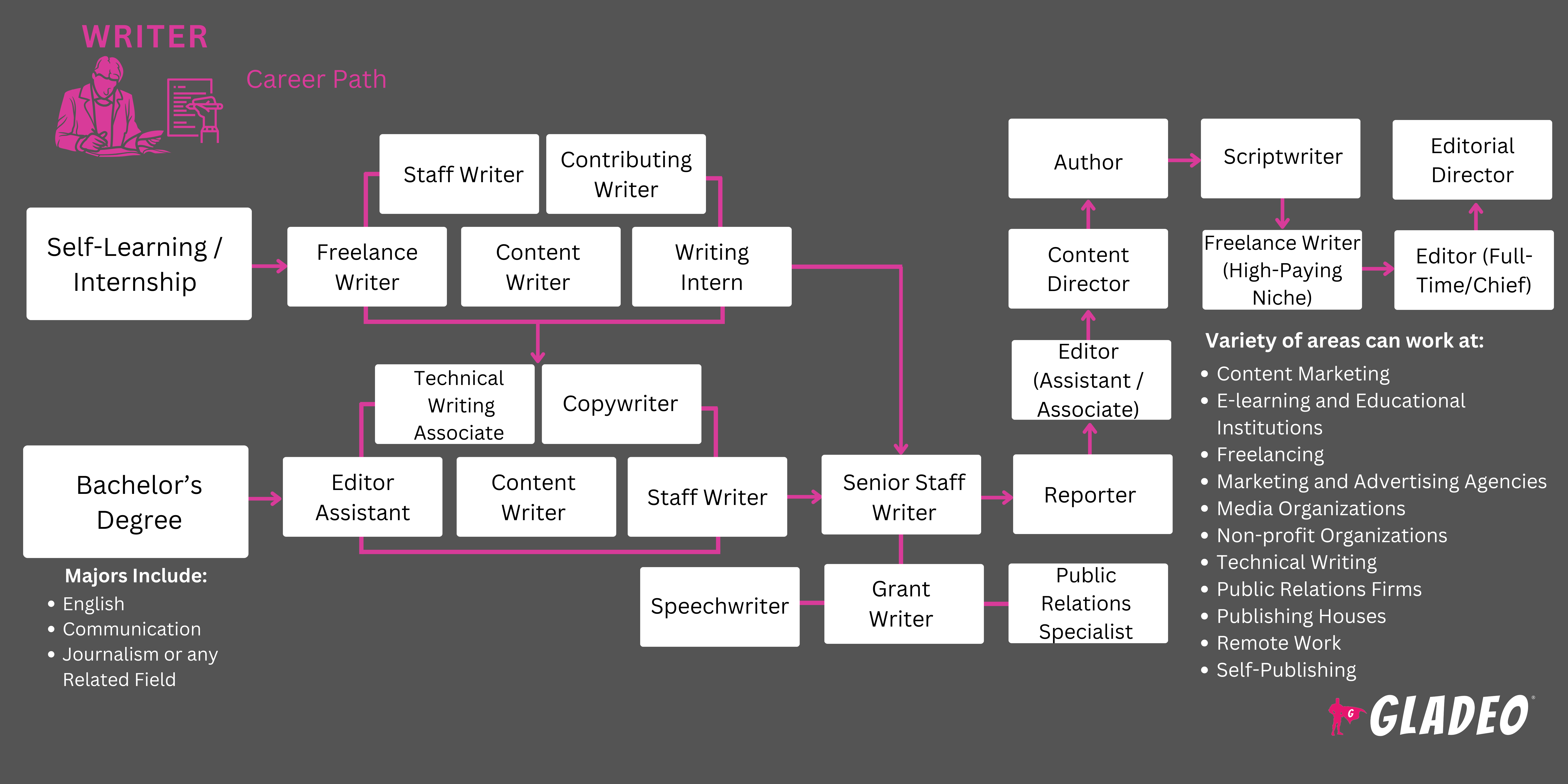
- Build a portfolio of your best writing samples, including published pieces, class projects, blog posts, scripts, and writing created for clubs or nonprofits
- Apply for entry-level roles such as Content Writer, Junior Copywriter, Editorial Assistant, Communications Assistant, Social Media Coordinator, Production Assistant, Writers' Assistant, or Technical Writing Intern
- Seek internships and entry-level jobs at publishers, agencies, media companies, production companies, tech companies, and nonprofits
- Consider freelancing for small businesses, local publications, or online platforms to build clips and experience
- Pitch articles or stories to magazines, websites, and literary journals, and submit work to contests and anthologies
- For screenwriting, write original scripts, enter screenplay competitions, and look for jobs as a writers' assistant or production assistant in film and television
- For novels, finish a manuscript, learn how to write a query letter, and research agents or consider self-publishing
- Search job boards such as LinkedIn, Indeed, ProBlogger, and company career pages, and look at freelance marketplaces for beginner projects
- Network by attending writing conferences, workshops, readings, and film or media events, and follow up with new contacts
- Make your online presence professional with a simple writing website, a clear bio, and links to your best work
- Practice for writing tests and interviews, which often include editing tasks or short writing assignments
- Stay open to starting in a related role, such as marketing, journalism, or technical support, and move into writing as you grow your skills
“Spend time reading a lot of whatever publications you like. Come up with an idea that they haven’t covered and just write it in the way you think it would appear in the magazine.” Amy Westervelt, Freelance Writer
- Keep writing and publishing, since a strong body of work is the best resume
- Develop a specialty or voice that sets you apart, such as science writing, comedy, young adult fiction, or UX writing
- Move from entry-level roles to senior writer, editor, content strategist, creative director, or managing editor positions
- For screenwriters, advance from writers' assistant to staff writer to story editor to producer or showrunner
- For authors, build a readership, publish regularly, and consider working with an agent and building a platform
- Learn editing, project management, and leadership so you can oversee other writers and bigger projects
- Network with editors, producers, agents, and other writers who can recommend you for future work
- Join professional associations and take advanced workshops to keep growing your craft
Websites:
- Authors Guild - authorsguild.org
- Writers Guild of America West - wga.org
- Writers Guild of America East - wgaeast.org
- Poets & Writers - pw.org
- Society of Children's Book Writers and Illustrators (SCBWI) - scbwi.org
- Science Fiction and Fantasy Writers Association (SFWA) - sfwa.org
- Mystery Writers of America - mysterywriters.org
- American Society of Journalists and Authors - asja.org
- Scholastic Art & Writing Awards - artandwriting.org
- National Writing Project - nwp.org
- Writer's Digest - writersdigest.com
- Publishers Weekly - publishersweekly.com
- Reedsy - reedsy.com
Books:
- On Writing: A Memoir of the Craft by Stephen King
- Bird by Bird by Anne Lamott
- On Writing Well by William Zinsser
- Save the Cat! by Blake Snyder
- The Copywriter's Handbook by Robert W. Bly
If you find that being a Writer isn't the right fit, your skills in storytelling, communication, and research can lead to many related careers.
- Editor
- Journalist or Reporter
- Public Relations Specialist
- Marketing Content Manager
- Social Media Manager
- Technical Communicator
- Grant Writer
- Librarian
- English Teacher
- Communications Director
"Be nice to everybody you come into contact with because a) that’s just a decent thing to do as a human being b) since there is so much turnover in the media, somebody who was your intern one day could/will be your editor later who you are pitching to.” Amy Westervelt, Freelance Writer (Regular contributor to Forbes, Wall Street Journal, Slate)
“Strike a good balance of being confident and smart but not arrogant and entitled.”
Newsfeed

Featured Jobs
Online Courses and Tools